
The red palm weevil (Rhynchophorus ferrugineus) is a highly destructive pest affecting palm trees throughout Europe, North Africa, and the Middle East. At only 2-4 cm long, the red palm weevil (RPW) can take down a 16-meter Canary Island date palm in only a few months. (Fig 1)
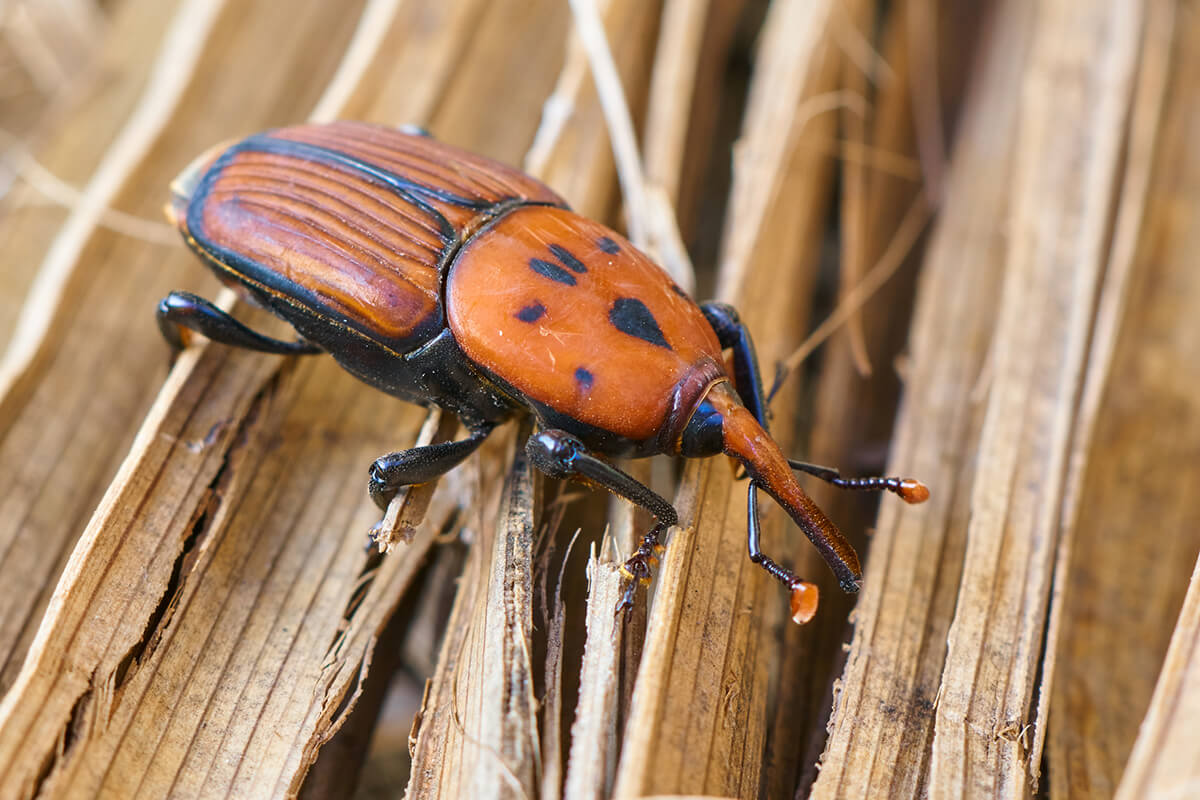
A close relative to the South American palm weevil (R. palmarum), a significant threat to coconut production in Brazil, the RPW attacks palm trees, including;
- Coconut palm (Cocos nucifera)
- Canary Island date palm (Phoenix canariensis)
- Date palm (Phoenix dactylifera)
- Sago palm (Cycas revoluta)
- Bismark palm (Bismarckia nobilis)
- Mexican fan palm (Washingtonia robusta)
- Fan palm (Livistona spp.)
- Areca palm (Areca catechu)
- Queen palms (Syagrus romanzoffiana)
Palm trees are not considered a tree in a botanical sense because they do not contain wood. Plams belong to the family Arecaceae and are closely related to bamboo and reeds.
Although rare, the red palm weevil can infect banana, sugarcane, agave, and yucca plants. These cases are thought to occur because palm trees, the weevil's preferred host, are scarcer in some regions where it is present.
Originally from Asia, the RPW has spread to Europe and North Africa via the Middle East. An excellent flyer, the palm weevil is believed to have spread beyond Asia by importing infected palm trees.
Although one case of RPW in California in 2010 was reported, the weevil was considered eradicated from the Laguna Beach area in 2015. An alert arborist spotted the weevil in a Canary Island date palm tree in a residential area.
How the Red Palm Weevil Kills Palm Trees
Similar to the destruction method used by the agave snout-nosed weevil, a female palm weevil lays hundreds of eggs in the crevices of the palm tree. Each female can lay upwards of several hundred eggs. The eggs hatch in a few days. This is when the "real" damage truly begins!
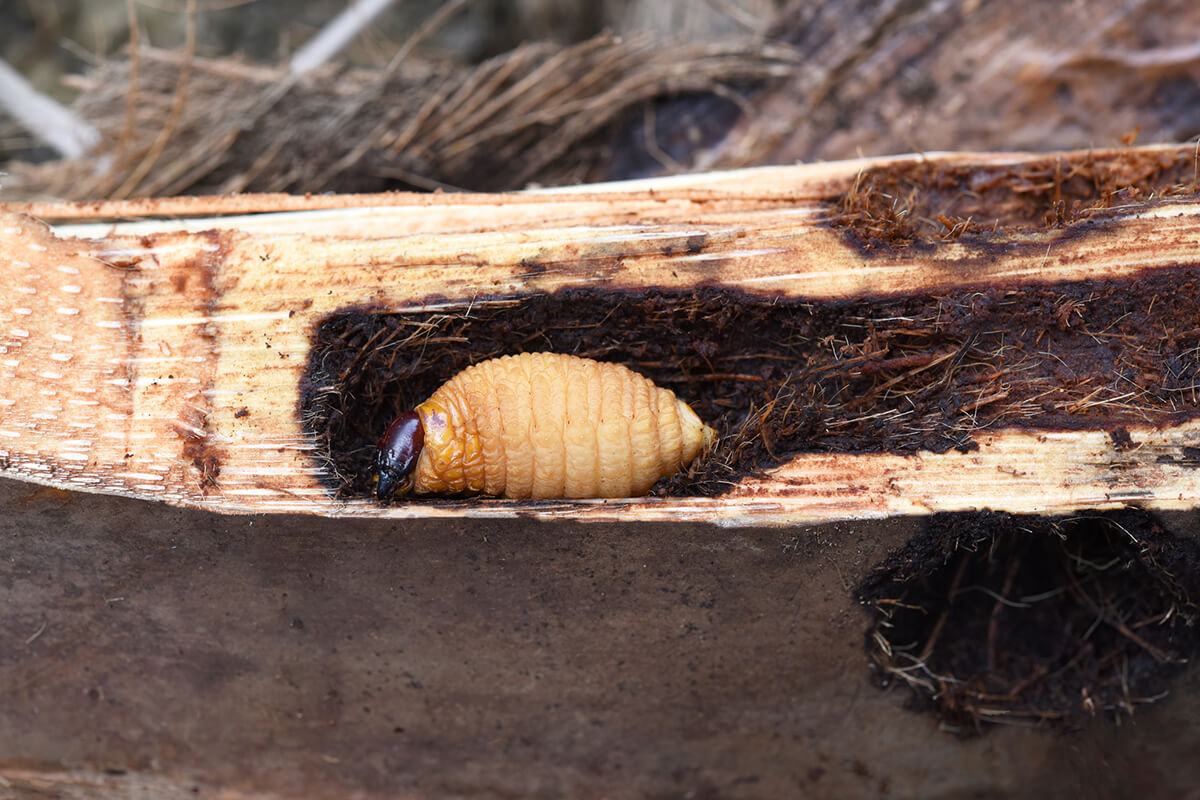
The larvae that emerge from the eggs tunnel into the tree's trunk and crown, creating extensive galleries that weaken the tree's structure as they devour the interior of the palm or the plant tissue that secures the fronds to the trunk.
The elongated snout of the weevil is called a rostrum. The rostrum contains mouthparts which the weevil uses to bore into plant material.
It's hard to imagine how a weevil could bore through a tree trunk. After recently cutting down a Mexican fan palm (a victim of the summer 2024 temperatures), I was surprised by how soft the trunk was. The trunk is very fibrous, resembling a pineapple. Palm trees hold a lot of water in their tissues, making the inner portion of the tree wet and spongy.
As the larvae continue to feed, they destroy (hollow out) the tree's vascular system, disrupting water distribution. (Fig 2) This causes the collapse of fronds and, eventually, the crown. You may also notice a thick, brownish, gooey substance oozing from small holes in the palm's trunk. This substance is comprised of a mixture of palm sap and frass (weevil shit).
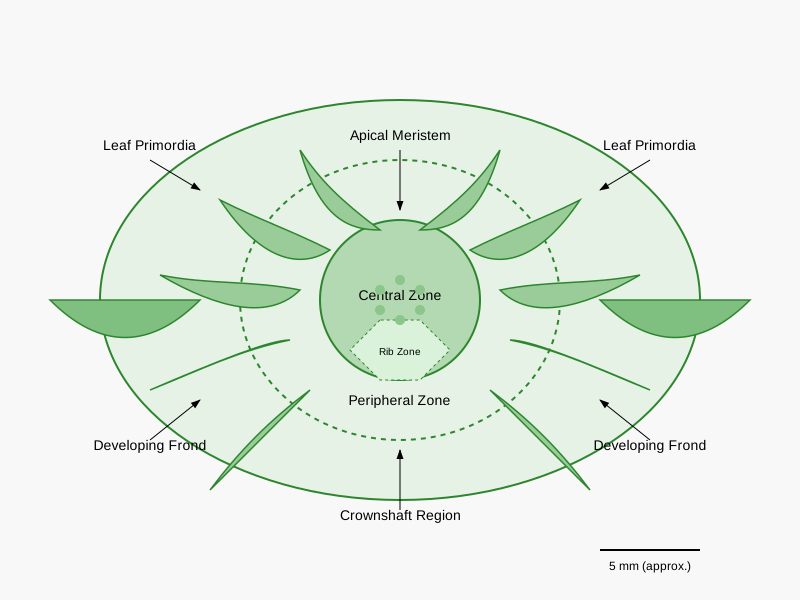
Palms grow from an apical meristem (or crownshaft) (Fig 3). When this is damaged, the palm can no longer grow.
At this point, the tree serves little more than a host for the next generation of red palm weevils. The larvae, hungrily devouring the tree, pupate inside cocoons, only to emerge as the next generation of weevils. Once they mature, they will fly to nearby palm trees to begin a new infestation.
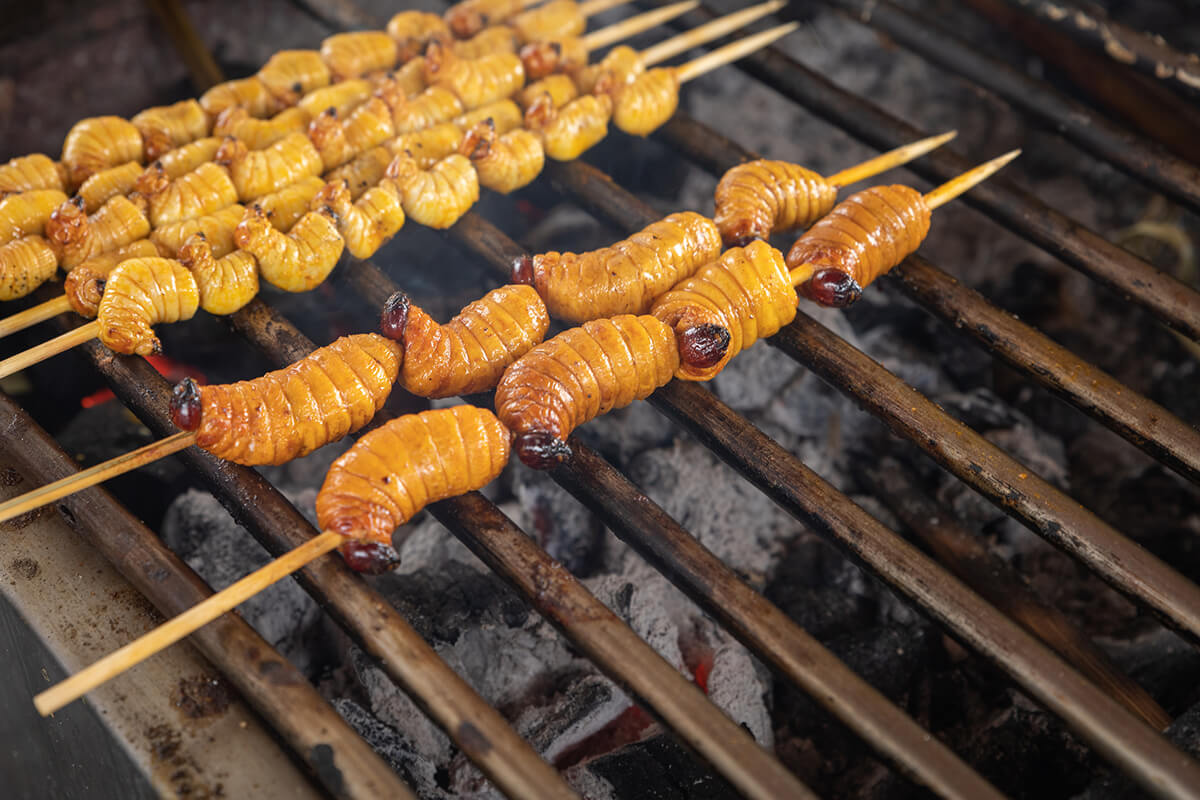
RPW larvae are considered a delicacy in parts of South America and Asia. The larvae are placed on skewers (or deep-fried), roasted over charcoal, and eaten as a snack. (Fig 4)
Red Palm Weevil - Prevention
Once a palm tree has been infested with weevils, it will usually not survive. Just as in the case of an agave that a snout-nosed weevil has compromised, by the time you notice the weevil or the symptoms of an infestation, it's too late to save the tree.
If an infected tree is spotted early, curative procedures may help it recover.
If you live in an area where palm weevils are active, it's probably best to avoid planting new palms. Certain European countries, including France, Italy, and Spain, restrict the planting or moving susceptible species to control the weevil's spread.
Prevention is key to protecting palms, but it is not a foolproof endeavor. Some of the prevention methods include the following:
- Systemic insecticides are injected through the trunk or soil or are applied as a chemical spray (shower) that poisons the weevil larvae and adults.
- Pheromone traps (plastic buckets) placed near palm trees containing plant material and pheromones attract weevils, preventing their escape and killing them with pesticide.
- Diatomaceous earth used as a fertilizer has shown some promise in preventing RPW.
Sound ergonomic practices, such as removing dead and heavily infested palms and reducing the prevalence of weeds, can reduce the incidence of RPW and make applying systemic insecticides more effective.
Because the RPW can detect palm-derived volatiles (ethyl and methyl ester compounds) emitted from (palm) trees through olfactory sensilla residing in the atennae, treating any recent wounds created by pruning the fronds or removing offshoots with insecticide is vital.
Biological controls (using natural enemies like nematodes) are generally ineffective.
If you're reading this from the United States, the RPW is not currently a threat. However, things can change quickly. All it takes is a single import containing a few stowaway RPWs. If you're from an area of the world where the RPW is a problem, follow local guidelines for treating palms. I included a few links to great resources below.
Additional Resources
Red Palm Weevil: guidelines on management practices
USDA New Pest Response Guidelines

Ask Me! 
Need some expert guidance? Shoot me a message, and I'll provide actionable, free advice to solve your problem.
Message Me