
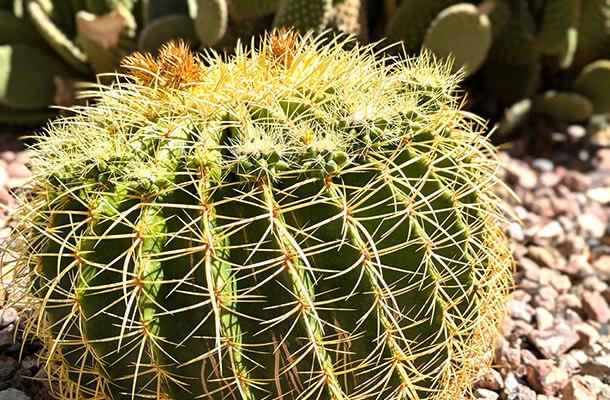
Propagate a barrel cactus and enjoy the desert's beauty with this easy-to-follow guide! The golden barrel cactus (Kroenleinia grusonii) is beautiful and easy to propagate from an offset (or seed).
The golden barrel cactus is known in Spanish as asiento de suegra, meaning "mother-in-law's cushion or seat." It is considered an endangered species in its native areas of México (central México, particularly in the states of Querétaro and Hidalgo).
An offset, also known as a pup, is the offspring of the barrel cactus that never leaves home. Some barrel cacti have many pups that grow out of the top or sides of the parent cactus. This process is called offset propagation. (Fig 1)

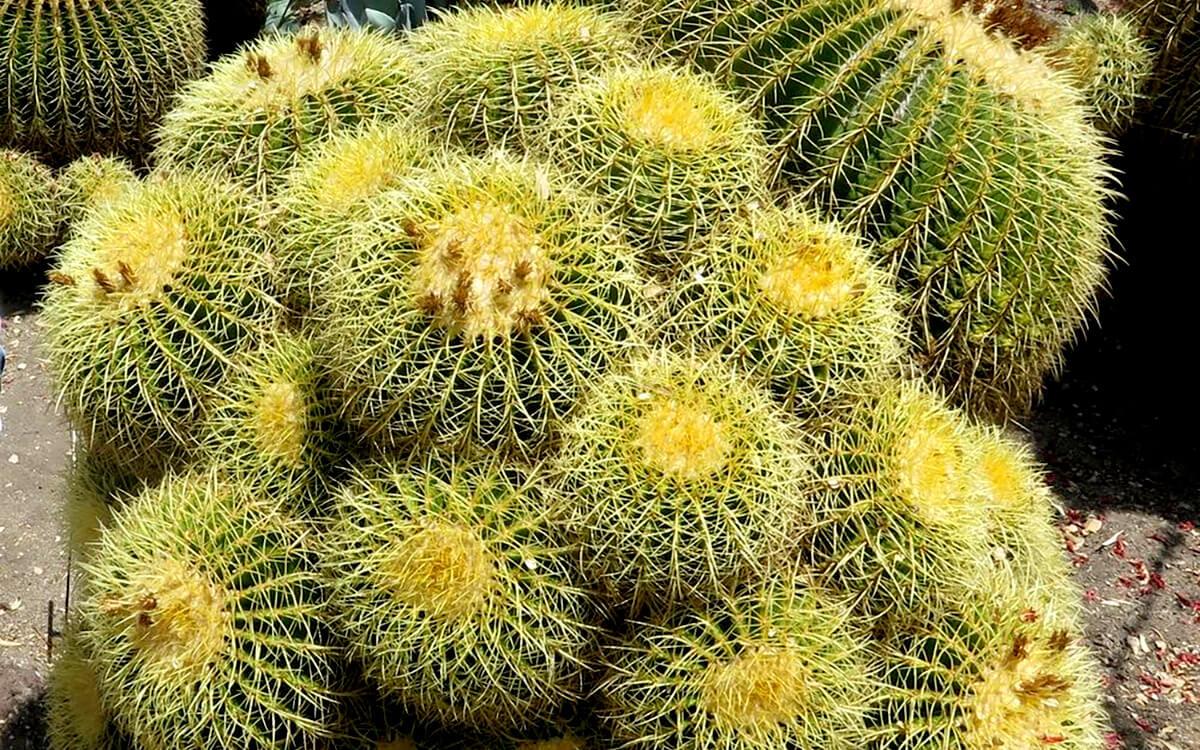
If the pups are not removed from the parent barrel cactus, it will develop a mounding effect over time, similar to a collection of basketballs balancing on each other. Personally, I love this look!
It takes several years for a barrel cactus to mature to the point of developing pups. The cactus pictured above is about ten years old. I've owned it for about 8 years, and I assume it was about 2 years old when I purchased it at Lowes for $5.
If you own a mature barrel cactus that has not produced pups, you can induce the growth of pups by drilling a small hole in the center of the cactus. Drilling a hole sounds traumatic but does not harm the cactus. This process is known as coring.
Commercial growers commonly perform coring to produce offsets, which result in massive barrel cactus mounds worth more money than a single cactus. (Fig 2) Coring forces the cactus to sprout pups as a means of survival. If coring sounds like something you want to try, more on this later.
Propagate A Barrel Cactus Using Offsets
Removing the offsets from the parent cactus to propagate a barrel cactus is easy. Identify the larger offsets before making any cuts. Larger offsets have a better chance of survival.
Once you've decided which offsets to remove, grab a pair of heavy-duty gloves, a tool to grasp the offsets, such as tweezers or tongs, and a sharp cutting tool.
Make sure you sterilize the cutting tool's blade with a solution of 10% bleach (9 parts water, 1 part common household bleach). You can also use isopropyl (rubbing alcohol) straight from the bottle without diluting to wipe across the blade of a cutting tool. This will prevent pathogens from passing from one plant to another.
Carefully remove the offset from the parent cactus using a gentle slicing motion. With the other hand, grasp the offset using a tweezer or tongs and lift upwards until it is free from the parent.
An offset is an exact clone of the parent cactus. The term "offset" reflects their role in the plant's natural reproduction and propagation process. Offsets can develop at the top of the cactus or at its base.
Contrary to what is commonly written, letting the offset (the bottom portion) callus before planting is unnecessary. If you prefer to wait for the offset to callus, do so. This also applies to propagating prickly pear cactus and bunny ear cactus.
Place the offset in a pot containing cacti-specific soil. The best cacti soil contains perlite. Bury the offset just enough to keep it standing upright. Provide a small amount of water immediately after planting. The potted offset can be placed outdoors or in a window with direct sunlight.
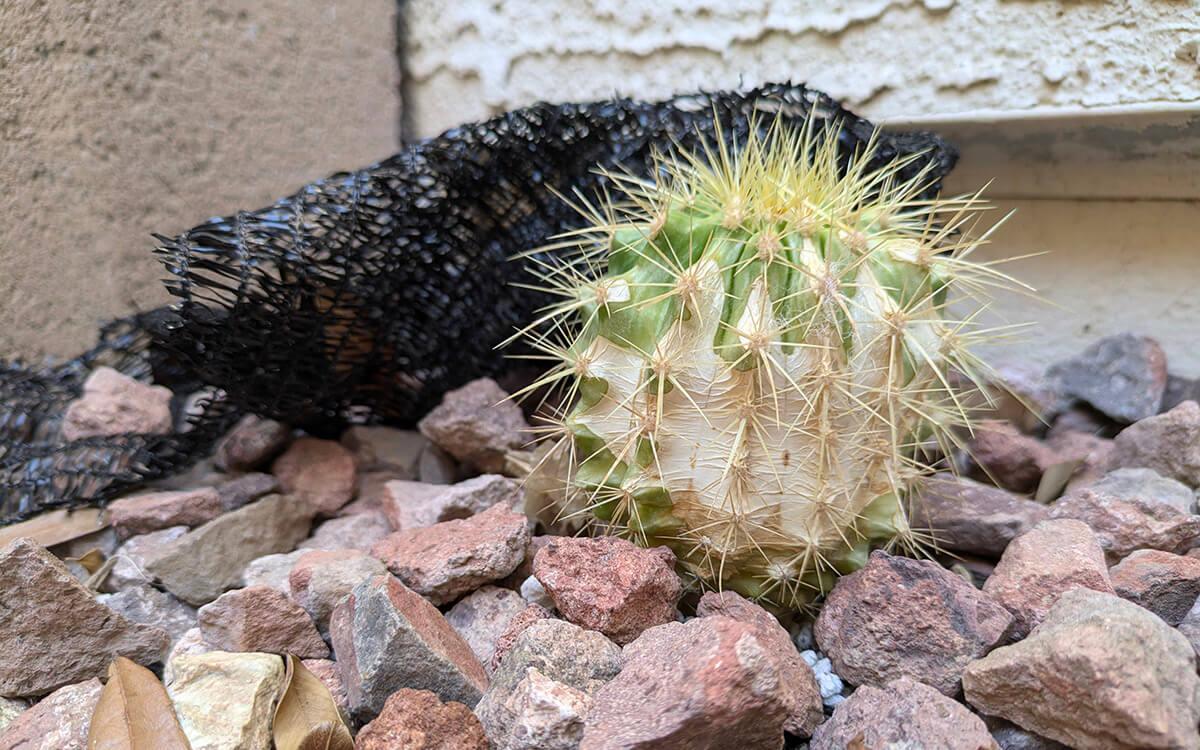
If you live in an area such as Phoenix, AZ, do not place the plant in direct sunlight during the hottest time of the year (May to October). Doing so will burn the offset and result in the cactus dying in as little as a day or two.
The barrel cactus in the photo below has been covered by Agfabric sunblock shade cloth, a plastic material that blocks the sun after the initial burn on the first day. (Fig 3)
Barrel cacti grow moderately fast during the first few years of life; however, growth dramatically slows as the plant matures.
Propagate a Barrel Cactus Using Seeds
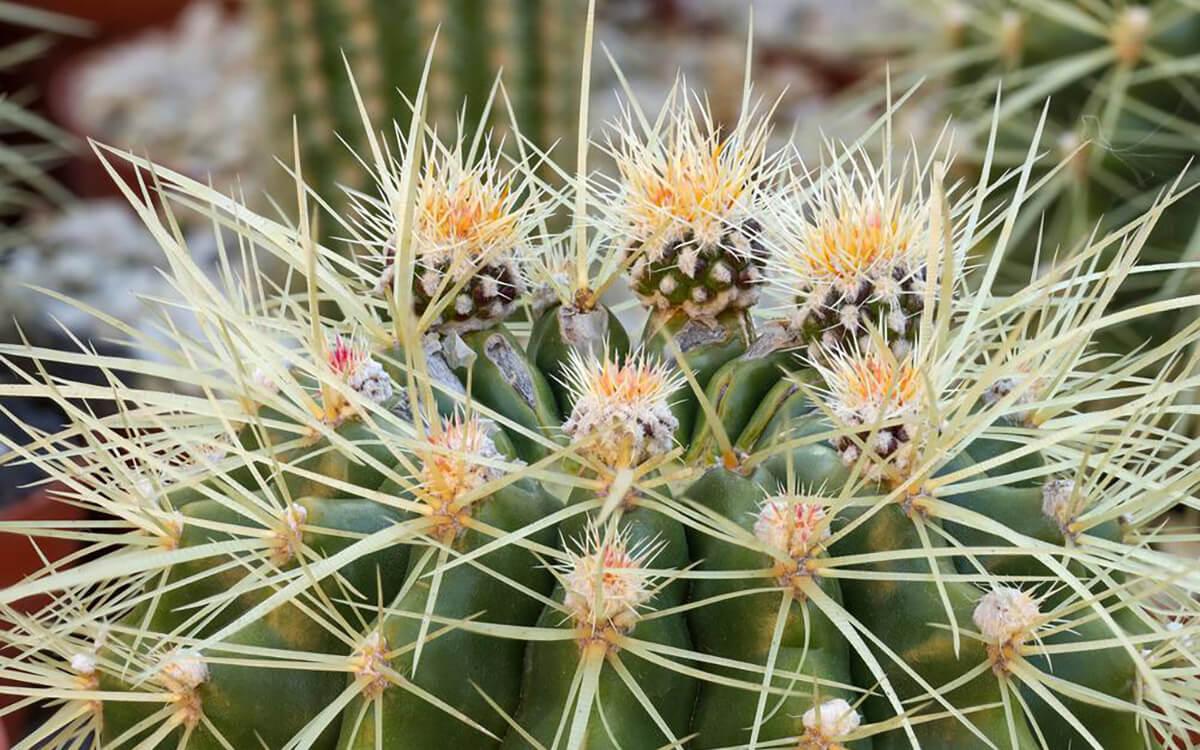
The golden barrel cactus usually develops flowers on the plant's crown before producing offsets. The flowers eventually die and leave behind seeds that you can use to propagate a new barrel cactus.
Propagating a barrel cactus from seed is a slow process that requires patience. However, watching a new cactus sprout from a seed you planted can be rewarding.
To begin, grab a pair of forceps or needle-nosed pliers. These tools will allow you to remove the seed pod without your hand getting too close to the spines. If you're the adventurous type (or loco like me), you can carefully remove the seed pods using your fingers.😁
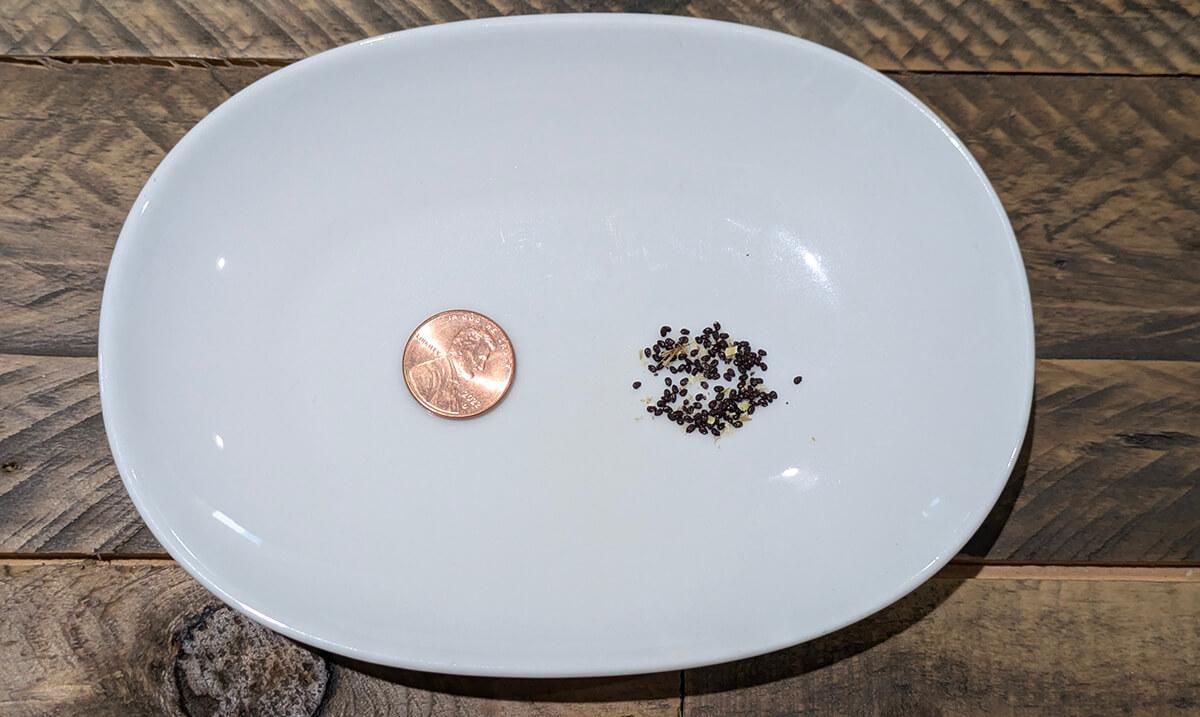
Once you have collected the pods, gently open each to remove the dark purple-colored seeds. (Fig 4) If the seed pod is relatively new, you may need to use tweezers or a small knife to pry the seeds from the sticky flesh of the inner portion of the pod.
Soak the seeds overnight in cool tap water. This can help kick-start the germination process. Fill a container with cactus soil. Spread the seeds on the top of the soil and cover them with a light dusting of sand. Using an atomizer, lightly spray the newly planted seeds.
Next, cover the entire container with plastic wrap. Place the container in a well-lit area of your home. Each day, remove the plastic and check the soil for dryness, providing spritzes of water as needed. Don't oversaturate the soil, and don't let the soil completely dry out.
In approximately several weeks, tiny seedlings will emerge from the soil. Soon after, it's a good idea to begin culling the weaker-looking seedlings; otherwise, seeds planted close to each other will compete for space. At this time, you can remove the plastic covering the container.
Move the container to an area of your home that receives direct sunlight. This will help the cacti continue to grow and prevent etiolation, a condition caused by insufficient direct sunlight.
Before the seedlings get too large, carefully transfer each to its own pot. You want to do this before the roots become intertwined, making separation difficult.
Coring a Barrel Cactus to Induce Offsets
As mentioned earlier, coring a barrel cactus will "force" the plant to produce offsets. Growers use coring to get the cactus to produce offsets earlier than it would naturally. As they mature, the offsets produce a beautiful mound of barrel cacti, greatly increasing their value.
According to a grower in Baja, México, I spoke with, coring is not a common process when the end result is the propagation of new cacti. He mentioned that coring is primarily used to increase the beauty and value of a cactus. He also said some nurseries have perfected the coring process to the point that they safeguard their methods as a trade secret.
For the purpose of this article, I'll leave it up to you to decide. If your goal is to produce a beautiful mound of barrel cactus, try coring. If your motive behind coring is to produce as many offsets as possible to propagate a barrel cactus, give it a try!
Here's how to core a barrel cactus. Using a drill with a 5/8" spade bit, drill a hole in the apical center of the cactus. Continue drilling the hole until you feel some resistance with the woody bottom of the cactus. You don't want to drill a hole through the entire cactus.
The apical meristem is the tissue in the center of a cactus that is actively growing. If you push down on the apical center of a barrel cactus with your finger, you will notice it has a soft, spongy consistency.
In about 7-8 months, the cactus will begin producing offsets around the perimeter of the drilled hole. (Fig 5)
If you live in the Phoenix area, it's advisable to avoid coring a barrel cactus during the summer months unless it is potted and can be protected from the sun.
Additional Resources
How to Propagate Succulents by Coring to Create Offsets - I recently discovered this segment on a local PBS channel.
The National Gardening Association—Don't let the name scare you! This site has a ton of information on desert plants, especially cacti.

Ask Me! 
Need some expert guidance? Shoot me a message, and I'll provide actionable, free advice to solve your problem.
Message Me