
Knowing how to protect cactus from frost will help it continue to thrive when warmer temperatures return.
In the desert southwest, winter brings a respite from the ferociously harsh summer temperatures. Cooler temperatures allow cacti to focus on building their root structures and repairing any damage suffered during the summer. But beware—if temperatures drop too low, things can get a little frosty and permanently damage a cactus. (Fig 1)
Here in the Phoenix area, frost is rare but can sneak up on you. When temperatures dip close to 32°F, many cacti are at risk. A cactus exposed to freezing temperatures can suffer frostbite, which it may never fully recover.
Frost occurs when the temperature is at or below 32°F, however temperatures at ground level can be lower than a reading on a thermometer only a few feet higher, meaning frost can occur even when the official temperature is above freezing.
Most cacti native to the Phoenix area do just fine during a short frost. But if you've got cacti that aren't locals, especially ones from South America or Mexico, you may be in for a bit of trouble. It's common for nurseries and big box garden centers to sell frost-sensitive cacti to unsuspecting buyers. When winter rolls around, these cacti are left out in the cold.
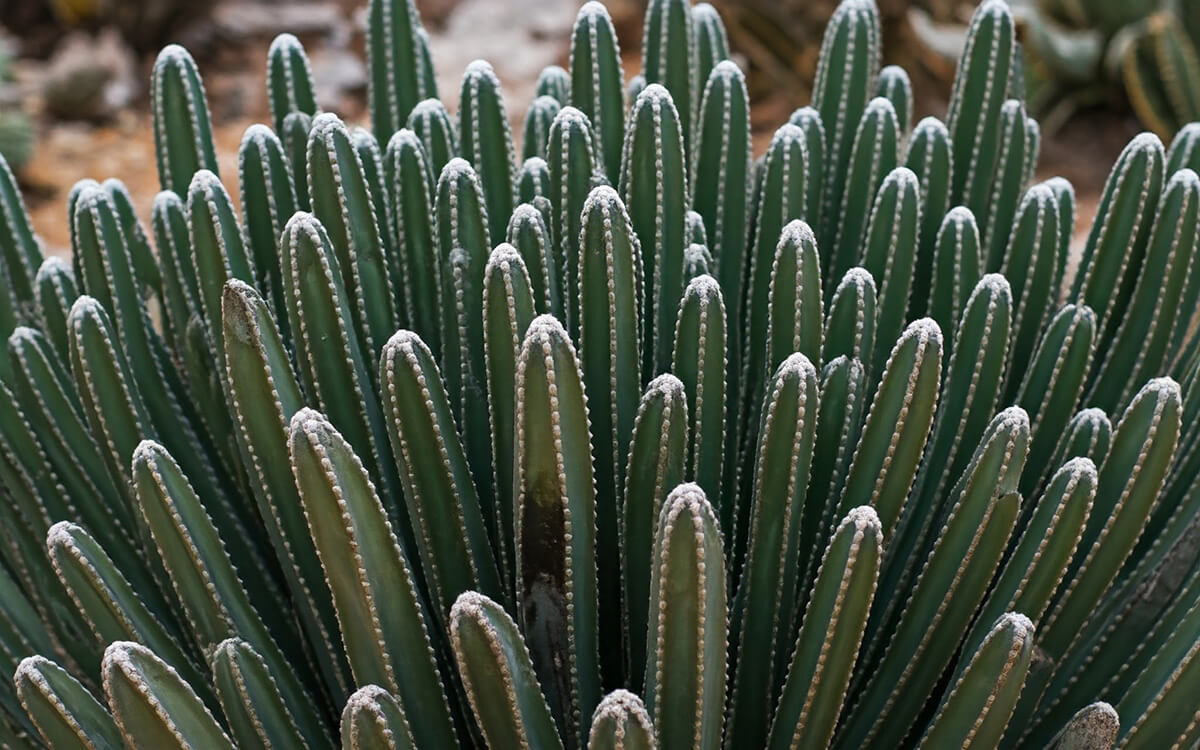
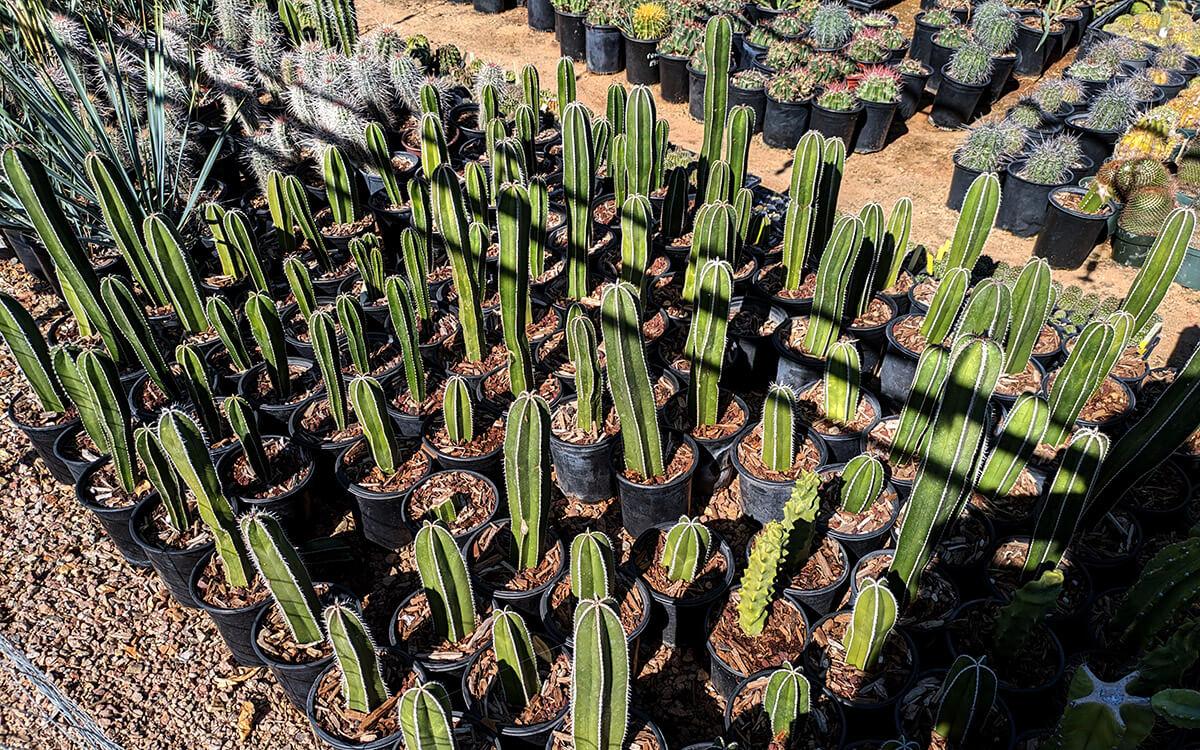
For example, two common varieties of cacti for sale in the Phoenix area are the snow white (Opuntia Erinacae Ursine) cactus (Fig 2), which can tolerate temperatures down to 10°F, and the Méxican fence post (Lophocereus marginatus) (Fig 3), which does not do well when temperatures dip below freezing.

Unless you are a cactologist, you probably won't know what region the cacti you own are native to. Rather than hoping for the best, covering all the cacti (or moving them indoors) you own is probably a good idea before cold temperatures are forecast.
When a cactus suffers frostbite, the damage inflicted will depend upon the type of cactus and the duration of the freeze. A columnar cactus, for example, can no longer grow taller when the apical center (the tip) is damaged by frost. When this happens, a cactus may produce offsets (exact clones) that appear at the base of the main plant. Offsets may also appear at the top of the cactus, just below the area damaged by the frost.
The apical meristem is the tip of the stem where new growth is initiated. This tissue is responsible for the primary growth of the plant, meaning it allows the cactus to grow taller and produce new structures.
In a globular (round) catus, frostbite may occur in the apical center, but depending upon the length of the freezing temperatures, it could occur anywhere on the cactus. The same can happen to a cactus with branches, for example, a saguaro or prickly pear.
Easy Methods to Protect Cactus from Frostbite
With the onset of winter, monitor the local weather forecast for freeze warnings, especially if you live in an outlying area that is more prone to colder temperatures.
Areas north of Phoenix, including Cave Creek, Anthem, and Carefree, experience lower temperatures than those in the valley. Areas south, including Tucson and Ajo (as well as east and west of Phoenix), can experience temperatures dramatically lower than Phoenix. This is mainly due to the increased elevation.
If the forecast calls for only a brief drop in temperatures, covering the cactus at night with any of the following materials should be enough to protect it.
- Cardboard
- Burlap
- Foam cup
- Old bed sheet
- Frost blanket
It's not unusual in the Phoenix area during January to see plants covered with cardboard the night of a freeze warning. The cardboard won't keep the plant warm, but it can prevent frost from accumulating on plants sensitive to frost.
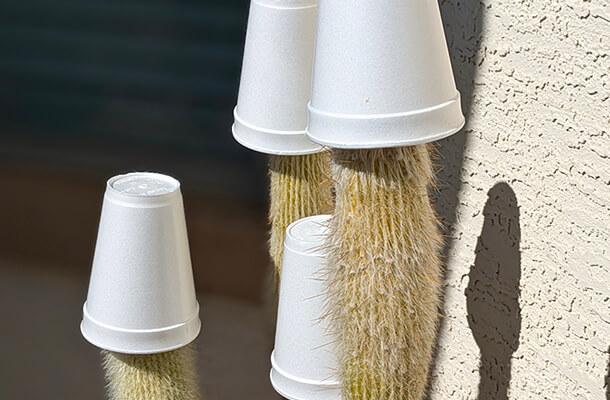
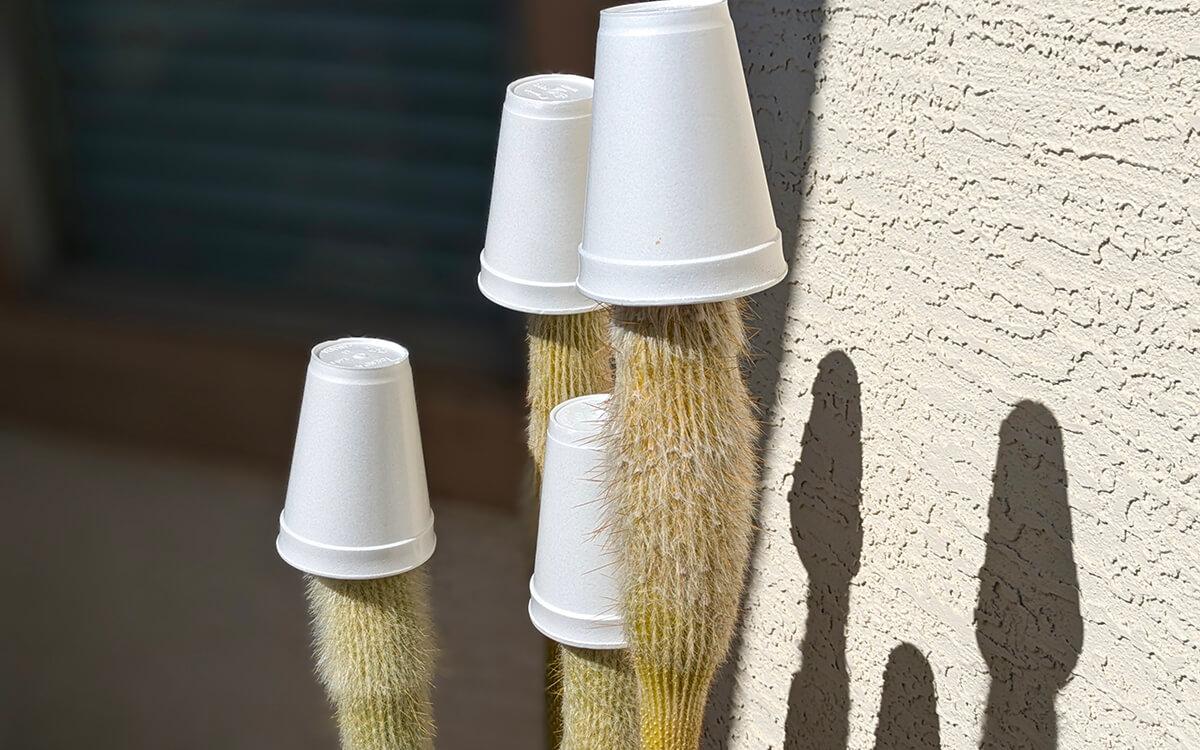
Placing a foam cup on top of a columnar cactus will prevent the tip(s) from getting frostbite. (Fig 4) Avoid using plastic cups, as they can freeze at the point of contact and damage the cactus.
A frost blanket effectively prevents frostbite, especially for globular or prickly pear cacti. (Fig 5) An old bed sheet or burlap is just as effective if you don't own a frost blanket.

Avoid watering a cactus before a freeze. Any water not absorbed by the soil or the cactus can freeze and damage the root structure.
Remove any covering from the cactus if the temperature is above freezing the next morning. In extreme cold conditions, you can leave the cactus covered for several days without harm.
What to do if a Cactus Suffers Frostbite
The weather forecaster totally dropped the ball, and now your poor cactus has been left out in the cold—literally! But before you panic and grab the pruning shears, take a deep breath. Your cactus might look like it's auditioning for a role in Frozen, but chances are, it can bounce back with a little TLC.
First things first: don’t rush to make a judgment call in haste. The true damage could take days, even weeks, to fully show itself. So, sit tight, play it cool (no pun intended), and give your spiky friend a fighting chance!
To prevent further frost damage, move your cactus (if it's potted) indoors or place it in a sheltered area. If your cactus is planted in the ground, cover it before the next frost.
Look for the following symptoms before subjecting your cactus to surgery:
- Black, brown, or yellow spots at the tips (areas of the cactus that were exposed to frost) of the cactus
- Look for any area that is mushy or soft to the touch
- Drooping or shriveling
If you notice any of the above symptoms after waiting several days or more, your cactus may have suffered frostbite and need some intervention.
Remove any mushy or discolored area of the cactus with a sharp (sterilized) knife or hacksaw. This will help prevent the rot from spreading to the rest of the cactus. When making a cut, make sure to begin the cut just below the affected area—you don't want to leave any rotting flesh behind. In a few weeks, the cactus will callous over any areas you have cut.
Avoid watering the cactus for a week or two to discourage further rot. During this time, watch for signs of new rot. If you notice new rot, promptly remove this section of the cactus.
Removing the area damaged by frostbite depends on the type of cactus.
- Columnar cactus: Cacti are among the easiest to treat. Remove the top portion of the cactus just below the black area. Examples of columnar cacti include the saguaro (Carnegiea gigantea), Mexican fence post (Pachycereus marginatus), and old man cactus (Cephalocereus senilis).
- Globular cactus: Carefully scrape away any signs of rot. In many cases, the cactus will heal itself. Examples include golden barrel (Echinocactus grusonii) and rebutia (Rebutia spp.).
- Flat-stemmed cactus: Examples include the tree-like prickly pear (Opuntia) or other similar types of varieties. Grab a knife or hacksaw and remove the entire damaged pad.
All cacti are incredibly resilient. If in doubt or you are unsure how best to remove damage caused by frostbite, give the cactus a chance to heal itself.
If you notice rot or mushy areas spreading, you should remove these sections before the rot consumes the entire cactus.

Ask Me! 
Need some expert guidance? Shoot me a message, and I'll provide actionable, free advice to solve your problem.
Message Me