
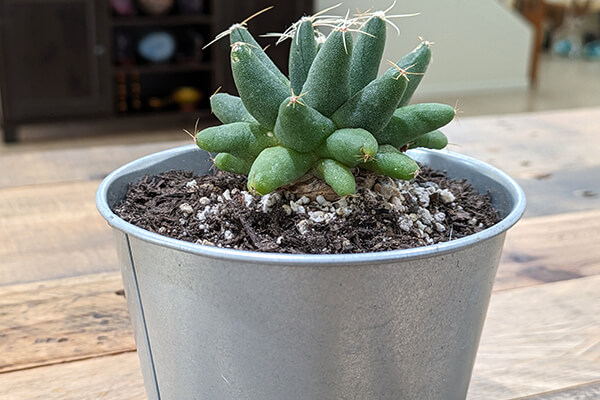
Caring for an indoor cactus involves very little effort. Learning how to care for an indoor cactus involves providing enough light and not overwatering.
Cacti, unlike traditional house plants, are very forgiving. If you forget to water a cactus, it's usually not a big deal. Many cacti, especially in winter, can survive weeks without water.
There are 1,750+ known species of cacti, native only to the Americas (with one exception). Most cacti are succulents. Cacti and succulents store water as a survival strategy to thrive in arid and desert environments where water is scarce. In your home, a cactus needs no more water than it would receive in a natural desert environment.
Cacti have specialized tissues called parenchyma cells that can expand and contract to accommodate water storage. The water is stored in these tissues during periods of rainfall or when water is available, and the cactus can then use these stored reserves during dry spells.
Parenchyma cells serve as storage reservoirs for water. These cells can accumulate water when it's available and release it as needed to adjacent cells or tissues.
By storing water, cacti can continue carrying out essential physiological processes such as photosynthesis and growth even when external water sources are limited. Additionally, the reduced surface area of cacti compared to other plants helps minimize water loss through transpiration.
Cacti and succulents are among the most popular houseplants for these reasons. They tend to be inexpensive, easy to care for, and live for many years.
I've already mentioned the importance of watering and sunlight; however, there's one additional factor to be aware of. Choosing the correct soil for your cactus is vitally important.
Choose a Good Cactus Soil
Depending upon whom you ask, you'll likely get (a lot of) different answers. Once you start looking, you'll quickly discover a wide variety of soils available for cacti. As the popularity of cacti increases, so does the selection of cactus soil.
To simplify things, the best soil for an indoor cactus is a mix that allows excess water to flow away from the roots. Soil that retains too much moisture will suffocate a cactus and cause the roots to rot.
Look for soil designed explicitly for cactus. There are some differences between soil designed for cacti and succulents. Soil designed for succulents tends to retain more moisture. A good cactus soil contains organic and inorganic materials, including pumice, sand, and perlite.
Perlite is (white) volcanic glass formed when obsidian comes into contact with water. Because it has low water retention and helps prevent soil from becoming compact, it works well when added to soil designed for cactus.
I use Miracle-Gro Cactus, Palm, and Citrus Soil for most of my cacti. This product is available at most retailers, including Home Depot and Lowes. An 8-quart bag costs about $7 and contains sand, perlite, and forest products.
I also use Kellogg Garden Organics 137 Pal and Cactus Mix. Typically, I only use this product when planting outdoors. A 1-cu ft. bag is $7.47 at Home Depot. It contains pumice and sand but no perlite.
Many other cactus and succulent soil options are available online and from retailers such as Tractor Supply and Ace Hardware. Amazon, for example, has an extensive assortment of soil formulated especially for cactus.
An Etsy seller (nursery), Cactus Limon, from which I have purchased cactus, adds perlite to commercially available cactus soil. Amazon sells an 8-quart bag of perlite for $16.95.
A nursery in Apache Junction, AZ, where I purchased an olive tree, recommends soil by Tanks Green Stuff, a Tucson-based maker of organic compost soils and fertilizers.
How to Care for an Indoor Cactus—5 Easy to Grow Cacti
Learning how to care for an indoor cactus can be an enjoyable experience. Over time, you'll grow accustomed to the subtle changes a cactus undergoes and be able to spot a problem before it becomes an issue.
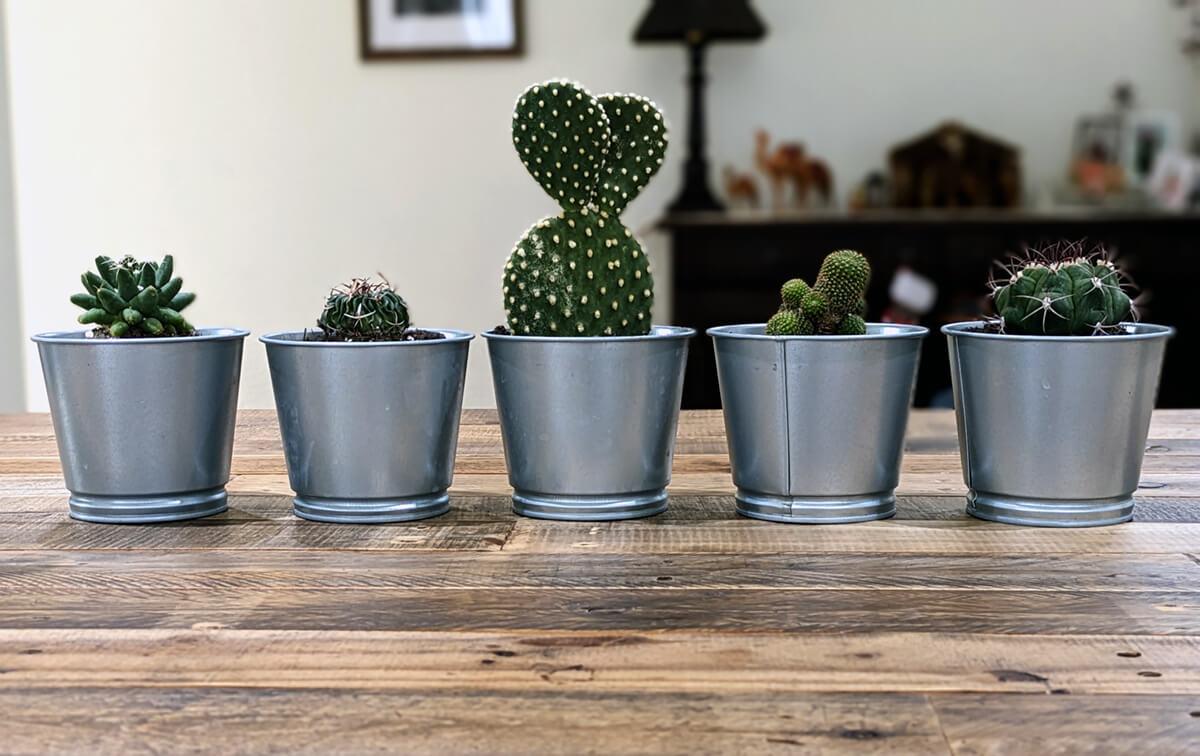
I've picked five of my favorite indoor cacti to highlight below. Each cactus is less than $10 and is an excellent choice, especially if you're new to growing cacti.
Rebutia Perplexa
Native to Bolivia and Argentina, Rebutia perplexa (Fig 1) forms a small, compact collection of globose stems. These cacti are known for their vibrant flowers and are popular among collectors and enthusiasts. Rebutia species typically have globular or cylindrical stems and produce vibrant flowers in the spring from the plant's apex.
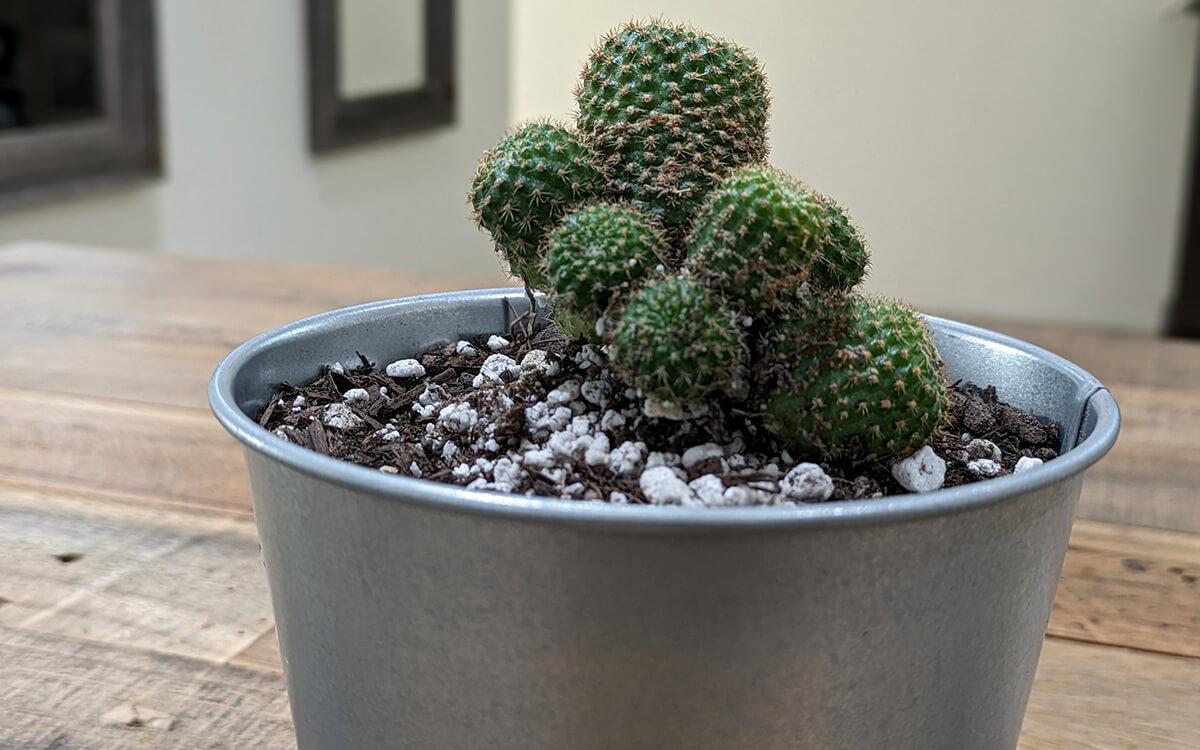
Rebutia perplexa is characterized by its globular or slightly elongated stems, which have prominent tubercles arranged in spiral or irregular patterns. From these tubercles emerge clusters of spines, which can vary in color from white to yellow or reddish-brown, depending on the individual plant and its growing conditions.
Easy to grow, Rebutia perplexa (Fig 2) is a relatively slow-growing cactus. It will produce a mound or clump several inches in height as it matures.
Because of the extreme temperatures here in Arizona, I keep this cactus indoors except during the winter months. Because it is a species of cactus grown in the mountains, it does not tolerate high temperatures.
Between December and March, this cactus lives outdoors on a covered patio. It is protected from any possible frost and receives a little direct sunlight.
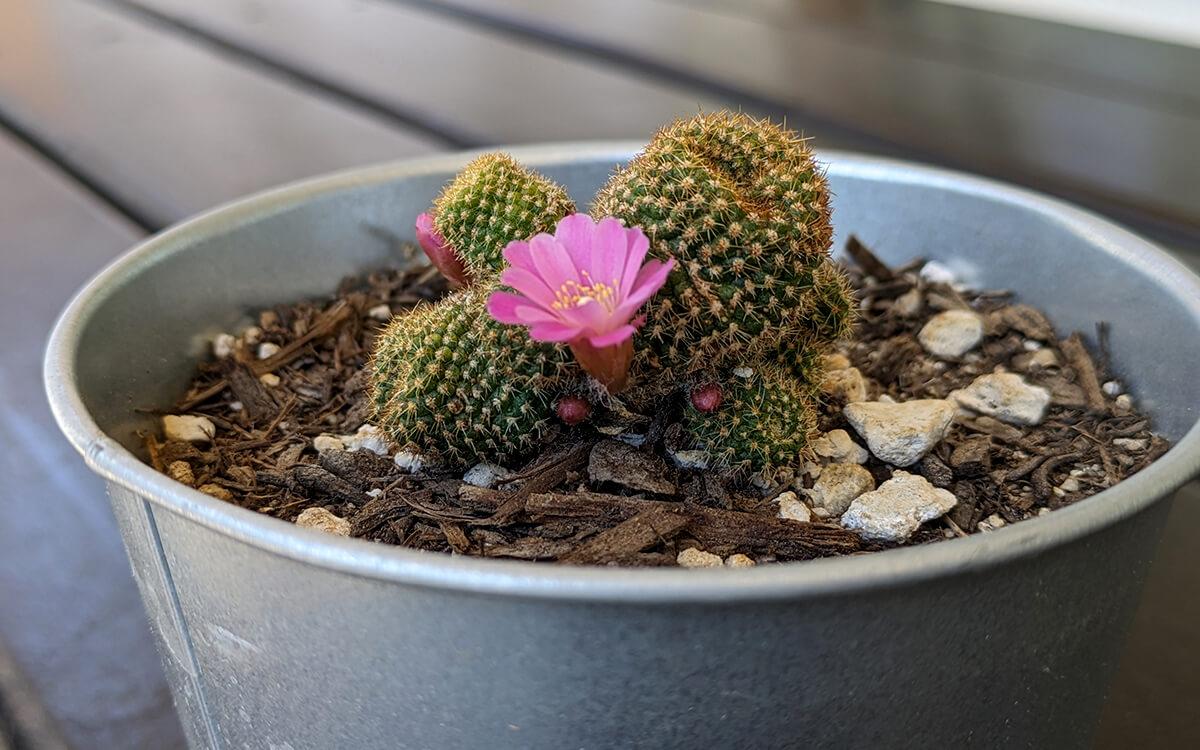
Rebutia perplexa does best indoors with bright, indirect light. Like most cacti, let the soil dry out between waterings. I typically water this cactus a few times per month.
Mammillaria Malaleuca
Native to central México, Mammillaria melaleuca (Fig 3) is a low-growing cactus that can develop clusters that form large mounds as it matures.
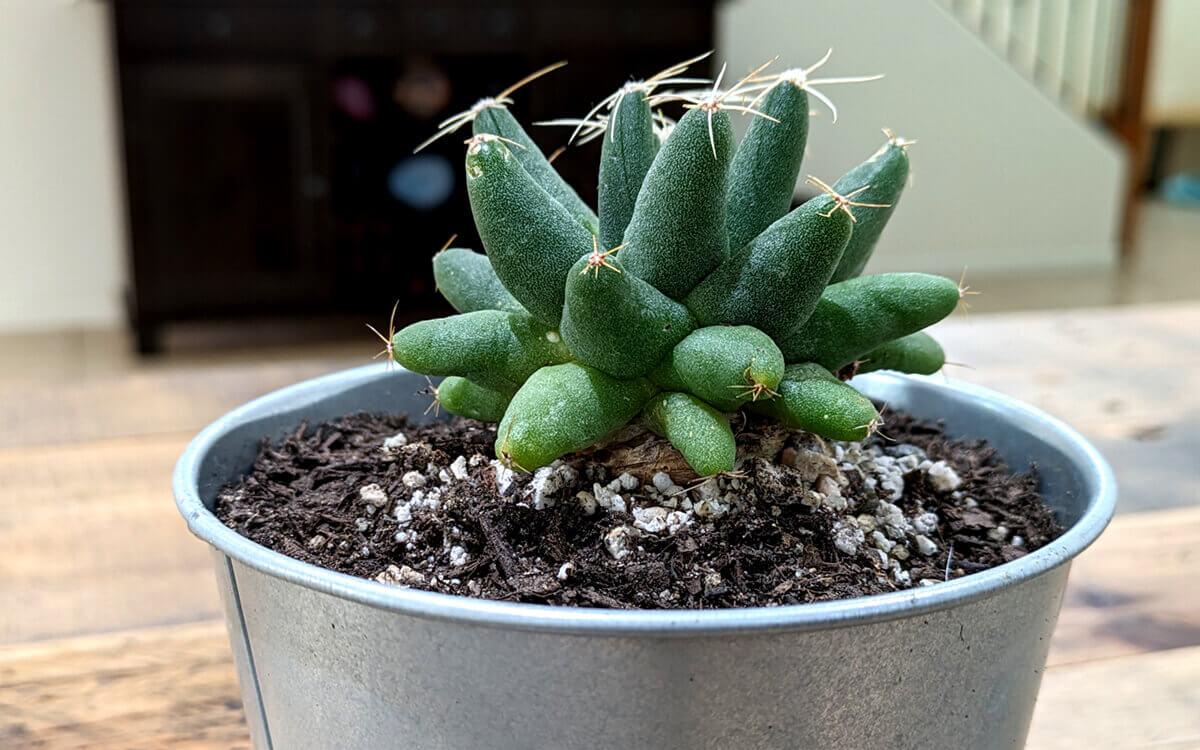
One of the distinguishing features is its dark green to bluish-green stem color, which can sometimes have a purplish hue. The stems are covered in tubercles, which are small, rounded projections that give the plant a textured appearance.
From these tubercles, spines emerge, which can vary in color from white to yellowish-brown and are usually relatively short compared to some other species of Mammillaria.
Indoors, it requires plenty of light. Placing this cactus in a window with a southern exposure is best.
Mammillaria melaleuca is slow-growing, like the other cacti mentioned here (except the bunny ear cactus). It requires a soil mix that allows excess water to flow away from the roots.
If you live in a hot climate, do not leave Mammillaria melaleuca outdoors in direct sunlight. Doing so will kill the cactus very quickly!
A mature specimen will grow to about 4 inches tall. In the spring, it can produce large bell-shaped flowers ranging from white to pinkish or yellowish. The flowers typically emerge from the top of the plant and are followed by the development of small, spherical fruits.
Gymnocalycium Planfzii
Gymnocalycium pflanzii (Fig 4) is a small cactus that grows up to 4 inches tall. It is native to the regions of Paraguay, Argentina, and Bolivia.
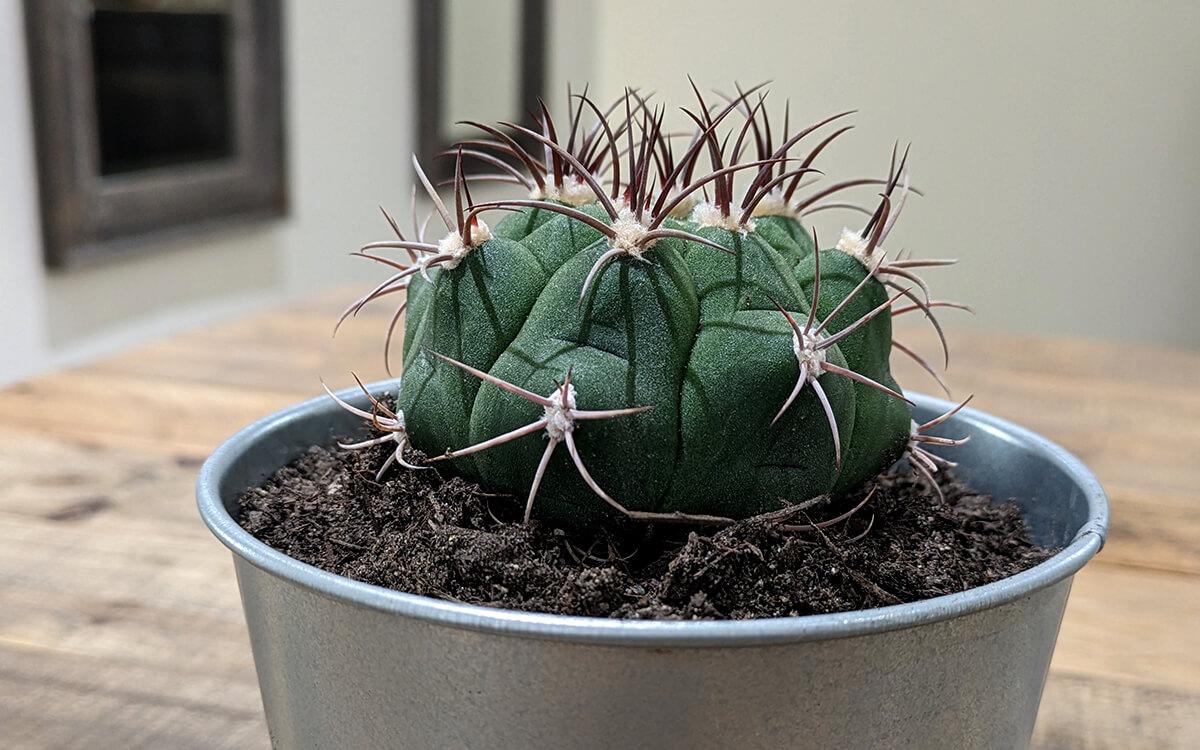
Like most cacti, it prefers lots of sun but will do okay if your home does not receive direct sunlight. In the wild, it is common to grow in shaded areas. However, insufficient sunlight may prevent the cactus from flowering, and too much direct sunlight can leave scorch marks (discoloration).
Water this cactus infrequently during the winter months and once weekly during the summer. As with all the cacti mentioned in this article, overwatering is the surest way to kill them.
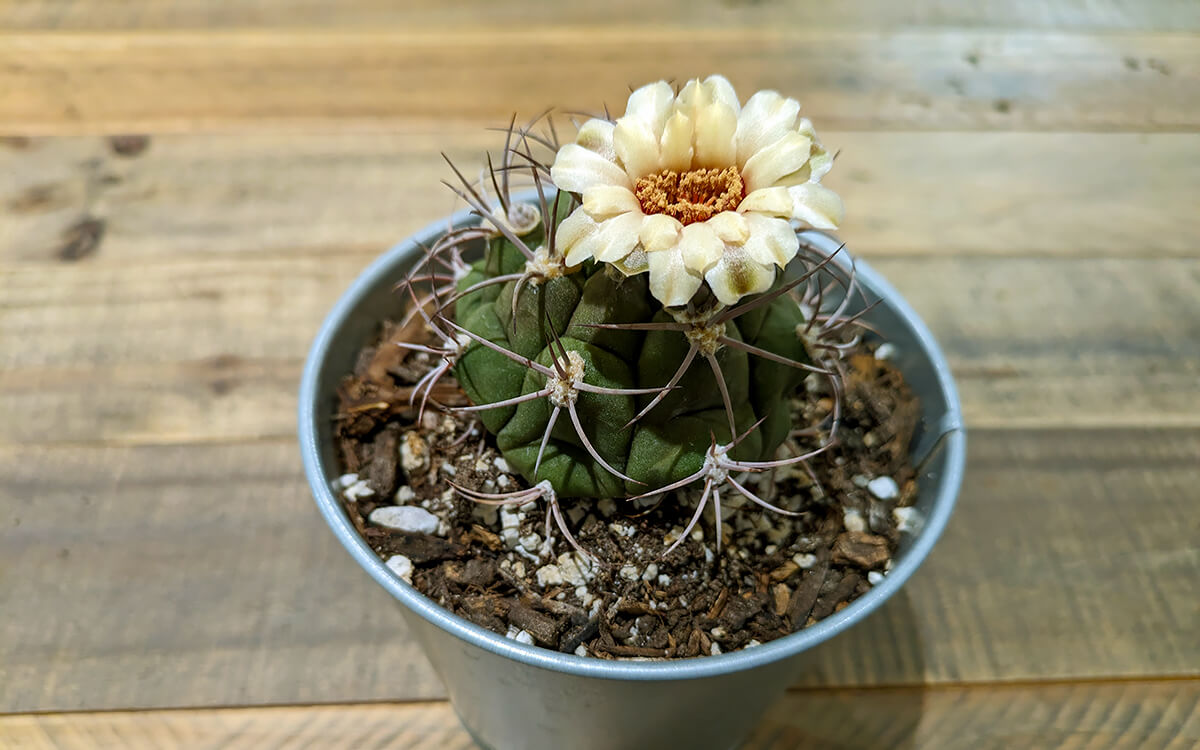
Gymnocalycium pflanzii can grow up to 4 inches in height and about 6 inches in diameter. In the spring and summer, it will produce a few waxy, yellow flowers that remain open (partially closed at night) for about a week. (Fig 5)
Echinofossulocactus
Native to México, Echinofossulocactus (Fig. 6), also known as brain cactus, unlike Rebutia perplexa, tolerates high temperatures and temperatures as low as 40 degrees. The deep furrows collect morning dew and funnel water to the roots in the wild.
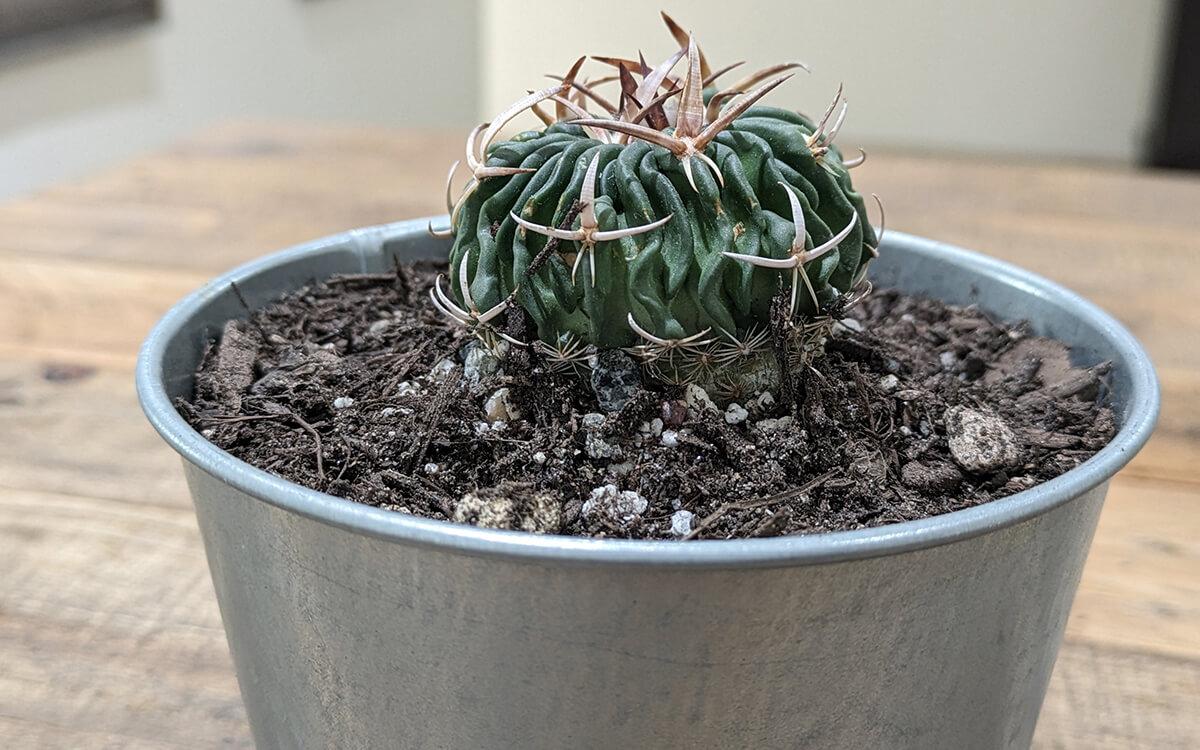
This cactus prefers full sun and warm temperatures. I water it once weekly during summer and less frequently during winter. Some growers recommend avoiding watering it during the winter months.
In the spring, it may produce small white flowers from the center of the spines. When flowering is complete, the spines will close and remain closed until flowering occurs again. (Fig 7)
When mature, Echinofossulocactus may reach a height of up to 4.5 inches.
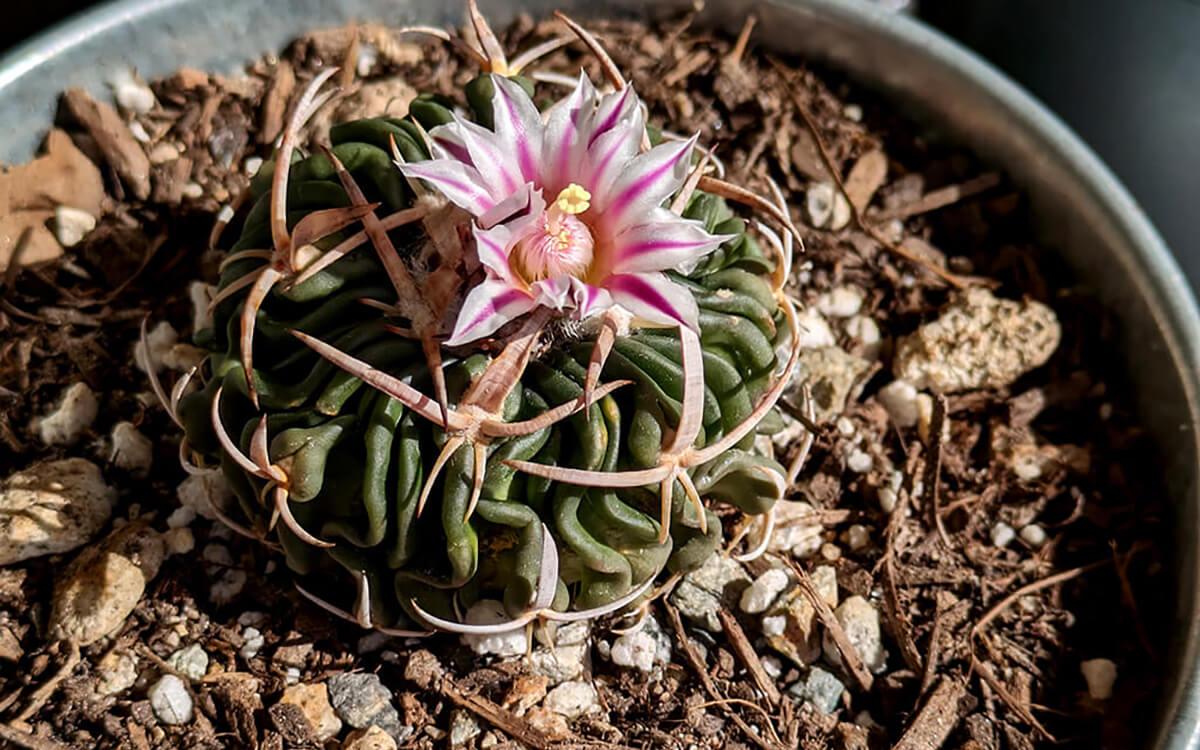
Echinofossulocactus will produce small (pinkish-white flowers with yellow stamens) from the top of the cactus in the spring. The photo above was taken on January 28, not exactly spring. The flower will close in the evening and reopen each morning for several days.
It is a very slow-growing cactus, eventually reaching about 5 inches in height.
Bunny Ear (Opuntia microdasys)
The bunny ear cactus (Fig 8) is native to most areas of México. It can also be found in Phoenix and Tucson, Arizona, Southern California, and El Paso, Texas.
The bunny ear cactus grows best outdoors in direct sunlight. However, if you live where temperatures drop too low or prefer to grow it indoors, it is an option, provided it receives direct southern exposure.
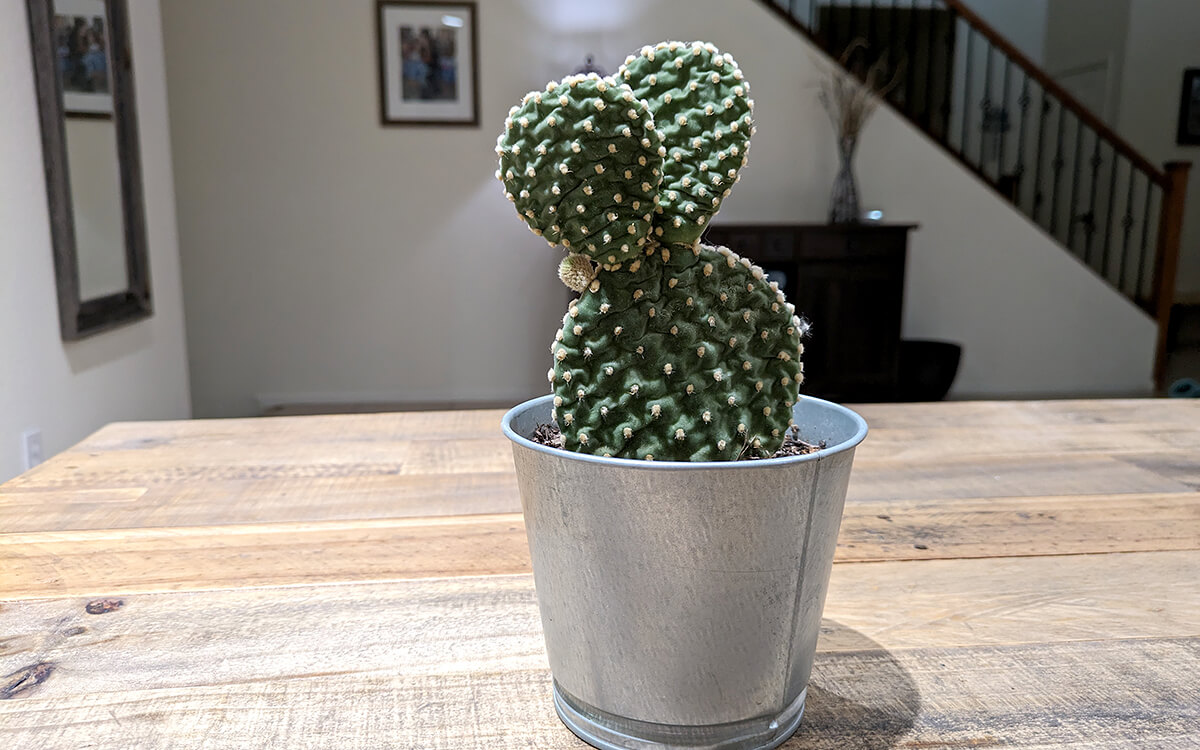
The bunny ear cactus is very easy to grow. It's tolerant of dry conditions and less susceptible to root rot than other cacti.
In April, the bunny ear produces beautiful, paper-like, yellow flowers that only open for one day. I have not seen it flower when planted indoors, but that doesn't mean it won't.
Grown indoors, the bunny ear cactus will not grow at the same rate as when planted outdoors, but will grow faster than any of the other cacti mentioned here. The bunny ear cactus is also very easy to propagate.
Where to Buy a Cactus to Grow Indoors
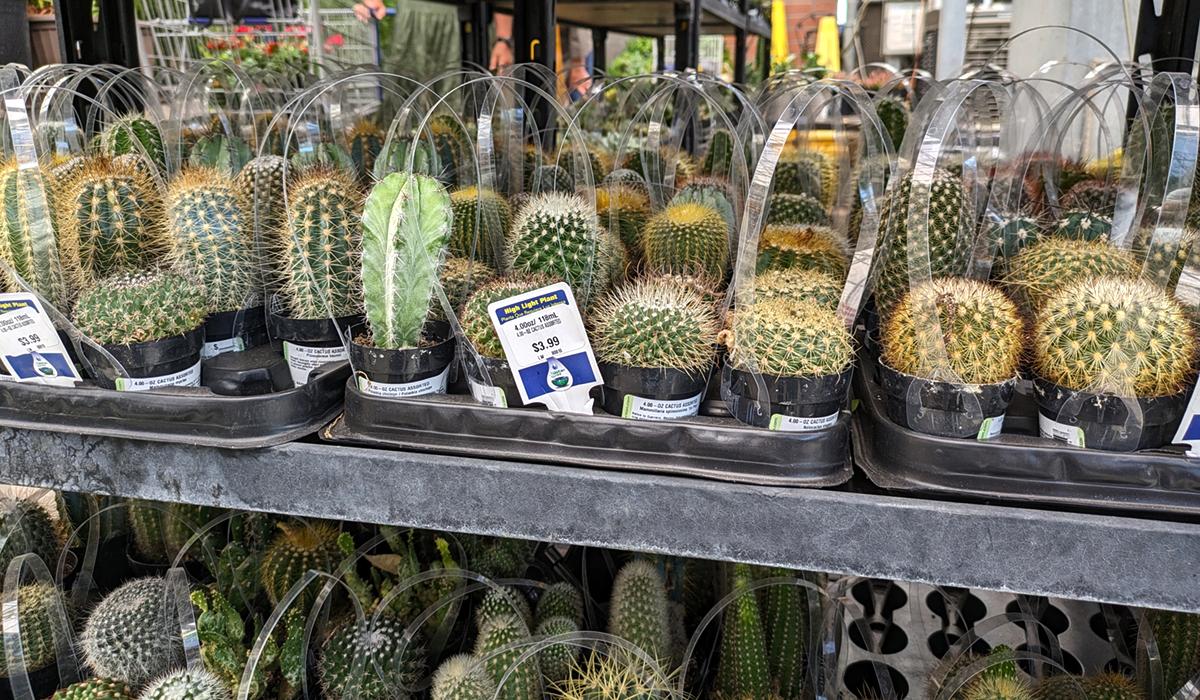
Lowes (Fig. 9) or Home Depot has decent cacti selections if you want something less exotic. Typically, the cacti that will grow best indoors are kept on a shelved cart close to the entrance. Most of these will do fine indoors, depending on the light requirements.
The cacti highlighted here were purchased from Cactus Limon (except the bunny ear cactus, which was propagated from a cutting), an Etsy shop popular for cacti and succulents. I understand if you've never purchased a live plant online; it seems odd.
Over the last several years, I've purchased numerous plants from Etsy sellers, and I've had good luck except for several Mexican feather grass plants. In hindsight, this may have partially been my fault for placing an order during the height of the summer.
There is a local cactus grower named Arizona Cactus Growers in my neighborhood. Jason, the owner, sells cacti through his Etsy store and ships throughout the United States. However, it's important to note that not all cacti available for sale are suitable for indoor growth.

Ask Me! 
Need some expert guidance? Shoot me a message, and I'll provide actionable, free advice to solve your problem.
Message Me