
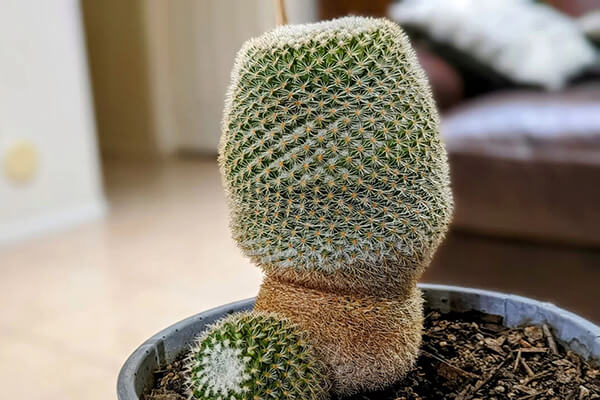
Cactus etiolation is a condition in which a cactus grows abnormally due to insufficient light. When a cactus doesn't receive enough sunlight, it stretches out and becomes elongated in search of more light. This results in a thin, pale, or weak appearance compared to a healthy cactus, which would typically grow more compact and with vibrant colors.
Chloroplasts found within plant cells are green because of the presence of chlorophyll. Chlorophyll absorbs red and blue light and reflects the green wavelengths which are detected by our eyes.
An easy way to tell if a cactus needs more light is to examine the new growth compared to the growth before you purchased the cactus. If the new growth is thinner or elongated, it's probably experiencing cactus etiolation.
Another biological condition quite noticeable in cactus etiolation is an unnatural shape or bending. Many times, the stem resembles the letter S. (Fig 1) Some cacti even begin to grow (or permanently bend) toward the nearest window. Outdoors etiolation is less common but does occur when, for example, a potted cactus is left in the shade for too long.

Bending or legginess is a phenomenon known as etiolation. Cactus etiolation occurs because the cactus lacks sunlight (blue light). It doesn't just occur in cacti; it can happen in any species of plant.
It's common to see etiolation in potted seedlings sitting on a window sill. The leggy stems of the seedings will bend towards the window in an attempt to gain additional sunlight.
When a plant does not receive enough light, it has difficulty performing photosynthesis. This won't cause a cactus to bend strangely, but it can make it appear pale.
Photosynthesis occurs when chlorophyll (the green pigment) converts carbon dioxide to oxygen and glucose. Glucose (carbohydrates) is the fuel (the plant making its food) that allows a plant to grow. If you notice your cactus looks pale in color, it may be due to the difficulty of performing photosynthesis. Without light, photosynthesis cannot take place.
How to Prevent Cactus Etiolation
Several years ago, I purchased a silver torch cactus (Cleistocactus strausii) from Lowes. Rather than planting the cactus outdoors, I planted it in a large terracotta pot in mi casa. Several months later, I noticed a strange bend in the columns (stems) of the new growth (Fig: 2).
The columns were growing with a distinct bend, reaching out towards the windows on the other side of the room. I eventually decided to transplant it outdoors.

The Silver Torch cactus, native to the mountainous regions in Bolivia and Argentina, requires full sun to partial shade. Because it needs a lot of light, it's probably not the best cactus to be grown indoors unless your house receives a lot of direct sunlight (southern exposure).
The cactus in the above photograph has been planted outdoors for a few years. Once outdoors, the etiolation stopped. The new growth is entirely linear and has the correct thickness. Unfortunately, the growth affected by etiolation will not regrow normally. Etiolation is permanent and cannot be reversed.
Transplanting a cactus outdoors isn't an option for those living in areas with cold winters. However, you can move your cactus to a place that receives the most sunlight in your home. During the summer months, move the cactus outdoors. Because most cacti are dormant during the winter, moving the cactus back indoors at the end of summer won't greatly affect its growth.
How to Mitigate Previous Cactus Etiolation Damage
Cactus etiolation is permanent; however, you can do a few things to alleviate its effects and prevent further etiolation.
Assuming you have corrected the issue with insufficient lighting, you can cut off the etiolated parts of the cactus using scissors or a sharp knife. Don't worry about hurting the cactus. Any section you cut will heal itself within a few weeks. Like a scab on your skin, the cactus will develop a hard, callous scab on any section you remove.
A callus prevents water stored inside the cactus from evaporating through the injured area. In addition, the callused area prevents animals such as tortoises and birds from eating the soft inner flesh. It also prevents insects or diseases from penetrating the plant.
This cactus pictured below is an area of my home that receives plenty of indirect light but no direct sunlight. In the past, I have removed some of the etiolated portions to keep the cactus from falling over. This method works great for cacti with branches (Fig 3).
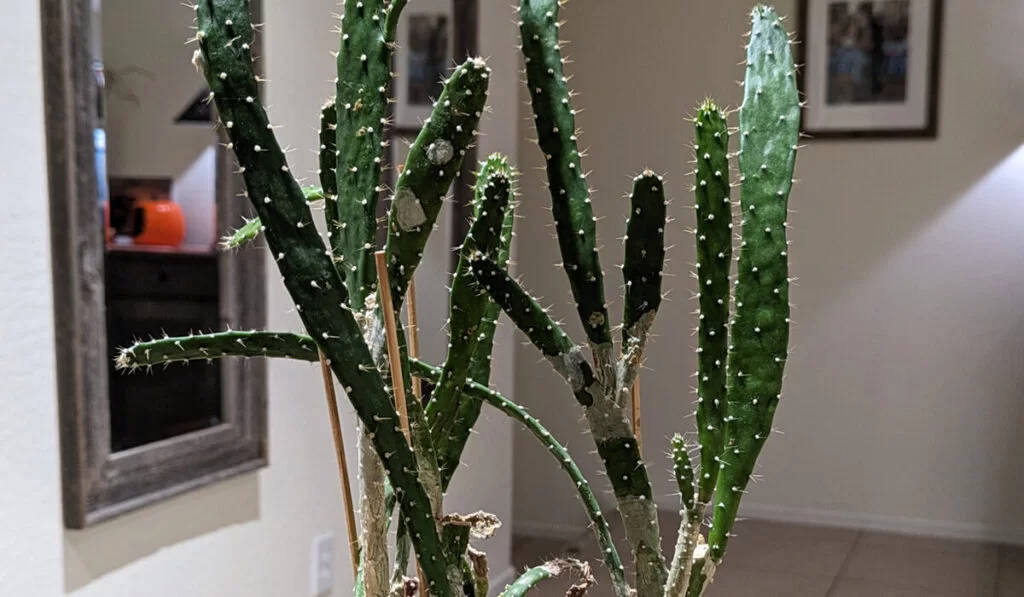
This cactus above is an area of my home that receives plenty of indirect light but no direct sunlight. In the past, I have removed some of the etiolated portions to keep the cactus from falling over. This method works great for cacti with branches.
If etiolation occurs in a globular cactus, you won't be able to remove the etiolated portion. Instead, when the cactus produces offsets, carefully remove these and start a new plant.
Cacti described as globular have ball-shaped stems and tend to be shorter. Several ball-shaped stems may form to create a cluster. A columnar cactus consists of stems with no clear delineation between the branches and the main column.
If you move the cactus outdoors or to an area of your home with direct sunlight, growth beyond the etiolated portion will return to normal.
The cacti in the photos below are a species of miniature cacti I bought at Lowes (Fig 4). Instead of planting outside, I placed both cacti on a window sill with southern exposure. Depending upon the time of year, they got some direct sunlight but not enough.
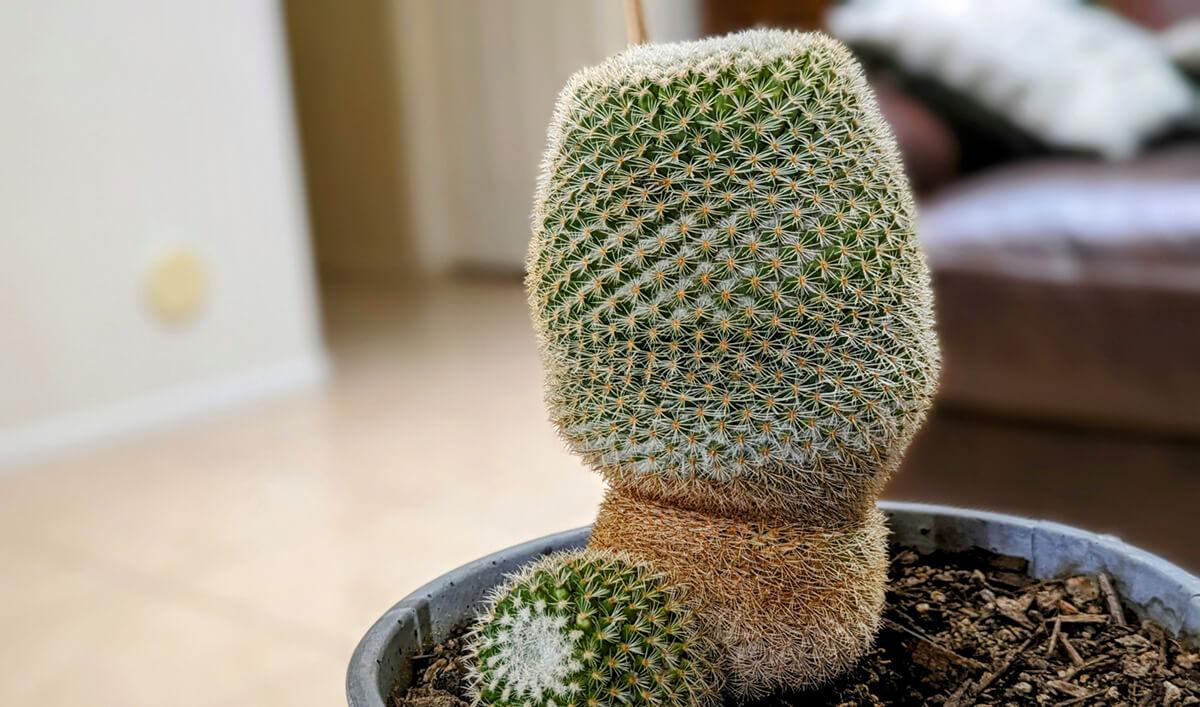
Both specimens began to display signs of etiolation within a few months. Because both consist of a singular globular stem, the stem appears thinner and has an odd bend. Both stems also exhibit cactus corking, a phenomenon in which a cactus develops a bark-like covering as it matures.

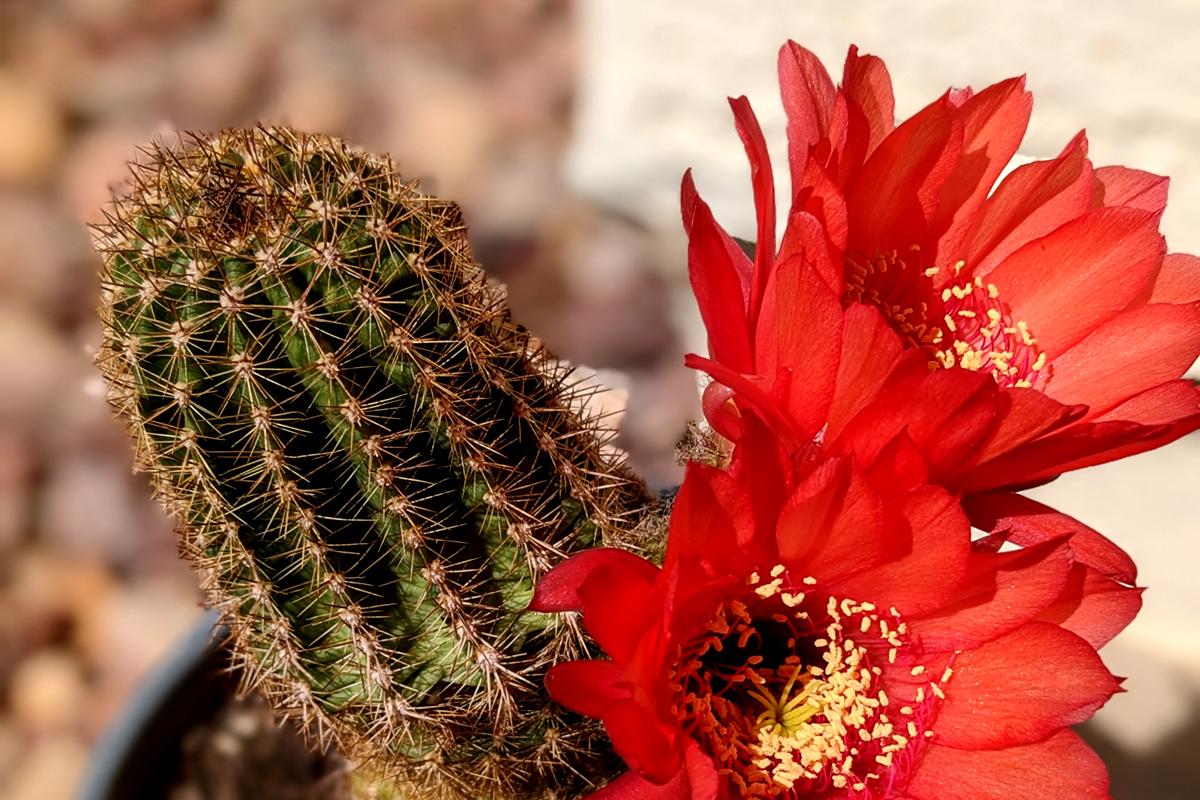
In the spring, I moved one of the cacti outdoors to increase the amount of direct sunlight (Fig 5).
Choose a Cactus (or Succulent) that Doesn't Need Direct Sunlight
If your home doesn't have windows that receive direct sunlight or have no interest in using grow lights, purchase a cactus or succulent that will do okay with less light.
The Christmas cactus (Schlumbergera) does quite well in a bright room with indirect light. Native to eastern Brazil, Schlumbergera is a genus of cacti with several species which grow in the mountains along the coast. In Brazil, the cactus is called Flor de Maio (May flower.)
Because Brazil is located in the southern hemisphere, the seasons are reversed. May represents the end of fall and the beginning of winter. When grown in the northern hemisphere, the Christmas cactus begins to bloom during December, which is winter in Brazil (May).
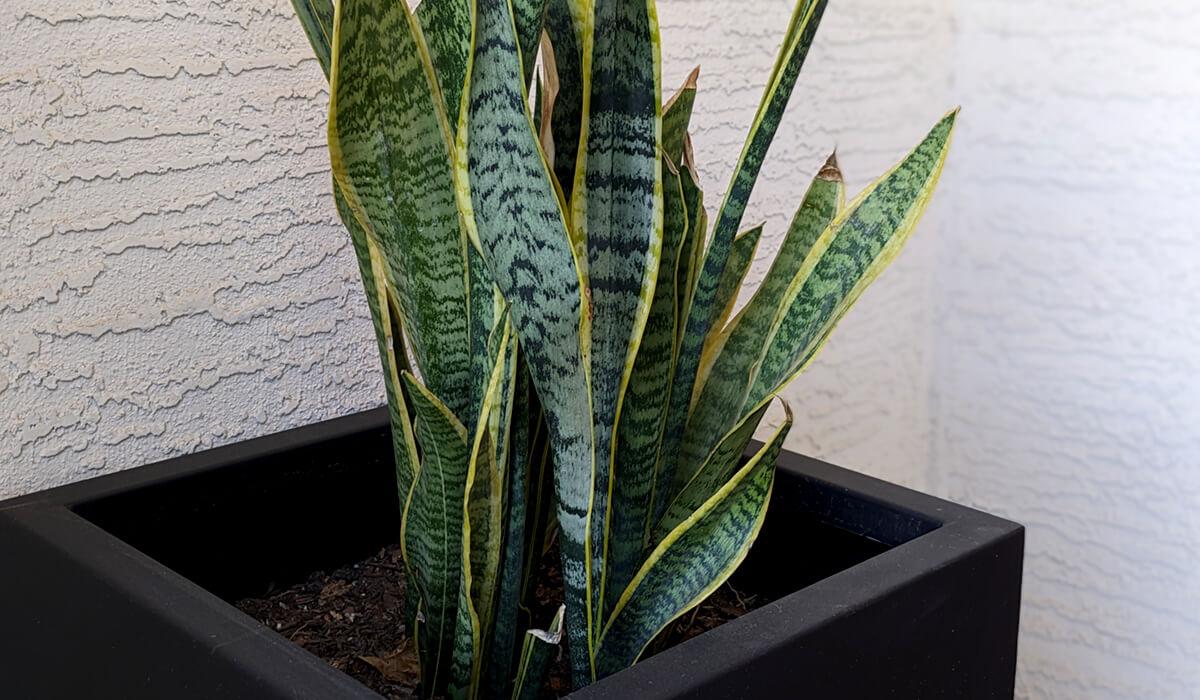
Considered a succulent, the snake plant (Sansevieria trifasciata) tolerates low light levels and requires little water. It does well indoors. If you live in a warm climate, it can survive outdoors, provided it receives shade, and the temperature does not drop below 50 degrees Fahrenheit for extended periods.
Recently, here in the Phoenix area, we experienced a few nights in which the temperatures dropped to 32 degrees for short periods. The snake plant (Fig 6) pictured below has not been affected by freezing temperatures. I assume this is because it is inside an entryway, which offers some protection.
The aloe vera (Aloe barbadensis) plant is another succulent that grows well planted indoors (Fig 7). It can also do quite well outdoors, provided you live in an area with mild winters. Native to the Arabian Peninsula, it grows wild in tropical and semi-tropical climates.
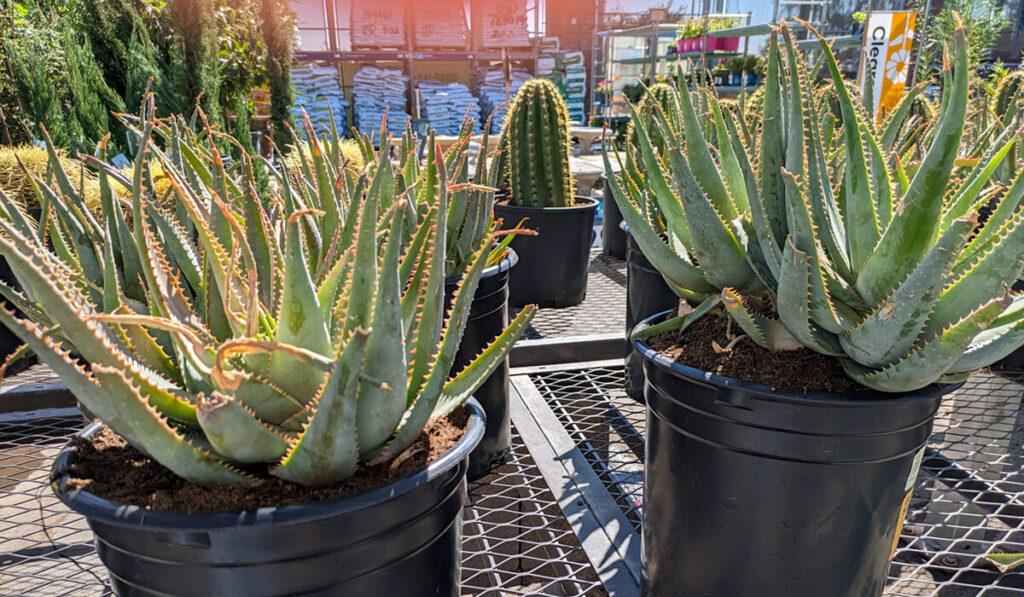
The aloe plant does best with bright, indirect sunlight. Outdoors, the plant will die if it receives direct sunlight (for extended portions of the day) in areas of the country that experience extreme temperatures.
One of the more popular succulents, the jade plant (Crassula ovata), requires bright, indirect sunlight. It is easy to grow, requires very little water, and does well in most home environments.
The jade plant can be planted outdoors if you live in Hardiness Zones 10-11 (Hawaii and parts of CA, AZ, FL).
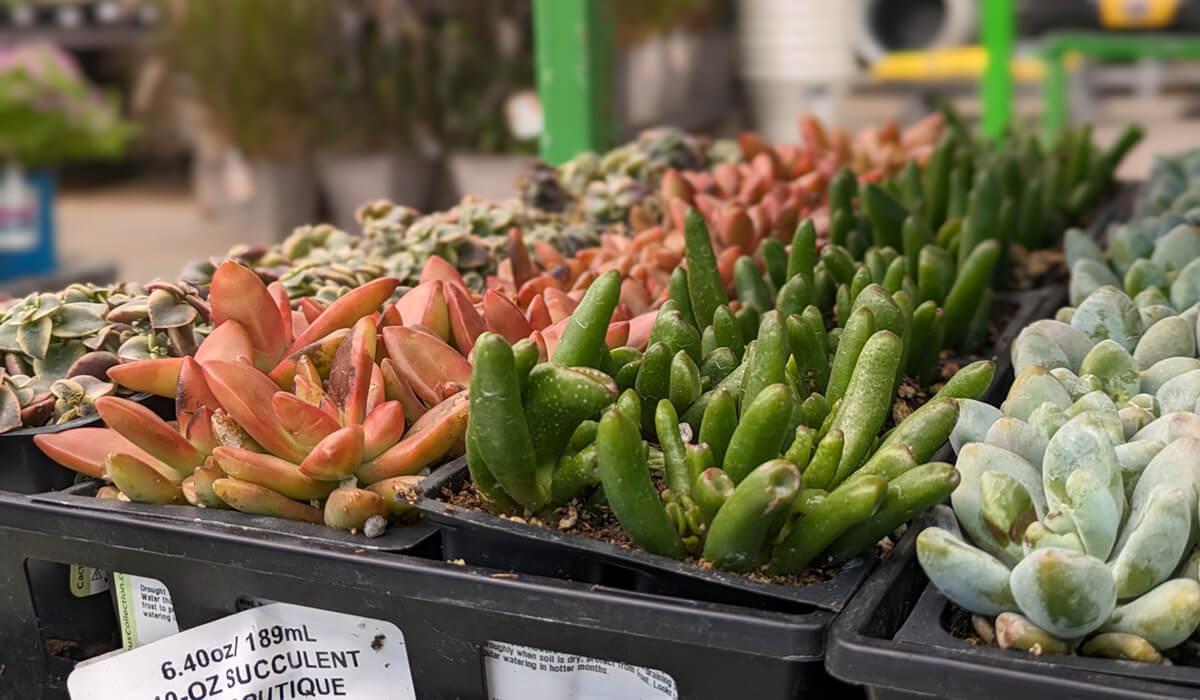
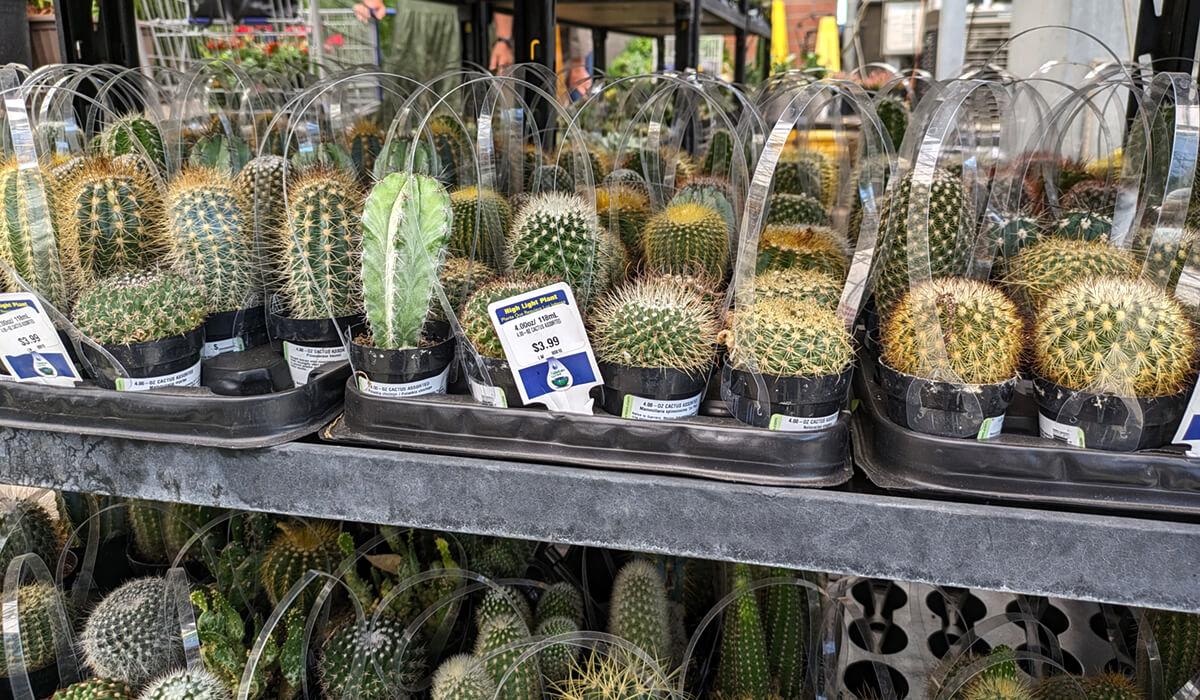
If you're new to growing cacti, Home Depot and Lowes (garden centers) have a great selection of small cacti and succulents (Fig 8 and 9). Typically, the cacti and succulents cost less than $5. It's an inexpensive way to test out your green thumb.
If you are ready to plant something a little more unusual, check out Arizona Cactus Grower, a seller of exotic cacti a few miles from my home. (Fig 10) If you can't locate a particular cactus at a store near you, Arizona Cactus Grower also owns a highly-rated Etsy shop. Most of the cacti listed for sale are shipped "bare root."
Plants shipped "bare root" contain no soil around the roots. Typically, the roots are wrapped in moistened newspaper. This method saves shipping costs because the weight of soil and a pot is eliminated, and it actually helps a plant acclimate quicker to a new environment.
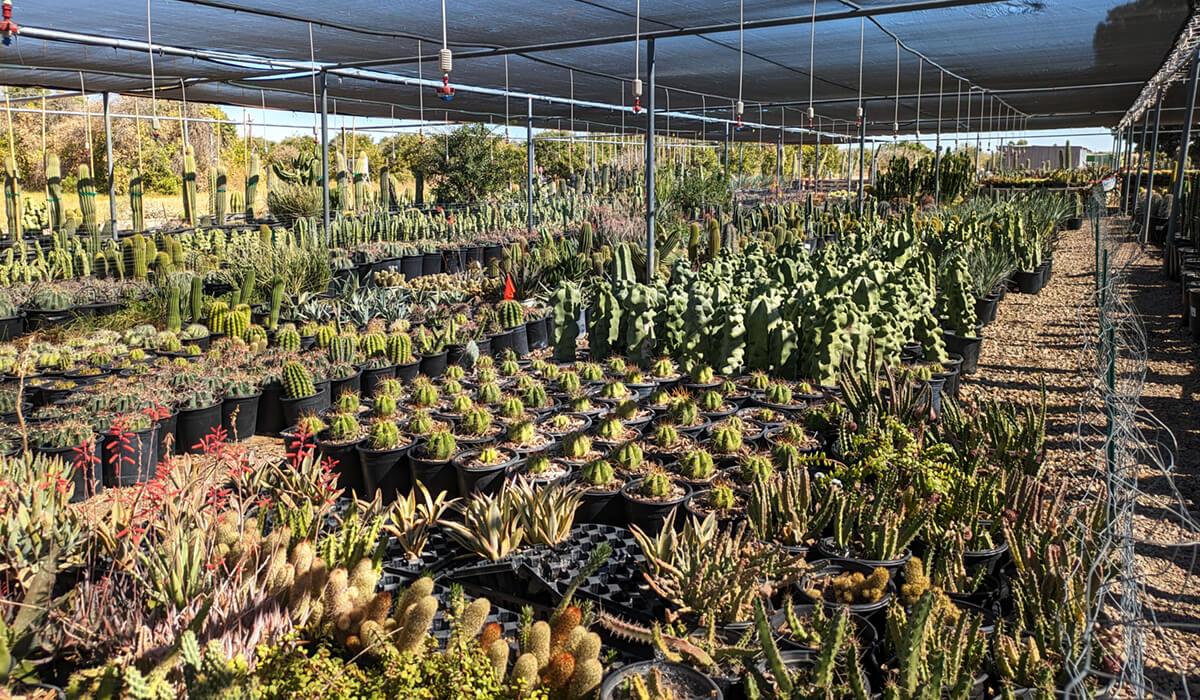
I recently visited the Arizona Cactus Growers' physical store and had the chance to meet the owner, Jason. The store is down a dusty dirt road adjacent to a citrus orchard on property previously used by Arizona State University for research.
Jason is exceptionally knowledgeable about the various cactus species he has for sale. He gladly answered all my questions and even showed me a homemade brochure (he carries around in his hand) illustrating how a particular cactus would look when it matures.
I purchased a beautiful Mexican fencepost cactus (Lophocereus marginatus) for $30.
How Plants Sense Light Wavelengths
Plants use photoreceptors, such as cryptochromes (Cry) and phytochromes (Phy), to sense different wavelengths of light and regulate etiolation.
Blue light activates Cry1 and Cry2, promoting de-etiolation, while far-red light regulates PhyB, influencing cell elongation and differentiation. The integration of these light signals enables plants to optimize their growth and development in response to changing light environments.
Cryptochromes (Cry)
- Cry1 and Cry2 are blue light-sensitive photoreceptors involved in de-etiolation, promoting seedling growth and development.
- Activated by blue light, Cry1 inhibits the COP1-SPA1 E3 ubiquitin ligase, leading to the accumulation of HY5 and CO transcription factors, which promote de-etiolation and flowering.
- Cry2 interacts with CRY-INTERACTING bHLH (CIB) proteins, regulating photoperiodic control of flowering.
Phytochromes (Phy)
- Phytochrome B (PhyB) is involved in far-red light perception, which plays a crucial role in regulating etiolation.
- PhyB senses the ratio of red to far-red light, converting to its active form (Pfr) in response to red light and inactivating in response to far-red light.
- The Pfr form of PhyB promotes de-etiolation by activating genes involved in cell elongation and differentiation.
- In low-light conditions, the preponderance of far-red light converts PhyB to its inactive form (Pr), slowing growth and promoting etiolation.
De-etiolation is a biochemical process by which a plant reacts to blue light after a period of insufficient light. This process, also known as greening, is aided by the ability of a plant to synthesize chlorophyll by converting pale etioplasts into green chloroplasts (green pigment chlorophyll), which gives them their characteristic color and enables them to capture light energy from the sun.
Additional Resources
NIH: Distinct Responses to Light in Plants
RHS: How Plants Sense and Respond to the Environment
NIH: The Hormonal Regulation of De-etiolation

Ask Me! 
Need some expert guidance? Shoot me a message, and I'll provide actionable, free advice to solve your problem.
Message Me