
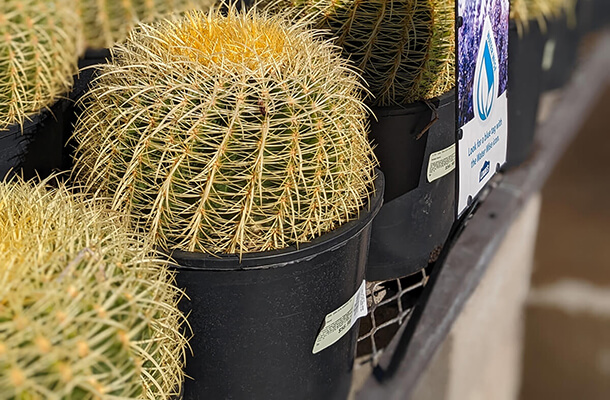
Where is the best place to buy outdoor desert plants? That depends on your budget, proximity to your home, and the value you place on quality versus price.
In Surprise, AZ, where I live, I have several options. There are the usual big box home improvement stores, including Lowes and Home Depot. There's also a regional chain of nursery stores named Moon Valley Nursery. Moon Valley offers the most extensive selection and the best quality. Unfortunately, they also have the highest prices.
My choice for the best place to buy outdoor desert plants is Lowes. The garden center at Home Depot isn't as nice as Lowes. Lowes seems to place a higher value on its garden center.
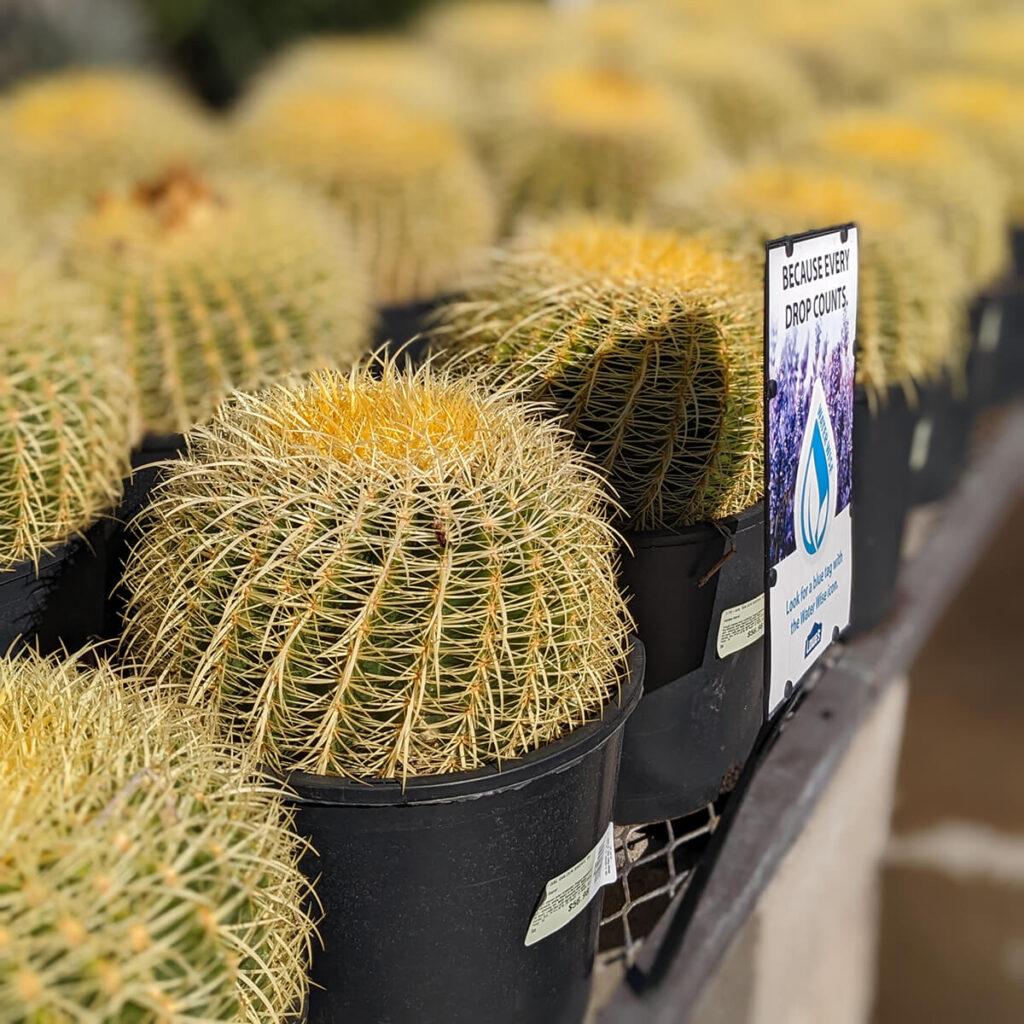
I'd always opt for a local nursery if money is no concern. The plants they sell are grown in Arizona and well adjusted to the harsh environment. But because I buy a lot of plants, I can only sometimes afford the prices at Moon Valley Nursery.
Lowes and Home Depot buy plants from growers throughout the country. And herein lies the problem. A queen palm grown in Florida will not survive in Arizona. The sun in Arizona is very intense. Combine the sun's intensity with temperatures exceeding 120 degrees and very low humidity, and it's easy to see why this is an issue.
Queen palms are not trees because they lack secondary growth and wood. They are a type of large, woody herb native to Brazil. Bananas and bamboo are close relatives of the palm tree.
A few years ago, I purchased five queen palms from Lowes. After the first summer, 4 of the five palms died. The palm frons turned an unsightly brown, and the tree stopped growing, only to eventually die.
The palm that survived looked different from the other four. I noticed this when I made the purchase. It was a much darker green. This palm may have been grown at a local nursery instead of in Florida.
After wasting $200+, I wondered why Lowes and Home Depot sell plants that are not bred for this region of Arizona. At the end of summer, it's commonplace to see customers toting dead queen palms to the customer service counter. Lowes offers a one-year guarantee on plants, trees, and shrubs. I wasn't about to return 4 (8-foot) dead trees to the store. Lesson learned!
I noticed something at Lowes and Home Depot that I had not noted previously. Most of the garden section has a canopy of black plastic shade cloth above the plants. This material has an SPF rating similar to sunscreen. The smaller the holes, the greater the protection from the sun.

I noticed the entire selection of queen palms was neatly tucked underneath this canopy. Remove the canopy, and the palms will burn and die. This is the exact scenario that occurs when you plant the palm in your yard.
What About Other Types of Plants?
From my experience, queen palms aren't the only plants that will suffer from the desert sun and heat. I can't begin to calculate the amount of money I wasted on plants that died. If I had to guess, $1,500-$2,000 is an accurate guess.
One of the exceptions I've found is cacti. Cacti thrive in the desert heat, but they are not immune. I've lost several barrel cacti. As the summer progresses, you'll notice the thorns clumping together in a tight bunch. It's almost as if the cactus is attempting to block the sun. This is usually due to insufficient watering, but not always. Some plants are stronger than others.
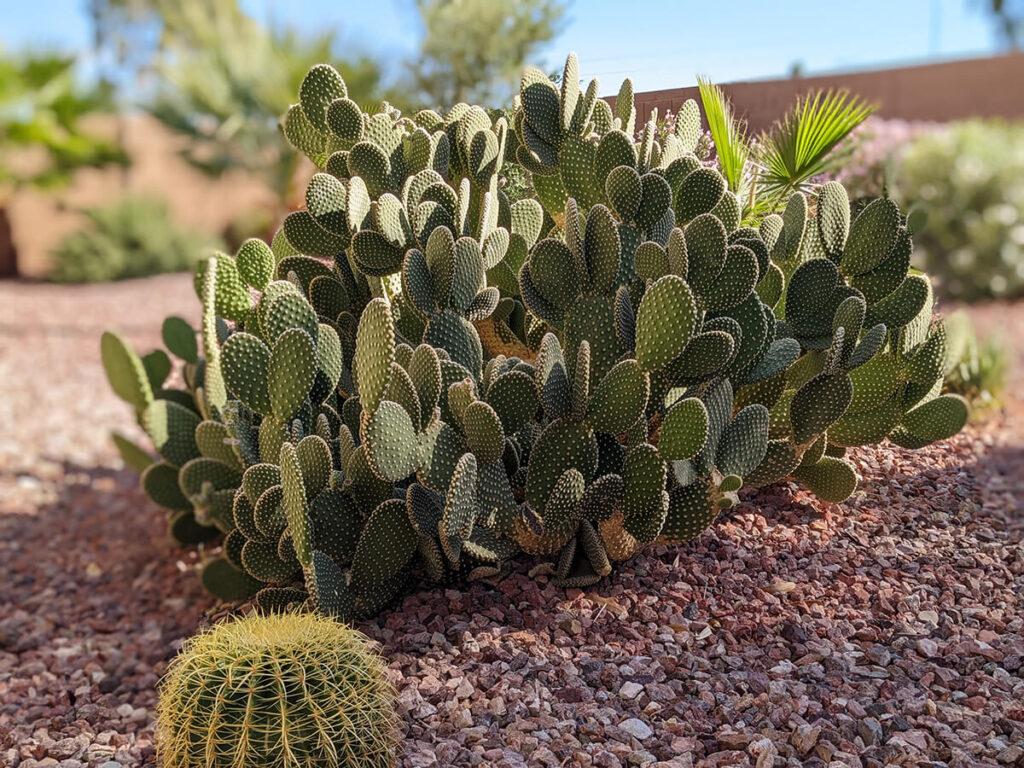
Oleander, a beautiful plant common to the Mediterranean region, does very well in Arizona. Oleanders are almost impossible to kill. If you plant them in direct sunlight, they will struggle for the first few summers.

I purchased several variants of boxwood, none of which made it through the summer.
I also planted several varieties of ornamental grasses, none of which survived.
Any succulent will most likely not survive more than a few months. The only exception I've found is the aloe plant, which does quite well, given plenty of shade.
Sago palms, native to southern Japan, cannot handle the hot desert sun. The leaves will brown, and the plant will go dormant. Because sago palms grow very slowly, if the plant "shuts down" for the summer, you'll miss out on a year's growth. I have two sago palms, which I have managed to keep healthy by covering them with Agfabric shade cloth. I cover the plants when the temperature consistently hits 100 degrees in early May. They remain covered until mid-September.
In the photo below, the brown tips on the leaves are from previous years of too much sun.

Fig trees, even those bred in Arizona, do horribly. I purchased a fig tree from a boutique nursery in downtown Phoenix. The tree had a tag stating that it was grown in Tucson, AZ—big mistake. Tucson is not Phoenix! Even though Tucson is further south by about 120 miles, Tucson rarely sees the extreme temperatures commonplace in Phoenix.
After an initial crop of figs in late spring, that was it. The several hundred figs that grew on the tree in early summer shriveled up and died. The fig tree leaves browned and turned to the consistency of burnt newsprint, no matter how much water I provided. Perhaps it would have done okay in an area with more shade. However, I don't have any shaded areas on my property large enough for a fig tree.
Plants that Thrive in the Desert
One evening, I decided to walk through the neighborhood to see if I could spot plants that seemed to thrive in the summer heat.
I am originally from a suburb about 20 minutes north of Baltimore. Walking through your new neighborhood and seeing tropical plants in people's yards takes a little time to get used to. Palm trees and cacti are typically only seen when you vacation somewhere warm.
One of the plants I discovered is the Mexican fan palm. The fan palm does amazingly well while not immune to the sun and heat. I purchased several of these from Lowes, all of which are doing great. Interestingly, these palms were not under the canopy of Agfabric shade cloth.
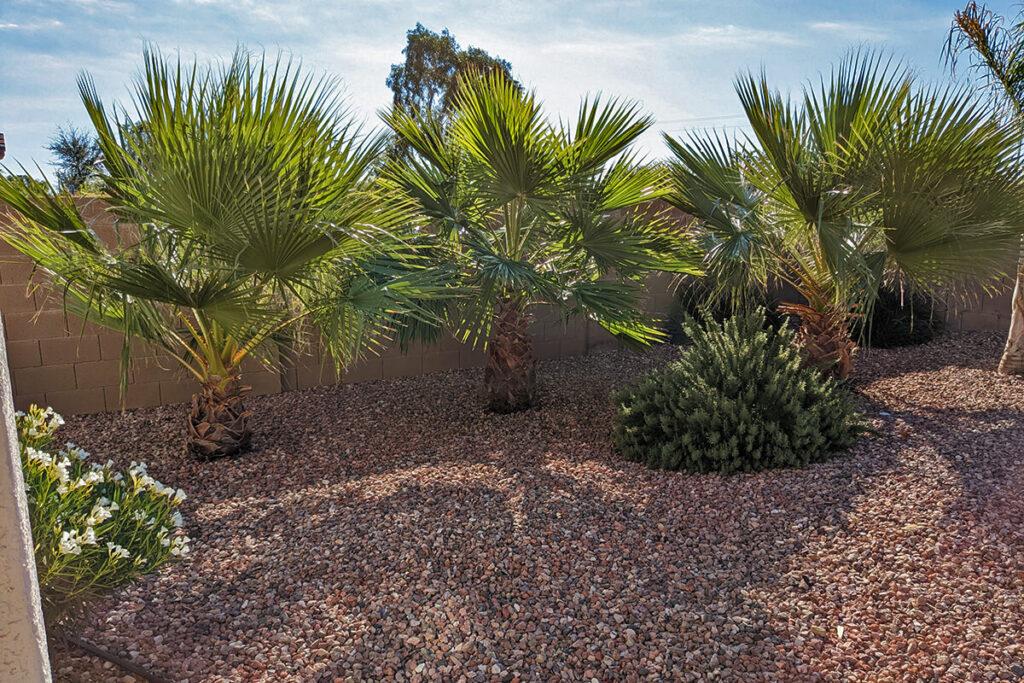
I purchased a 12-foot fan Mexican fan palm from Moon Valley for about $800 (including planting). I was disappointed that an agave snout-nosed weevil decimated a giant agave I owned, and I wanted to fill the void left by the deceased agave. That was my justification for spending $800.
Olive trees are the hardiest plants for the Phoenix area's climate. They require very little water and seem immune to even the hottest days.
Fruit-bearing olive trees are illegal to plant in Maricopa County. Why? Because they produce an immense amount of pollen in the spring. Many years ago, areas throughout Phoenix planted thousands of olive trees. Besides being beautiful, they require very little water.
It wasn't until years later that the large amount of pollen produced became recognized as a detriment to people with allergies. In 1986, the planting of fruit-bearing olive trees was banned.
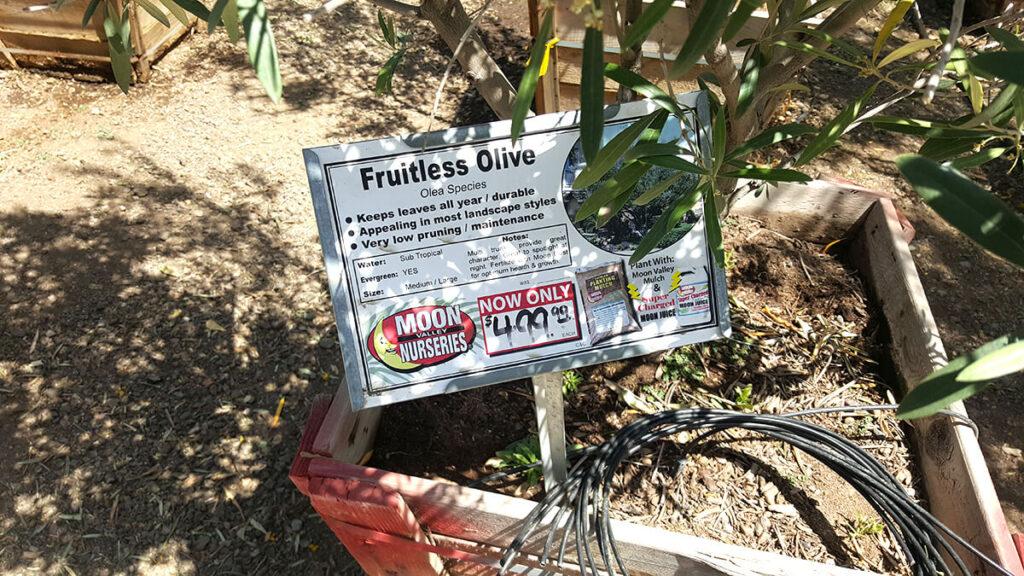
You can purchase "fruitless" olive trees at Lowes or Home Depot at a much lower price than a nursery. They look the same as fruit-bearing trees. Fruitless olive trees will even flower in the spring but won't produce fruit.
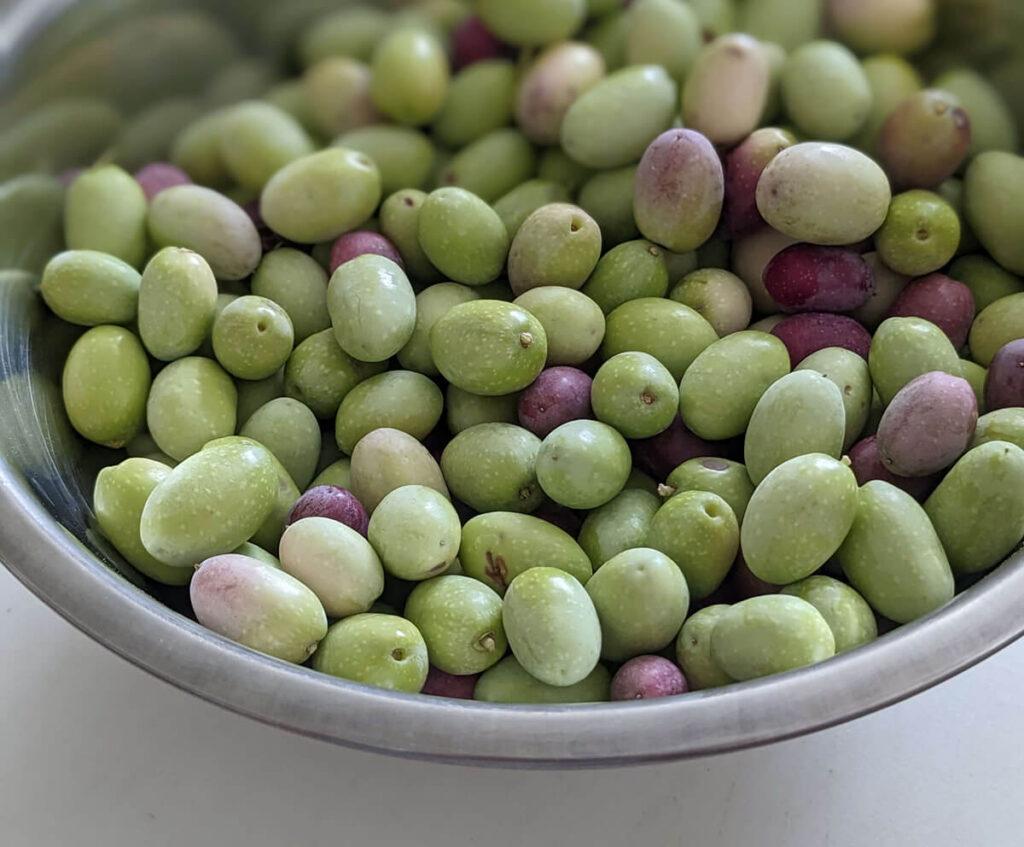
I have three olive trees. Two "fruitless" and one fruit-bearing (Oleo Europaea). I managed to get the fruit-bearing tree from a small nursery in Apache Junction, AZ. This fall, I got my first small harvest of olives.
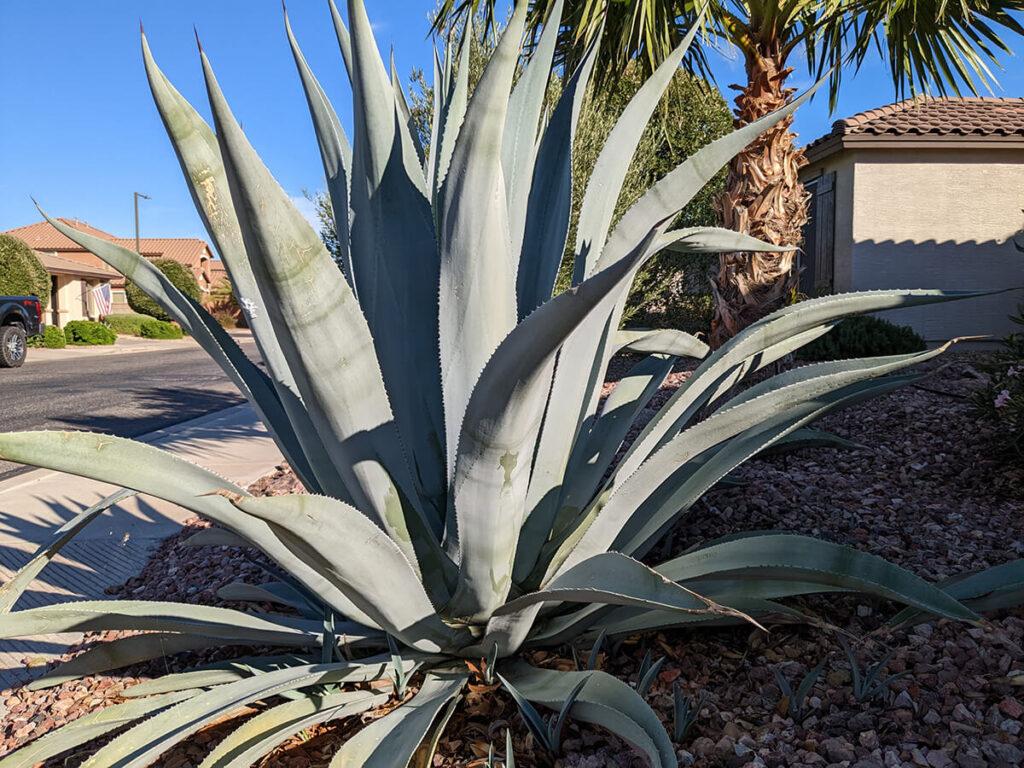
My favorite plant besides the Mexican fan palm is the blue agave. The agave does exceptionally well in the desert climate. It requires very little water and has almost no upkeep. They can be purchased for as little as $25 and grow quickly.
The only downside to the agave (a big one) is the nasty agave snout-nosed weevil, which kills these plants. The weevil pierces the agave's core, where it lays its eggs. Grubs that hatch from the eggs devour the heart of the agave, aided by a microorganism that rots the flesh of the agave.
Where to Get Advice
When I have questions about a particular type of plant, I go to a local nursery. In my case, Moon Valley Nursery. The folks who work there really know their stuff. If money burns a hole in my pocket, I'll buy from Moon Valley. Otherwise, I'll drive a few miles to Lowes and make a purchase based on the expert advice I received.
I also follow a small, Arizona-based nursery on Facebook. This is the same nursery from which I purchased the fruit-bearing olive tree. The proprietor of this nursery posts a lot of helpful information on the plants she has available, including many exotic species, such as banana, mango, jackfruit, and pineapple.
Another option I use quite often is the ASU (Arizona State University). Before considering purchasing a particular plant, I consult this resource to check its viability for growing in Phoenix.
Because the Phoenix area has many microclimates, plants that do well in Queen Creek (a southern suburb of Phoenix) may not survive in Cave Creek (north of Phoenix), which, because of the higher elevation, does experience freezes.
If you're not afraid to experiment with a little trial and error, do what I did when I first moved to Arizona: buy a few plants and try your luck. Keep in mind, avoid planting anything between May and October. The summer is brutal, and anything new you plant in the ground will struggle to survive. I was told this numerous times when I first moved to Arizona. In hindsight, it's advice I wish I would have taken seriously.
I recently discovered a local cactus grower in Surprise, Arizona. Even if you don't live in Arizona, you can still purchase much of what Arizona Cactus Growers offers at their Etsy store.
I visited their nursery a few weeks ago and was impressed by the selection and the knowledge of the owner, Jason. Jason is highly passionate about cacti, which shows in the specimens he offers for sale.

Ask Me! 
Need some expert guidance? Shoot me a message, and I'll provide actionable, free advice to solve your problem.
Message Me