
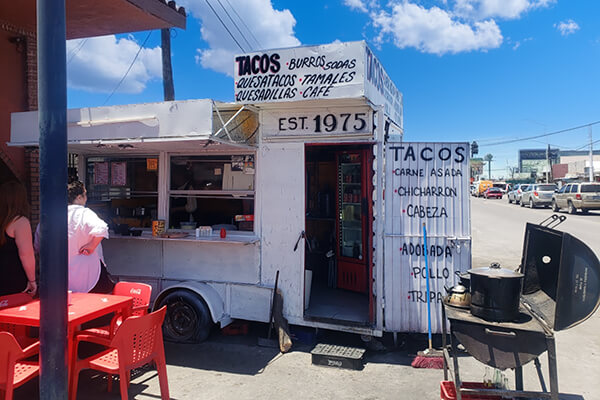
Finding authentic tacos on the road to Puerto Peñasco might seem unlikely, especially in the small, overlooked town of Sonoyta, México. Arizona residents driving to Puerto Peñasco are familiar with Sonoyta because it's the first town you enter after passing through Lukeville, Arizona, and into México. For many, Sonoyta is just a quick blur in the rearview mirror.
Conversely, if you're heading back to the United States, Sonoyta is the last Mexican town before the Lukeville border crossing. (Fig 1)
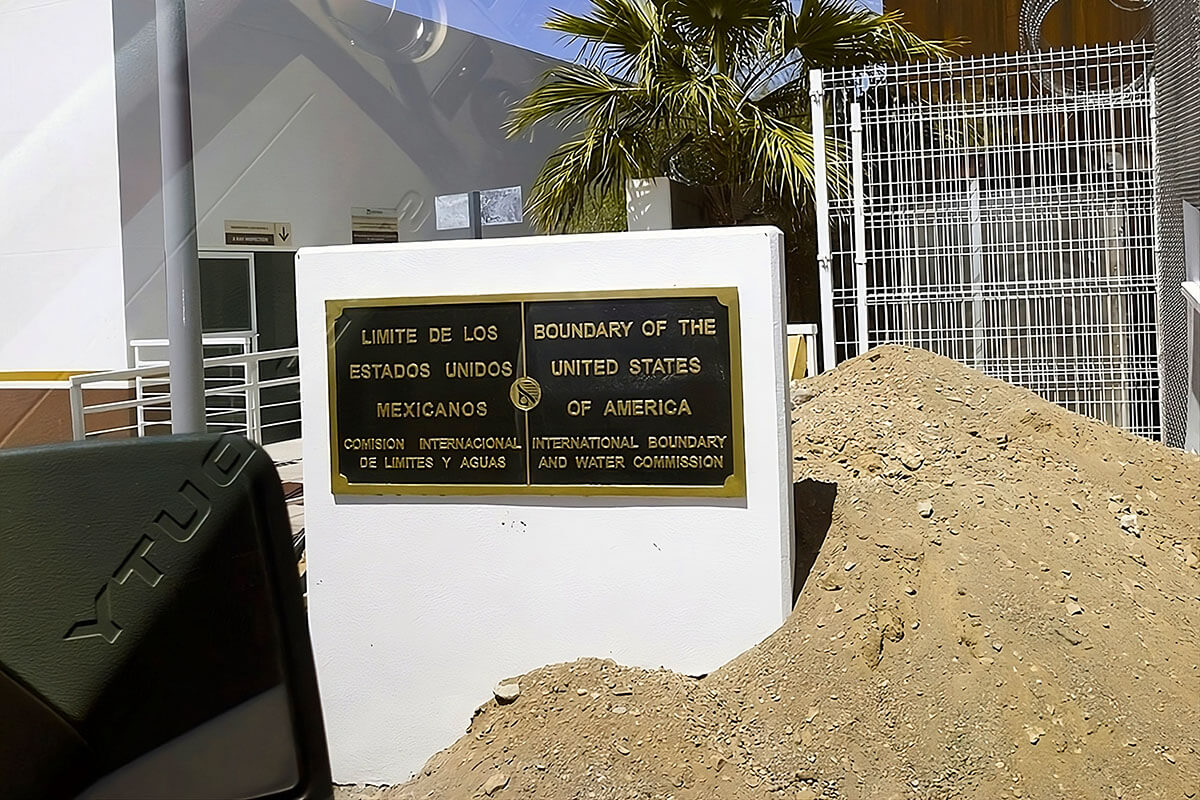
But Sonoyta has a story if you’re willing to stop and listen. It’s a town where time seems to have forgotten. It’s undeniably poor, and options for residents and road-weary travelers alike are scarce, but there's an authenticity that’s hard to ignore. There's something gritty and genuine about the place, a resoluteness I’ve come to appreciate. Sonoyta is everything the U.S. is not, and that's why I love the town.
On a recent return trip from Puerto Peñasco, a friend suggested we grab a bite before heading back across the border. After an hour on the pothole-riddled Hwy 8 and nursing a Don Julio hangover, I was desperate for something to settle my stomach.
After a weekend of consuming nothing but tacos, I had my fill, but my friend insisted we stop at a taco stand a short distance from the border. I was skeptical when we pulled up to a modest stand just a few blocks from the border crossing. (Fig 2)
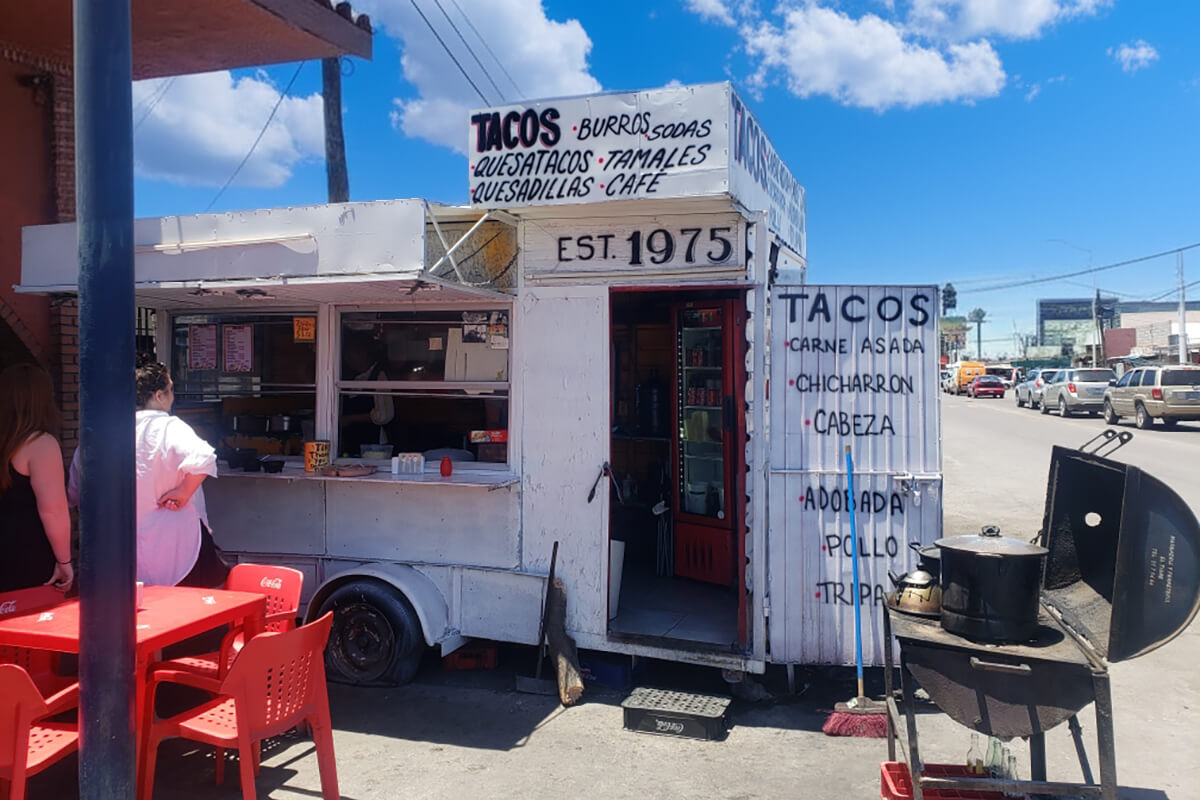
La Carreta, Taquería
The taco stand, named La Carreta, which translates to "the cart" in English, probably looks no different from when it was founded in 1975. But don't let its outward appearance fool you! As I exited our truck, the powerful aroma of mesquite-grilled steak, mixed with diesel fumes, wafted through the thick desert air.
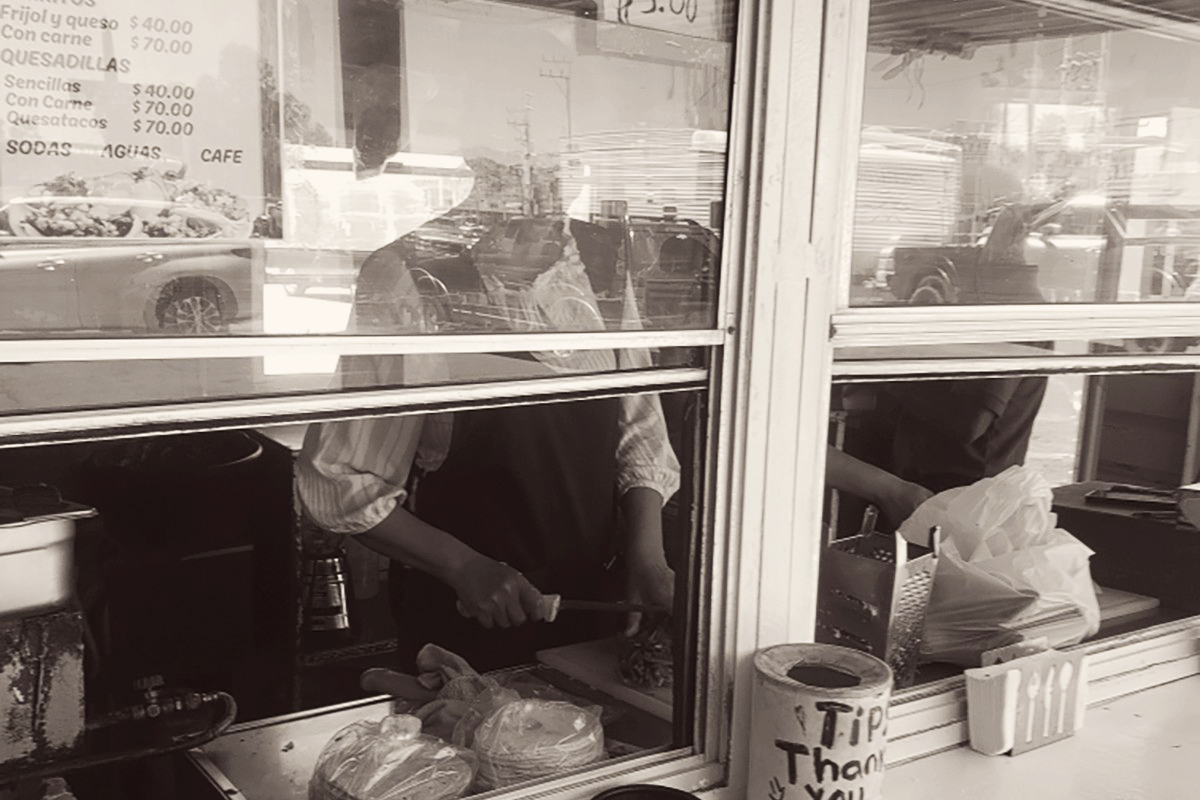
I ordered a couple of carne asada tacos at 40 pesos each (about $2), and watched through the windows as the two women in the small kitchen assembled my order with unflinching precision. (Fig 3)
I am a carne asada aficionado. It's my benchmark meal, the one I order first at any Mexican restaurante. If they get the carne asada right, I'll be back.
As I waited for my tacos, I watched the line of Americans in their SUVs and pickup trucks wait at a red light, a great juxtaposition. Americans in their $80,000 chariot-like SUVs (four times the average salary in Mexico) ride triumphantly through a town where almost nothing is new.
After receiving my tacos on a flimsy paper plate, I topped them with all the necessary condimentos, including sliced red onions, cucumbers, pico de gallo, avocado salsa, chopped cabbage, and a generous drizzle of picante salsa roja. I noticed that in most Mexican restaurants (located in México) I've dined in, they offer cucumbers and cabbage as a topping—something I've never seen in the U.S.
I settled into a flimsy chair beside a sun-baked plastic table aligned in a neat row next to the taco stand. I eagerly surveyed the three tacos neatly arranged on the plate, as I felt the corners of my mouth begin to tingle.
At first bite, the unmistakable smoky mesquite-flavored meat cut through the fog of my hangover. I wasn't just eating a taco; I was quite possibly having the carne asada taco by which all others would now be judged, no joke!
The soft flour tortilla perfectly complemented the generous portion of marinated flank steak, and the spicy salsa roja had just the right amount of heat. What stood out most was the overall freshness of the homemade ingredients, which was pretty outstanding!
As I polished off the last few bites, I found myself watching the two women inside the stand. Were they mother and daughter? Business partners? There was something quiet and unspoken in the way they moved. They rarely spoke, yet they understood each other completely. I wondered what the women thought of us Americans as they watched us devour the tacos with reckless enthusiasm.
In my haste to ease my hunger, it wasn't until I finished eating that I realized I had forgotten to capture a few photos of the deliciousness, whoops.
I thanked both women for the meal and, remembering the limes we had in our cooler, offered the younger woman the bag. Fresh fruit, after all, can’t cross the border, and I figured it would be better to give them away rather than have them confiscated by CBP. She smiled, nodded, and slipped them behind the counter without missing a beat.
A few days later, back in Arizona, I wheeled my Weber grill out of my garage and decided to try my hand at carne asada using a recipe I had been working to perfect. (Fig 4) As the flank steak hissed and charred over the mesquite coals, my mind drifted back to the two women from La Carreta.
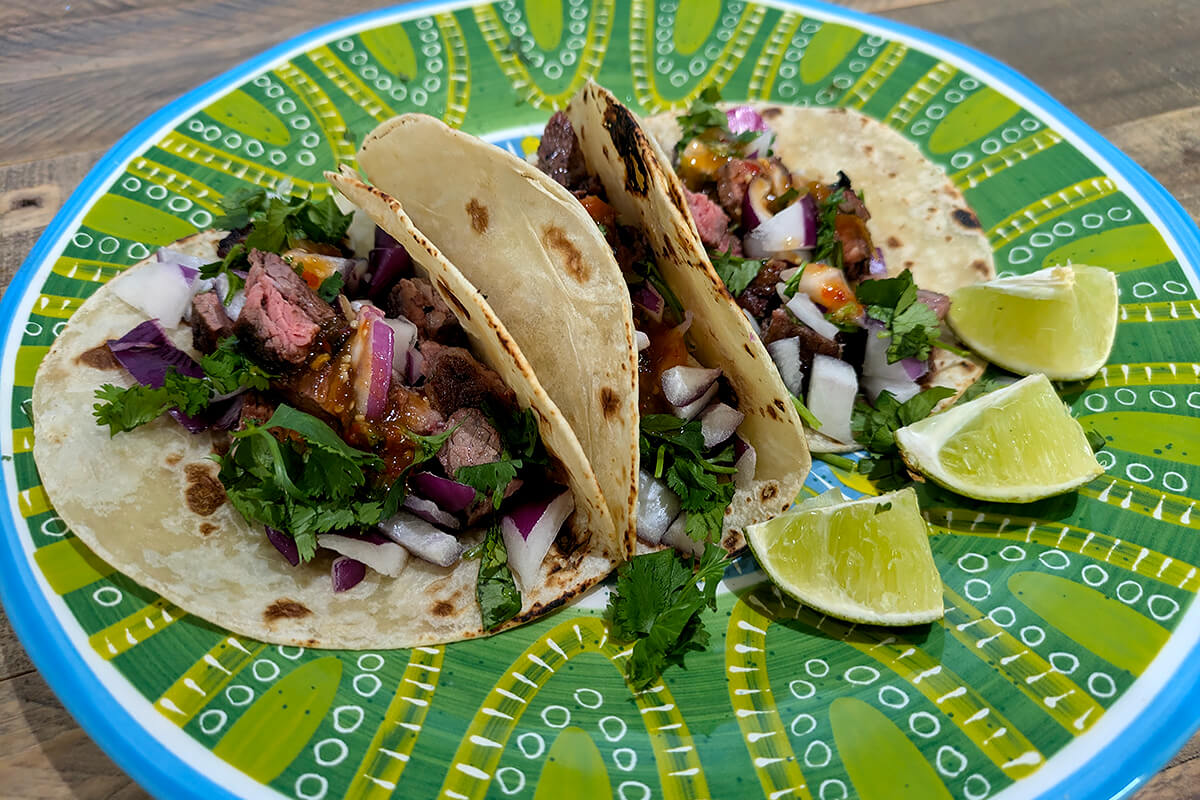
I thought about how much easier my life is than theirs. And yet, a part of me envies them. There's something noble about showing up each day, no matter the obstacles, to earn a living in a town that would challenge even the most entrepreneurial person this side of the border.
Some of life’s best meals (and best lessons) come wrapped in a tortilla, served on a paper plate, in the middle of nowhere.

Ask Me! 
Need some expert guidance? Shoot me a message, and I'll provide actionable, free advice to solve your problem.
Message Me