

This article was originally published in 2022. For the latest information on protecting agaves, please check out the updated article Worm Castings Can Protect Against Agave Weevils
Few insects are more destructive than the snout-nosed weevil (Scyphophorus acupunctatus). (Fig 1) If you have spent years caring for a beautiful agave specimen, it's heartbreaking to discover its demise before realizing there was a problem.
So, how do you prevent snout-nosed weevils from destroying agaves? Unfortunately, there is no surefire method to protect agaves. It's a process that involves trial and error. Your agaves will survive if you get it right (or lucky). Get it wrong, and chances are your agave will perish a few days after the weevil invades.
The key is knowing that, given the opportunity, weevils can and will destroy agaves. Remain proactive and take measures to protect the agave, especially during warmer months when it is active and looking for food.
How the Snout-Nosed Weevil Destroys Agaves
Because the weevil is mostly a solitary traveler, unlike an invasion of ants or a group of aphids on the underside of a leaf, it's unlikely you'll spot the weevil until it's too late.
The weevil begins its attack by using its snout to pierce the flesh of the agave to gain access to the plant's core. Next, the weevil lays its eggs in the heart of the agave.

When you first notice a problem, it's too late to prevent the snout-nose weevil from destroying the agave. The first sign that a weevil is present is the collapse of the lower leaves. The first time I noticed this, I mistakenly thought the agave needed water. I gave the agave a healthy amount of water and assumed all was well.
The collapse of the lower leaves means the eggs have hatched and become larvae. The larvae have already begun eating the plant's core at this stage. (Fig 2)
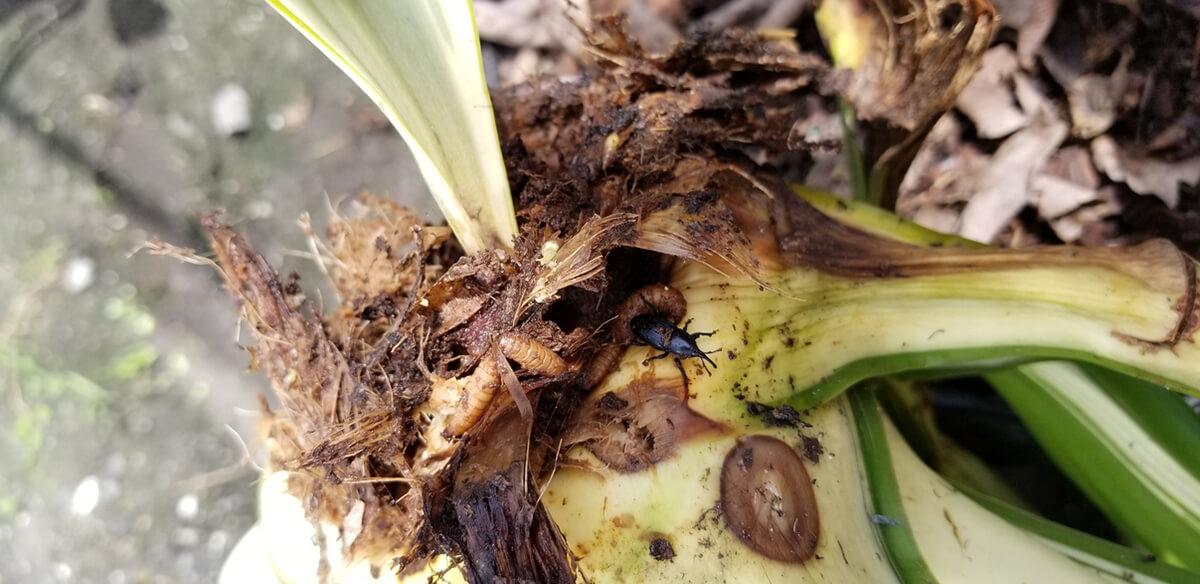
To make matters worse, it is believed the weevil introduces pathogens to speed up the decay of the plant, thus providing a ready-made food supply for the larvae.
The entire process happens very quickly. In my case, the agave was finished within a few days after noticing the collapsed leaves. All it took was a gentle push, and the entire agave toppled over, revealing a mass of rotting plant flesh crawling with cream-colored larvae.
Cleaning Up and Removing the Weevil Larvae
If you have other agaves nearby, act quickly to prevent the snout-nosed weevil from infecting them. Although the weevil cannot fly (it is wingless), the larvae could crawl to the next plant once they emerge from the soil as adults.
The first step should be to gather the pieces of the infected agave and place them into a large trash bag. Next, crush any larvae you find in the soil. The larvae are easy to see as they can be pretty large. They are similar in appearance to maggots with brown heads.
Spray the entire area with an insecticide. Use a shovel to overturn the soil to kill any remaining larvae. Check the soil over the next few days for any remaining larvae you may have missed.
If you have other agaves nearby, spray these, too. If any larvae escape from the infected area, they may migrate to other plants in the area. There's also a chance that the weevil laying the eggs is still nearby.
If you plan to replant another agave, wait several weeks to ensure the soil is free of any remaining larvae. In my case, I replaced the agave with a Méxican fan palm, which is not susceptible to the snout-nosed weevil.
What is the Snout-nosed Weevil
The snout-nosed weevil (a sisal weevil) is a tiny black insect about 15mm long. Its long, curved rostrum (snout) makes identification easy. Weevils belong to the superfamily Curculionoidea and are considered beetles.
Most weevils, including the snout-nosed weevils, are considered pests because they destroy plants, including the agave used to make tequila.
The snout-nosed weevil, native to México, is known to infect several different types of agaves, dragon trees, and yucca throughout Africa, Europe, North and South America, Central America, the Caribbean islands, and the South Pacific.
The snout-nosed weevil is considered an invasive species in areas outside of México. Because of their popularity, agave plants have been exported worldwide, bringing the snout-nosed weevil along for the ride.
The adult weevil bores holes into the leaves and infects the plant's heart with fungi, depriving it of water and effectively killing it. This is why the agave appears to lack water at first glance.
Once penetrated, the weevil will lay eggs, which can only survive with enough moisture. When the larvae (grubs) emerge from the eggs, they bore tunnels in the central shoot of the agave until they are fully mature and ready to pupate. The tunnel boring introduces pathogens that kill the agave quickly.
How to Prevent Snout-nosed Weevils from Destroying Agaves
Update: 8/6/23
I lost another two giant agaves today to what I suspect is the snout-nosed weevil. I inspected the plants the day before, and they appeared fine. I sprayed the plants with Spectracide Triazicide every few weeks because the weevil seems to be most active in this area in July.
While removing the agave, I inspected the plant for weevils and found several insects present. I am unsure if these were weevils or some other insect feasting on the rotting flesh. (Fig 3, 4)
I spoke with the owner of a local cactus nursery after noticing he had several agaves for sale. He had not experienced any issue with weevils but mentioned that agaves should not be watered during periods of excessive heat. Doing so will cause the agave to rot and die quickly.
Like many cacti, Agaves open their stomata at night to absorb CO₂. The agave cannot open its stomata when night temperatures are too high. This fact, compounded by watering, causes the plant to collapse and die.
Stomata are small openings that open to take in carbon dioxide. The stomata are only open at night when temperatures are lower. This is to prevent water from evaporating through the open stomata. If night temperatures remain above 95 degrees Fahrenheit, the stomata will not open and the agave is unable to perform Crassulacean Acid Metabolism (CAM).
I've decided to give up planting agaves!
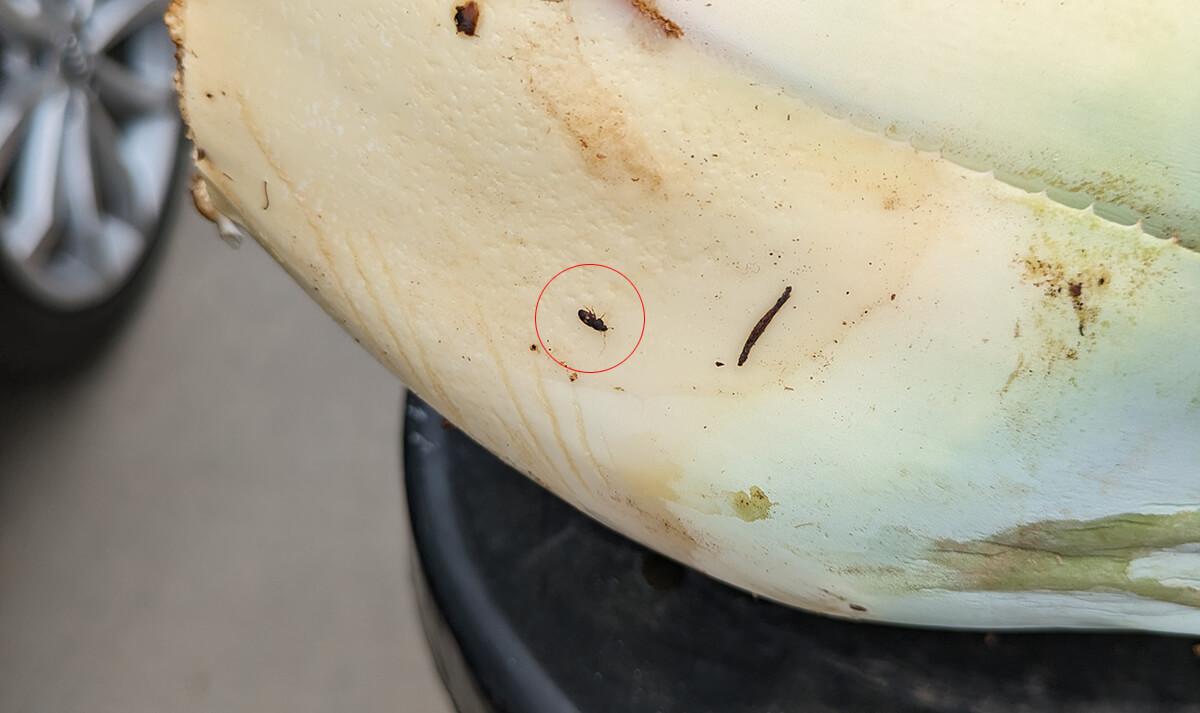
Fig 3: Suspected juvenile weevil on the remains of an agave plant
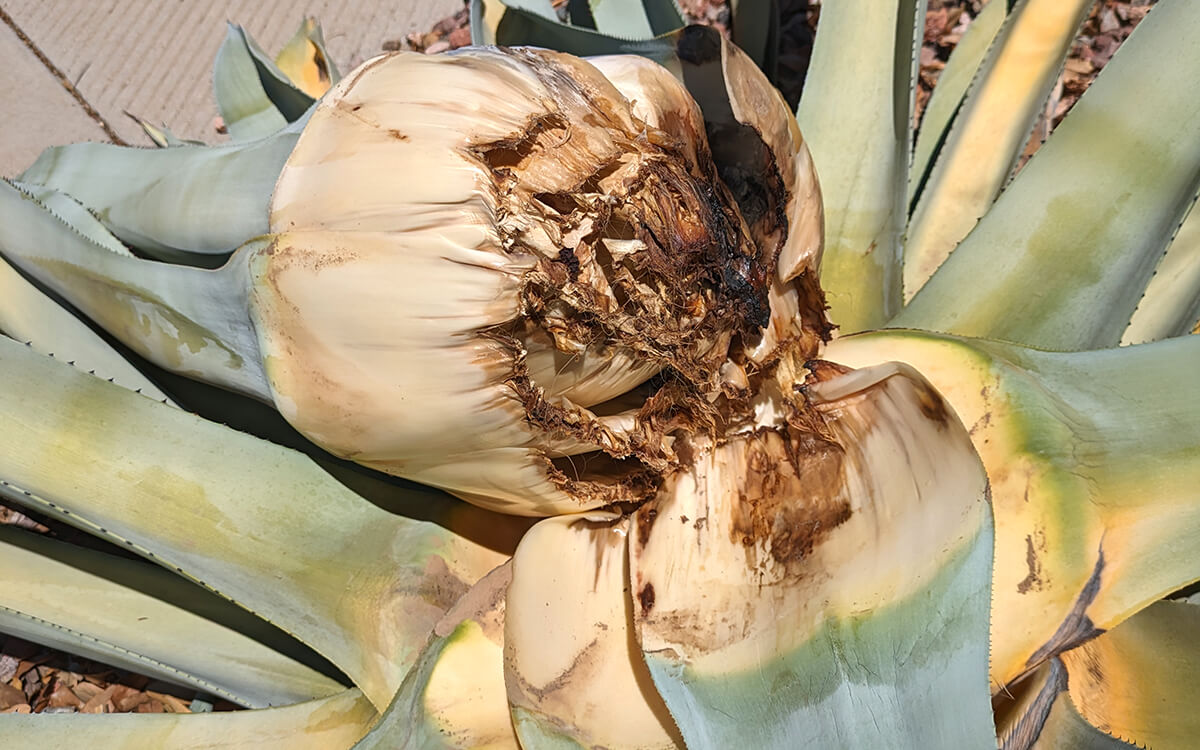
Before losing two agaves, I was aware of their susceptibility to weevils. In hindsight, I recall a salesperson at a local nursery mentioning something about weevils; however, I ignored his warning.
According to the National Center for Biotechnology Information (2022), "In a field trial in the southwestern US with thousands of individual plants, all eventually succumbed to the snout weevil when they reached a size greater than 30 kg."
After the loss, I did a lot of reading about how to prevent snout-nosed weevils from destroying agaves. Most of what I mention here concerning prevention is based on my experience. It's been almost three years since I last lost an agave. A few of the agaves I now own are considerably larger than the two I lost, meaning "getting it right" is essential.
I've not seen this documented or mentioned elsewhere, but I noticed both times the plant was infected; the week prior, I pulled out several pups (bubil) from the ground. In hindsight, this could be an easy avenue for the weevil to travel to the core. Typically, when you yank a pup out of the ground, it leaves a small tunnel that could easily be used by an insect, such as a weevil, to attack the area where the pup was separated from the main plant.
Removing the pups might also leave the plant susceptible to pathogens (and weevils) in the area where they were broken off from the main plant. Breaking the pup off the main plant creates an open wound that the agave cannot protect.
Spraying the agave immediately after removing any pups is a good idea. I have not seen this documented, but it's worth doing so.
Weevils are most active in the spring and early fall. However, this may vary depending on where you live. Both attacks on the agaves I owned occurred in early June, not exactly a spring-like month in the Phoenix, Arizona area.
Spraying when the weevils are actively seeking new food sources is essential. This means you should spray in the spring, late summer, or early fall. If, after spraying, you experience heavy precipitation, it's a good idea to re-treat the entire area because rainfall can dilute the active ingredients, making the insecticide less effective.
I have used Bayer Advanced Season Long Grub Control in the past. However, it no longer appears to be available in spray form. Because of this, I've been using Spectracide, a Triazicide Insect Killer, which I purchased at Amazon and Home Depot.
Another insecticide worth mentioning is BioAdvanced Systemic Plant Fertilizer and Insecticide. Two Amazon reviewers say using this product to prevent weevils from killing agaves.
Both insecticides mentioned above are absorbed by the agave's roots and dispersed throughout the plant's leaves. Theoretically, this may deter the weevil from piercing a hole in the agave. If larvae are already present, it's thought that they, too, will be killed.
I'm not particularly fond of insecticides because of the potential health risks from breathing in airborne insecticide particles and the potential damage to lizards or other small reptiles. However, to protect several agaves I still own, there is no alternative.
I've read quotes from others that mention the primary way a weevil arrives in your yard is by purchasing a plant from a nursery and then introducing it into your yard. That sounds like a plausible explanation. In my case, that's probably not true. I don't recall planting anything new in the area of the agaves. That's not to say a weevil didn't walk from the back of my house to the front. Who knows?
Interestingly enough, weevils don't bother potted agaves. I've seen this reported elsewhere; however, if true, I don't know how much credence should be given to the theory that most infestations are introduced by bringing home potted plants from a local nursery.
I've had two variegated agaves in pots for over eight years without issue. The variegated species may be less prone.
Finally, if you can purchase a weevil-resistant agave, buy it! I am still waiting to see one available for sale. Rumors say they are being cultivated, but I have yet to locate any information on genetically modified agave plants.
Additional Reading
Problems and Pests of Agave, Aloe, Cactus, and Yucca - The University of Arizona
Agave Americana; Characteristics and Potential Breeding Priorities - NIH
Agave Americana (century plant) - CABI

Ask Me! 
Need some expert guidance? Shoot me a message, and I'll provide actionable, free advice to solve your problem.
Message Me