
Water conservation in the desert southwest is a big deal! If you live in an area such as Phoenix, AZ, which is notoriously dry, learning how to conserve water and save money is important.
Having previously lived on the U.S.'s East Coast, I never thought about water conservation. Rainfall was frequent, and water bills were cheap. In the mid-2000s, a typical water bill for my house was $13 for three months. That is cheap!
In the summer of 2015, I moved to Surprise, AZ. Quickly, I learned how expensive water is. Water in a desert climate is a precious commodity. A typical year brings about 5 inches of water.
I suspect as climate change becomes more impactful, the price of water will only increase.
In this area of the country, most of the water used in residential homes comes from the Colorado River. Unfortunately, the once mighty river is drying up. Currently, there are no restrictions on water usage. However, I expect this not to be the case in years to come.
If you care about the environment and would like to conserve water and save money, there are several steps you can take.
Install Toilet Tank Displacement Bags to Conserve Water and Save Money
Toilet tank displacement bags are a one-and-done application. The bags last for years, require no maintenance, and are inexpensive.
The displacement bags work by displacing the water in a toilet tank by about 0.8 gallons. Just as ice cubes in a drink displace liquid, a toilet displacement bag works by displacing water, thus reducing the amount needed to fill the tank.

Each time you flush the toilet, the displacement bag will reduce water usage by almost a gallon per flush. You won't notice any difference in the regular operation of your toilet. The only difference is the toilet will use less water to flush the contents of the bowl.
A typical person flushes a toilet five times per day. In a household with four people, that's 20 flushes every day. If you install a displacement bag in each of your home's bathrooms, you could save about 480 gallons of water per month or 5,760 gallons per year.
Installing a bag requires a few simple steps.
- Fill the displacement bag with ordinary tap water. The suggested water level is marked on the bag.
- Remove the tank lid from your toilet.
- Hang the bar from the side of the tank using the clip. Make sure the bag does not impede the operation of the float inside the tank.
- Place the tank lid back on the tank.
I installed three displacement bags seven years ago and have yet to have to replace any. Since then, I saved about 30,240 gallons of water!
Install a High-Efficiency Showerhead
Delta Faucet Company says a typical shower head uses 2.5 gpm (gallons per minute). That's about 20 gallons of water for an average 8-minute shower.
By switching to a 1.5 gpm shower head, you'll save 12 gallons of water per shower. That may not seem like a lot, but over one year for a family of four, that's a savings of 17,520 gallons of water, assuming each person showers once per day.
Anyone can do installation of the shower head with just an adjustable wrench and channel locks. You'll also need a roll of Teflon tape. The Spruce has excellent instructions detailing how to change a showerhead.
I've never actually used a high-efficiency showerhead. The previous owner installed oiled bronze fixtures throughout the house. This makes finding replacements a bit more difficult.
If you have a favorite high-efficiency showerhead, write to me and tell me what you love (and don't love) about the showerhead.
Use Your Dishwasher More Often
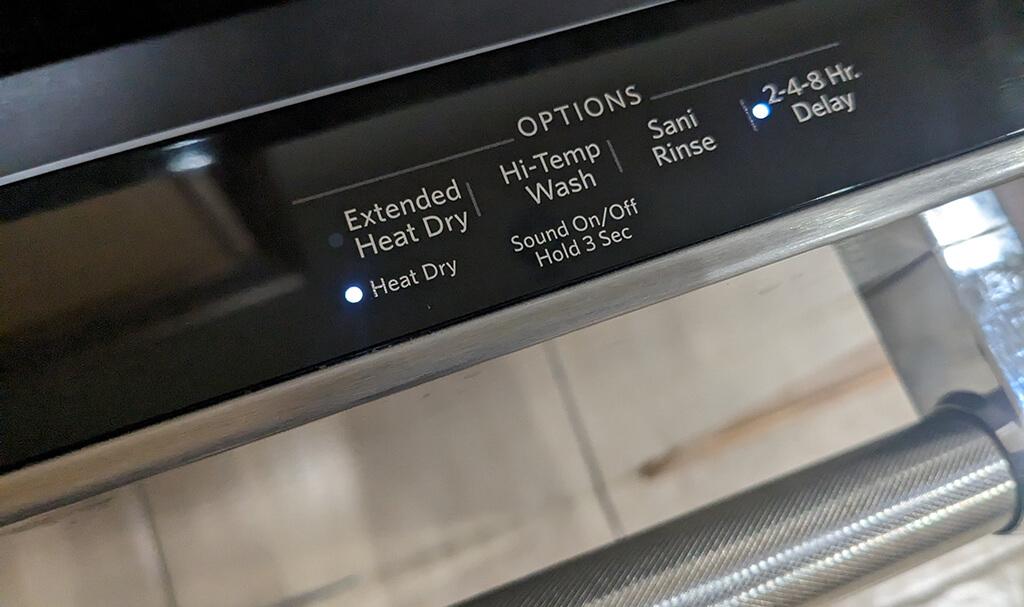
According to the NRDC (National Resources Defense Council), handwashing dishes can use up to 27 gallons of water per load. Using an Energy Star-rated dishwasher uses as little as 3 gallons.
Even if you live alone, using a dishwasher makes more sense than hand washing. Today's dishwashers are much more effective at removing stuck food particles, especially on dishes that may have sat for a few days. Also, skip rinsing your dishes before you place them in the dishwasher.
If your utility company has a plan that offers a time of day when energy usage is cheaper, set your dishwasher to run when the energy cost is the lowest.
Use a Drip Irrigation System
Irrigation systems are a godsend for many homeowners in the desert southwest. Once you create a schedule for your system, things primarily run on autopilot—except when it rains!
Ran in this area, especially during summer, is extremely rare. I've witnessed 6+ months of no measurable rainfall. There are times during the monsoon season (June-August) when the Phoenix area can get an inch of rain from one storm. Even a 1/2 of rain here makes the lead story on local TV news programs.
There are times of the year when we get enough rain that most homeowners could shut off their irrigation systems for weeks. The problem is, they don't! You must go outside, unlock the irrigation controller, turn the system off, and then remember to turn it back on as things begin to dry out.

Because of this, most homeowners just let the irrigation schedule run, regardless of recent rainfall.
The Rain Bird system at my home was installed in 2007. In terms of technology, it's ancient! It still works, but programming it is a cumbersome process, especially if you have no idea where the zones the previous owner created are located.
Upgrade to a Smart Irrigation System
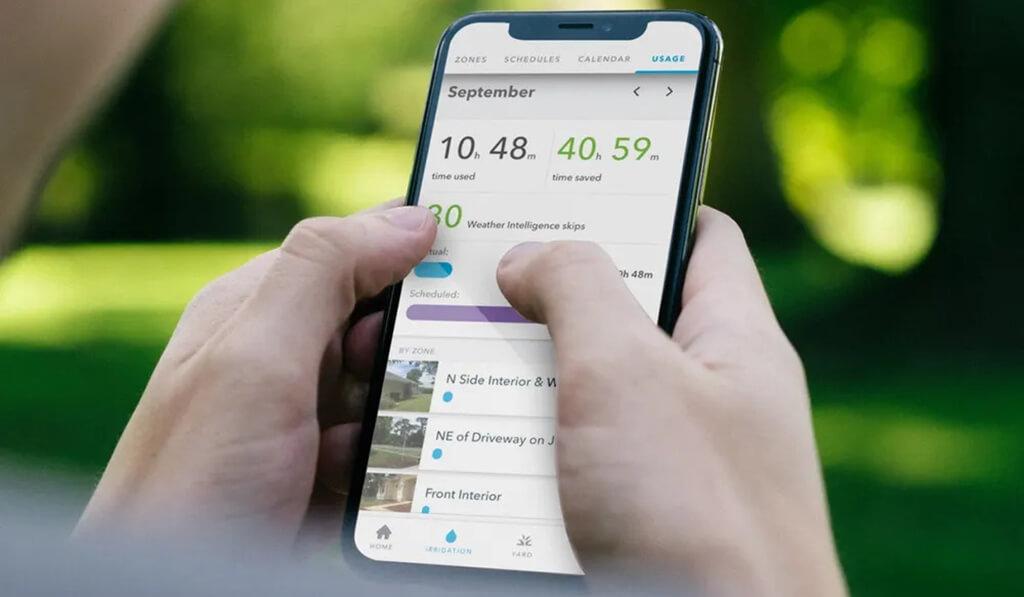
If you have an older irrigation system, you can easily replace the controller with a "smart controller" controlled by an app on your phone.
I like Rachio's "smart sprinkler" controller product. Rachio monitors the weather and automatically adjusts your schedule based on the forecast. It will also update your monthly schedule to offset seasonal changes in the weather, including freezing temperatures.
The Rachio 3 Smart Bundle supports up to 16 zones and includes a weatherproof outdoor enclosure. When this article was published, Amazon sold the Rachio 3 for $278.99.
The Rachio 3 only replaces the controller on your existing irrigation system. You'll still use the existing irrigation lines buried on your property.
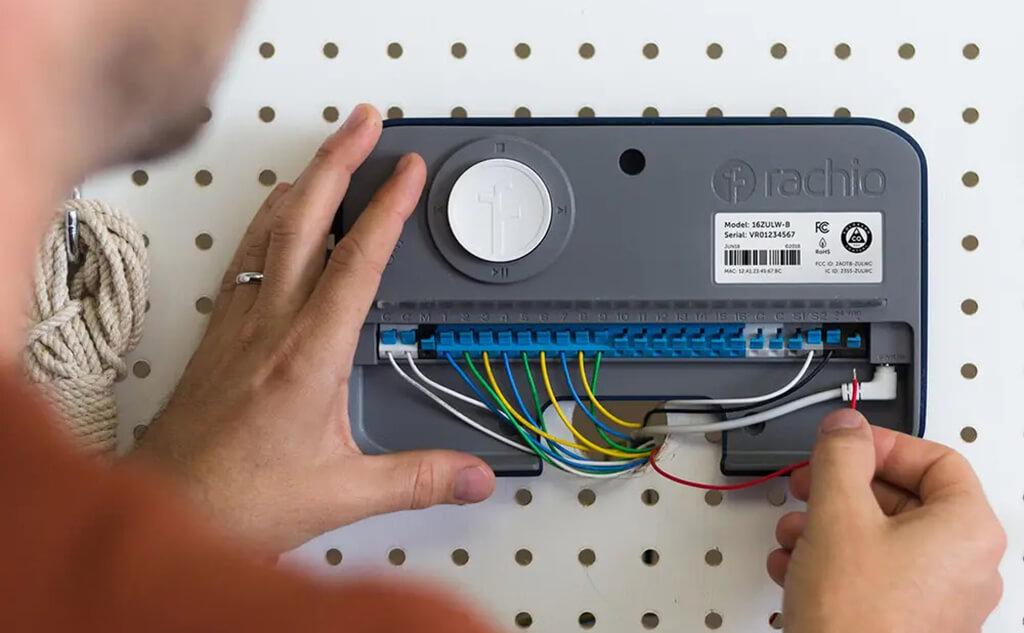
If you have an older irrigation controller, you can disconnect it and connect it to the Rachio 3 using the same wires. The outdoor enclosure allows you to place the system on an exterior wall, thus eliminating the need to move it indoors. The outdoor bundle does not include a plug. Instead, you need to hardwire the controller.
For example, if your existing controller is in a garage, you can purchase the system without the outdoor enclosure. If you have a receptacle nearby, you can plug the controller directly into an outlet, eliminating the need to hardwire the system.
You can also purchase the Rachio system with support for 4 or 8 zones.
The Rachio 3 connects to an app on your phone via Wi-Fi and supports Google, Amazon Alexa, Nest, and IFTTT.
Configuring the controller is done directly from the Rachio app on your phone.
Create a Map for Yourself and the Next Person Who Owns your Home
If you don't yet have an irrigation system and think you might have one installed, consider making a map illustrating where the lines are buried. Or, if you have figured out where all the lines run in your existing system, creating a map can be helpful.
A map is a great reference years after you have forgotten the location of the lines. Take photos of the locations of the lines before they are buried. This will help you recall the location of the primary and feeder lines and prevent accidentally severing a line the next time you add a new plant.
It's also great to turn a map (and photos) over to a buyer when you sell your home. I've lived in my home for almost eight years and still don't know where all the lines are, which is partially why I don't use an irrigation system.
Additional Ways to Conserve Water and Save Money
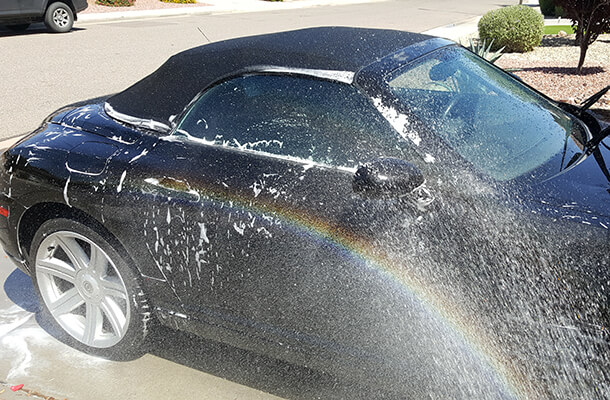
- Visit a car wash instead of hand washing at home. According to the Arizona Department of Water Resources, washing a vehicle at home can use up to 148 gallons of water. A self-service car wash uses roughly 12 gallons of water per vehicle.
- When it's time to purchase a new washing machine, consider a front-loading machine. Front-loading machines use about 25% less water. These also require less water from the water heater.
- Don't plant grass! If you have a yard with a lawn, consider replacing the grass with stones or gravel.
- Choose plants that use less water. Avoid planting anything that requires large amounts of water. Instead, stick to plant species that are native to your area.

Ask Me! 
Need some expert guidance? Shoot me a message, and I'll provide actionable, free advice to solve your problem.
Message Me