
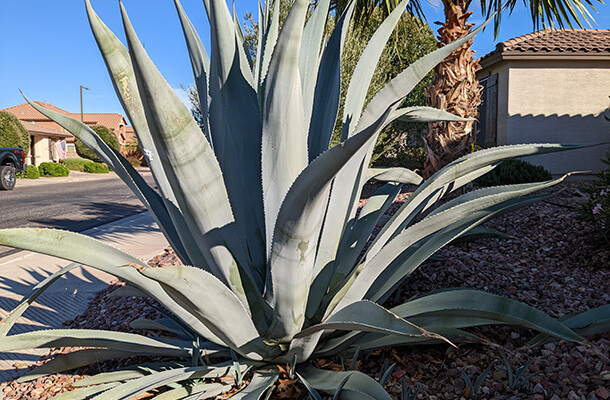
If you live in an arid climate, don't choose plants that require a lot of water. Instead, select plant species that flourish in a hot, dry, desert environment.
You'll save money when you choose plants for a desert environment by not having to replace plants that can't survive the hot temperatures. And you'll also conserve water. Select plants native to your area or those from other regions with a similar climate.

In Phoenix, AZ, most plants available at local nurseries and big box stores are not native to Arizona. They are native to regions in South America, Mexico, Australia, South Africa, and the Mediterranean.
Avoid plants such as rose bushes, arborvitaes, boxwoods, avocado trees, (most) tropical fruit trees, and the planting of grass lawns.
Big box stores commonly have plants for sale that do not grow well in Phoenix. People wrongly assume, for example, that if Home Depot is selling fig or avocado trees, these can grow in the Phoenix area.
These varieties of plants require too much water and will struggle due to the extremely high temperatures and the intensity of the sun. I learned this lesson firsthand when I first moved to Arizona.
Instead, embrace your climate and choose plants for a desert environment.
Choose Plants For a Desert Environment
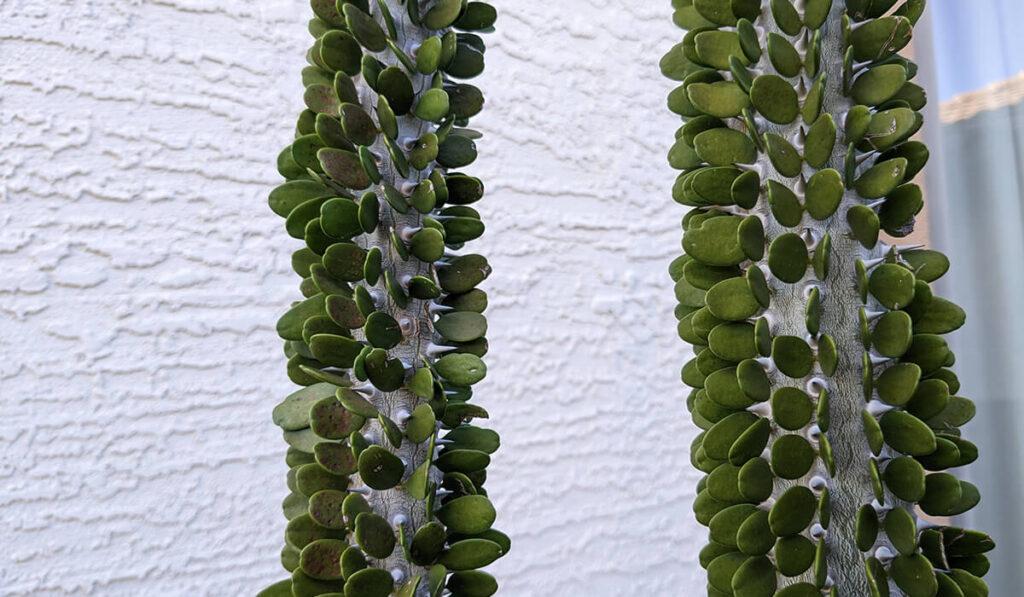
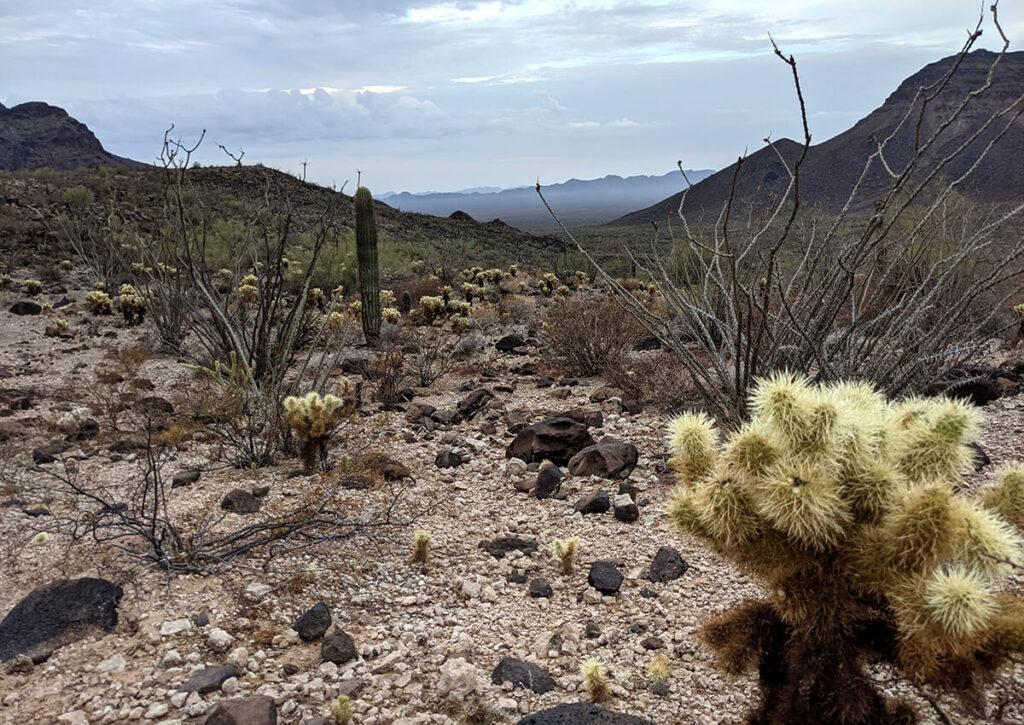
Just because you live in a hot climate doesn't mean you're limited to cacti. One of my favorite desert plants is the semi-succulent Ocotillo (Fouquieria splendens). Native to the Sonoran Desert, southern Nevada, New Mexico, and Texas, the ocotillo does exceptionally well in the Phoenix area. It requires very little water and virtually no upkeep.
If you water an Ocotillo regularly, it will maintain its tiny green ovate leaves. Otherwise, the plant will lose its leaves and appear as a collection of dead sticks. When provided with water, the leaves will quickly return. The Ocotillo will blossom in the spring with bright orange flowers atop the large stalks.
Texas Sage
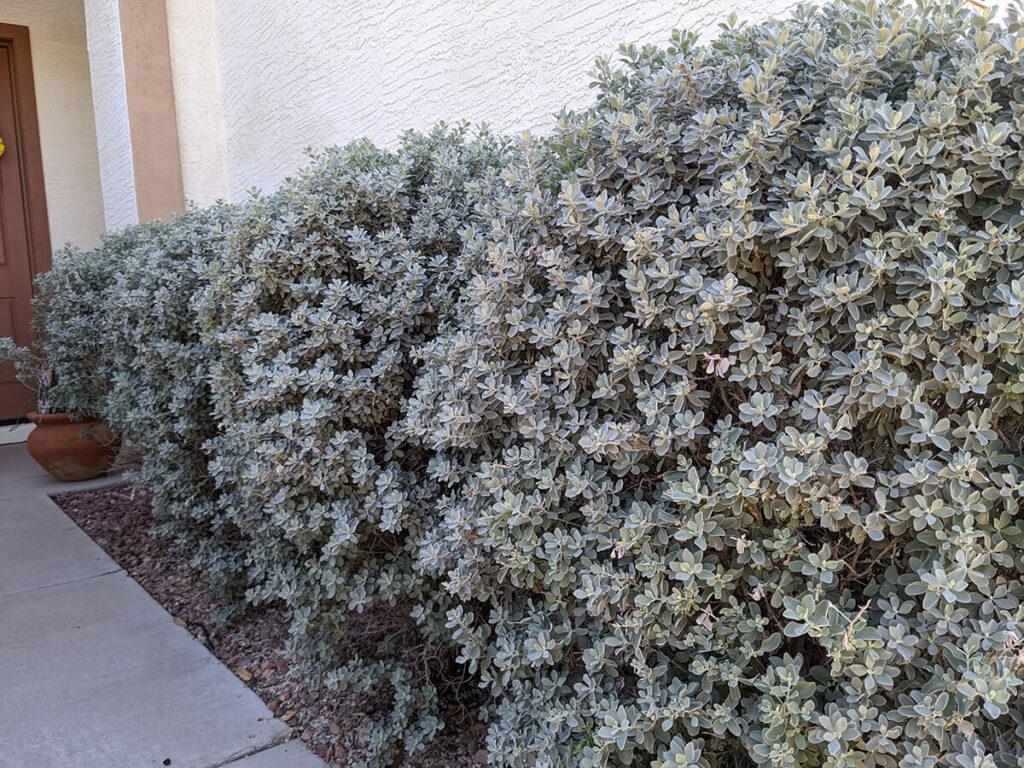
Another great plant is the Texas sage (Leucophyllum frutescens). It is very inexpensive to purchase and requires little care beyond regular trimming.
The Texas sage I own has never been irrigated or hand-watered except on infrequent occasions. The sage plant will tolerate large amounts of water but will do well with very little.
After heavy rainfall, the plant blooms with pink-colored flowers that last a few weeks. Interestingly, hand-watering never produces flowers.
Prickly Pear Cactus
Contrary to the notion that cacti grow slowly, the prickly pear cactus (Opuntia) can easily grow to heights of 10 feet or more in only a few years. The prickly pear does not need irrigation and will do fine with occasional hand watering.
The prickly pear below was planted from a cutting (4 pads) from a much larger specimen that broke off during the remnants of Hurricane Rosa in October of 2018. Yes, Arizona does experience hurricanes!
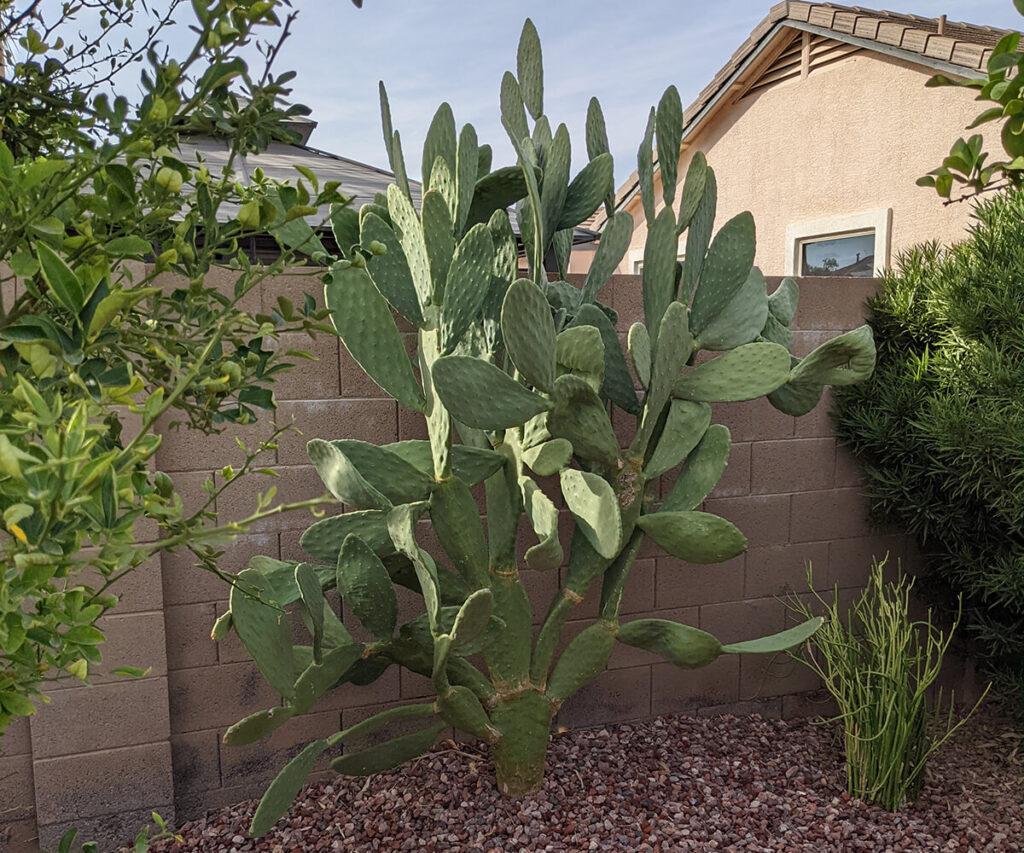
The cactus pads can be cut off (using a hacksaw) and eaten. In Mexico, nopal, the name of the young pads, have the spines removed and sliced into thin strips. They can then be grilled or pickled and served in tacos. Latino markets in Phoenix have these available for purchase in the produce section.
In early spring, the prickly pear develops beautiful yellow, paper-like flowers. After the flowers die, they turn into delicious fruit.

The fruit tastes like a cross between a kiwi and a watermelon. Birds love the fruit, too! I have yet to determine a foolproof method to prevent birds from devouring most of the harvest.
Nerium Oleander Shrub
The oleander (Nerium)shrub thrives in subtropical and desert areas. It requires very little water, grows quickly, and is immune to extremely hot temperatures.
Native to the Mediterranean region, oleanders will generally flower throughout most of the year.
Oleander shrubs can get quite large, with some varieties reaching 20 feet. I prefer the dwarf variety, which grows to about 3 to 4 feet. These are easier to maintain and won't overtake other plants in your yard.

The oleander can also be "trained" as a tree variety. The lower branches can be pruned to form a single or multi-trunk tree.

Before you purchase an oleander, please note that the plant is highly toxic to humans and pets. Ingesting even a small amount of the plant can lead to death. When pruned, the branches emit a white milky-type substance that is toxic. I do not react to the plant; however, it's best to wear gloves when pruning the oleander to err on the side of caution.
When touched, the flowers can also cause an allergic reaction, resulting in hives. My daughter picked a flower from an oleander bush on the way home from school. Within minutes, her entire arm erupted in red hives.
Silver Torch Cactus
The Silver Torch Cactus (Cleistocactus strausii) is a slow-growing plant native to the mountainous regions of Bolivia.

Beginning in the spring, the torch cactus sends out long tubular blooms from the side of the stems. Interestingly, the blooms will only fully open if they receive sufficient direct sunlight. Because this cactus is in partial shade, I have yet to see the flowers.
The torch cactus requires very little care and is very drought-resistant. Provided with enough sunlight, it can reach heights up to 10 feet.
In the above photo, the strange bend in the stems was caused by insufficient sunlight, a phenomenon known as etiolation. At one time, I had the torch cactus inside my home. The stems grew with a strange curve because they were not receiving enough light. The curve is an attempt by the cactus to get more sunlight.
The two inner (straight) stems sprouted after it was planted outside.
I purchased the torch cactus at Lowes for about $25.
Mexican Fan Palms
The Mexican Fan Palm (Washingtonia robusta), native to Mexico, grows extremely fast and requires very little water.
The Mexican fan palm is partial to sandy, well-drained soil and can reach heights of 100 feet. They require full sun and will do best if fertilized regularly.
The fan palm is also tolerant of soil with high salt levels, making it a perfect choice for the Arizona desert.
Arizona was covered by a shallow sea between 4.6 billion and 538 million years ago. This period is known as the Precambrian, the earliest part of Earth's history. This helps explain why the soil in many Arizona areas is high in salt and very sandy.
The Mexican Fan Palms below vary from 3 to 4 years old.
Both Lowes and Home Depot sell Mexican fan palms for as little as $29, depending on the height of the tree. Unlike Queen Palms, Mexican fan palms are very tolerant of hot temperatures and don't seem bothered by the sun's extreme ultraviolet rays. You may notice some yellowing of the fronds during the hottest time of the year, but this will fade as temperatures moderate.
The only maintenance required is removing the older fronds as they droop toward the tree trunk. Removing these is unnecessary; however, doing so gives the tree more regal appeal. I prefer to use a hacksaw to remove the older fronds.
As the palm grows taller, you'll need to hire someone to remove the dead fronds that cannot be easily reached from the ground.
Plan for Long-Term Sustainability
You can experiment with non-native plants in the desert, like rose bushes or some species of succulents, for a while, and they might thrive for a few years. Nevertheless, a scorching desert summer can ultimately prove fatal for these out-of-place flora.
I mention rose bushes because the previous owner of my home planted roses along the edge of a patio. I've never been particularly fond of roses, so I removed them!
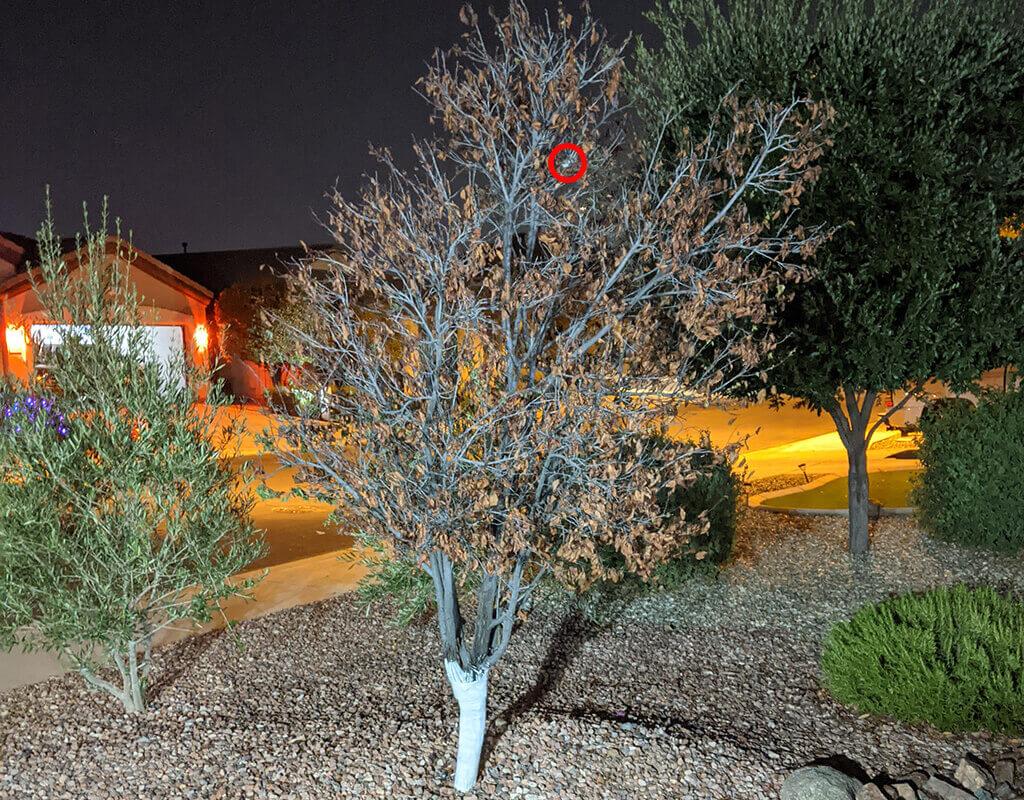
The previous owner also planted a purple-leaf plum tree. The tree was stunning and contrasted nicely with the rest of the landscaping. However, even though it survived for several years, it eventually succumbed to the extreme heat of the summer of 2020.
I left the dead tree planted for several months because a hummingbird (circled) took to sleeping in the tree each night.
As you browse the garden center, take note of the fabric hanging above the plants. This is a sure sign the plants underneath this fabric will have difficulty tolerating direct Arizona sun.
Notice the differences in the canopy in the photo below. The white canopy protects the flowering perennials, which are the most susceptible to sunlight.

Many of the fruit trees for sale at Home Depot and Lowes will do fine during cooler months but will only survive the hottest portion of the summer if provided with protection from the sun.
I purchased a strawberry guava tree from Home Depot a few years ago. The tree did produce a small amount of fruit, but the leaves experienced severe burning during the summer months. I tried for two years to protect the tree by covering it in Agfabric shade cloth until I eventually gave up and removed the tree. The shade cloth did prevent the leaves from scorching; however, as the tree grew taller, it was challenging to keep it covered.
If your property lacks shaded areas, it is best to avoid buying most plants from garden centers shielded by sun-blocking fabric. Not all plants under this canopy require protection. A recent conversation with the owner of a cactus nursery revealed that the fabric is also used to shield younger plants until they adapt to the local climate.
Choose plants that thrive in direct sunlight and hot temperatures. These are typically the trees, shrubs, and cacti not protected by the canopy (or under a canopy with lesser sun-block protection).
A great place to start is The Plant List by The Arizona Native Plant Society. The site features a comprehensive list of plants for a desert environment. Many of these plants can be found at local nurseries or big box retailers.
If you live in the Phoenix area, Arizona Cactus Growers has a beautiful selection of exotic cacti for sale. If you live elsewhere, you can purchase cacti from their Etsy shop and have a cactus shipped directly to your home.
I recently visited their nursery and met with Jason, the owner. He has a fantastic selection of cacti, all expertly grown on-site.

Landscaping an entire yard often comes with a hefty price tag. The last thing you want is to replace plants due to poor choices, like picking ones unsuited for extremely hot climates.
Investing some time in research before purchasing will save money and result in a collection of plants that thrive, regardless of the weather.

Ask Me! 
Need some expert guidance? Shoot me a message, and I'll provide actionable, free advice to solve your problem.
Message Me