
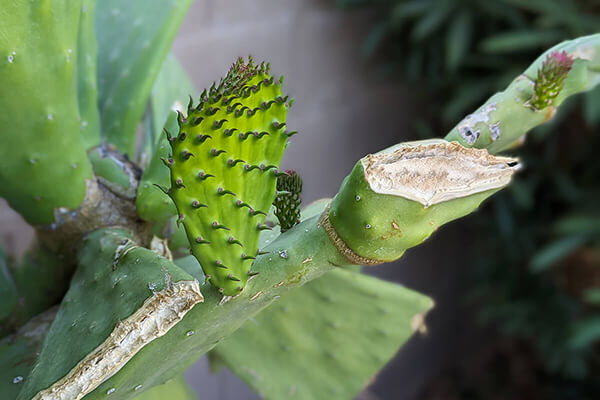
All that's necessary to propagate prickly pear cactus is a donor plant. The prickly pear cactus (Opuntia) is beautiful and incredibly easy to propagate from a cutting.
When I first moved to Arizona, one of the first plants I purchased was a prickly pear. (Fig 1) I was unaware that a prickly pear cactus produced fruit at the time. More on the fruit a little later.
I recall that I paid about $25 for the prickly pear at Lowes. The cactus had a few large pads and was about a foot tall.

I did not know much about the prickly pear cactus then, so I assumed it was a slow-growing plant. The prickly pear cactus grows at an astonishingly fast rate. It can easily exceed 10-12 feet in only a few years, with lots of direct sun and hot temperatures.
The prickly pear grows in every direction, not just up! New pads constantly sprout out of existing larger pads starting in the spring and throughout the summer months. (Fig 2) Herein lies the problem, or if you want to propagate a prickly pear cactus, a bonus.

Because of the speed at which the cactus grows, it cannot always support its growth. As the size of the cactus increases, weaker pads will spit or even break off. When they break, as they fall from the main plant, they break off other pads in their path before hitting the ground.
In my case, as the remnants of a rare Pacific hurricane passed through Arizona, the strong winds broke off several larger sections of the prickly pear cactus. Feeling disappointed, I decided to try growing the pads separated from the main plant.
Propagate Prickly Pear Cactus (In a Pot or the Ground)
After the hurricane dissipated, I propagated a few pieces of the prickly pear cactus in a different area of my yard. Three years later, I had a new prickly pear larger than the original.
The prickly pear, as well as most cacti, are incredibly resilient. The process is simple, even if you have no experience with propagating cacti. It's the same process used to propagate a bunny ear cactus. All that's required is some cactus soil and a little water. If you live in the desert and want to propagate a prickly pear cactus in your yard, skip the cactus soil. The soil in your yard will suffice.
If you're from an area where cacti are uncommon, dig a hole and replace the soil with cactus soil.
Prickly Pear — USDA hardiness zones: 3B through 11. Native only to the Americas, the Opuntia species are the most cold-tolerant of the lower elevation cacti.
If you plan to grow your cactus in a pot, purchase a bag of cactus soil. Please don't buy potting soil meant for house plants. Potting soil will retain water, causing the cactus to rot. Most cacti are incredibly susceptible to rot. Overwatering or using soil that holds too much water will deprive the root system of oxygen, and the plant will rot.
You don't need a large pot, at least in the beginning. The prickly pear has a small root system and will grow fine in a smaller pot. Just keep in mind if you live in an area that receives regular rainfall, it may be best to keep the cactus under a porch (during periods of heavy rain) to prevent the soil from getting saturated.
I like to use a hacksaw to take a cutting from a prickly pear. Since the cactus is mostly water, a hacksaw blade easily cuts through the pad. A sharp knife will work if you don't own a hacksaw. Cut the pad diagonally rather than straight across. A diagonal cut will give you more surface area to cover with dirt and provide a stable base. (Fig 3)

You can remove a single or multiple pads connected to a larger pad. Prickly Pear cacti are tough plants. Don't worry about hurting the donor cactus. Within a couple of weeks, the cactus will heal itself. Eventually, it will grow new pads where you removed the pad. (Fig 4)

Place the tip of the pad in some soil, burying just enough of the pad to keep it from falling over. If you have a few plant stakes, you can place them on each side of the pad. Tie a string around the pad and secure it to the stakes.
It's not a pretty solution, but in a few weeks, the cactus will have enough root growth to support itself. You can then remove the stakes. (Fig 5)

Care and Maintenance—Propagated Prickly Pear Cactus
Prickly pear cactus, like most cacti, require very little care. If you are planting your propagated cactus outdoors, choose a location that receives full sun throughout the day. The more sun the cactus gets, the faster it will grow.
If you don't have an area in your yard that receives full sunlight, the propagated prickly pear will do just fine. However, it won't grow as quickly. If the pads on the cactus begin to grow in a long, thin shape, this is a sign it needs more sun. Insufficient sunlight will cause the cactus to "reach" toward the sun, distorting the shape of the pad in an attempt to get more sunlight.
Water the cactus about once a week. A few ounces of water should be plenty. An easy way to tell if you are under-watering is to look for wrinkles on the pads. Prominent wrinkles mean the cactus is dry. Wrinkles or drooping can also indicate that the cactus is reacting to high temperatures and direct sunlight.
If you are using an irrigation system, it's okay if the soil around the base of the cactus dries out for a few days.
It's virtually impossible to kill a prickly pear, even if you occasionally forget to water it. However, overwatering can cause the cactus to rot.
If you suspect the cactus is beginning to rot, remove the entire plant from the ground and cut off the rotten portion of the pad. Place it back in the soil and reduce the water it receives.
You may need to prune the cactus to prevent it from toppling or getting too large as it grows. Grab a hacksaw or a knife and remove the unwanted pads. You can then start the whole process of propagation over again or give the pads to a neighbor.
Harvesting Prickly Pear Fruit
Eventually, your cactus will begin to grow fruit. (Fig 6) Even a plant with a few pads will produce fruit!
The sweet, prickly pear fruit is popular in the desert southwest. It is used in candy, margaritas, jelly, aguas frescas, and eaten whole. I've seen the fruit for sale in Latin grocery stores throughout the Phoenix and Southern California regions.
The prickly pear fruit is typically ready for harvest towards the end of July. Of course, this will vary depending on where you live.
The two prickly pear cacti I own have produced a lot of fruit! However, I have yet to figure out how to prevent birds from enjoying the fruit before I do. I tried fruit bags this summer, but it was a complete failure. The birds eventually figured out they could peck through the plastic mesh, made brittle by the intense sun.
The previous year, I tried deer fencing material draped over the cactus. This seemed to work better than the bags. However, the birds quickly figured out they could land on the ground and fly up through the center of the fencing material.
The unrelenting sun baked the fruit that did survive unscathed, causing it to drop to the ground before it was ripe. Unlike bananas or avocados, prickly pear fruit will not ripen after being removed from the plant.

The cladodes (a modified branch or stem) typically begin to emerge from the pads in early April. A few weeks later, a yellow flower emerges from the cladode. The flowers only open for one day before closing in the early evening. Once bees have pollinated the flower, the process of developing into a fruit begins.
The areoles are numerous, small structures on the pad containing purplish spines. It is from this area that the cladodes emerge, as well as new pads. The areoles are scraped off the younger pads before the pads (nopal) are eaten.
As the fruit matures, it becomes bright red and more rounded rather than oblong. (Fig 7) The tiny spines (glochids) on the fruit mostly disappear when the fruit is ready for harvest, making handling somewhat easier. A simple twist (while wearing gloves) will quickly remove the fruit from the pads.
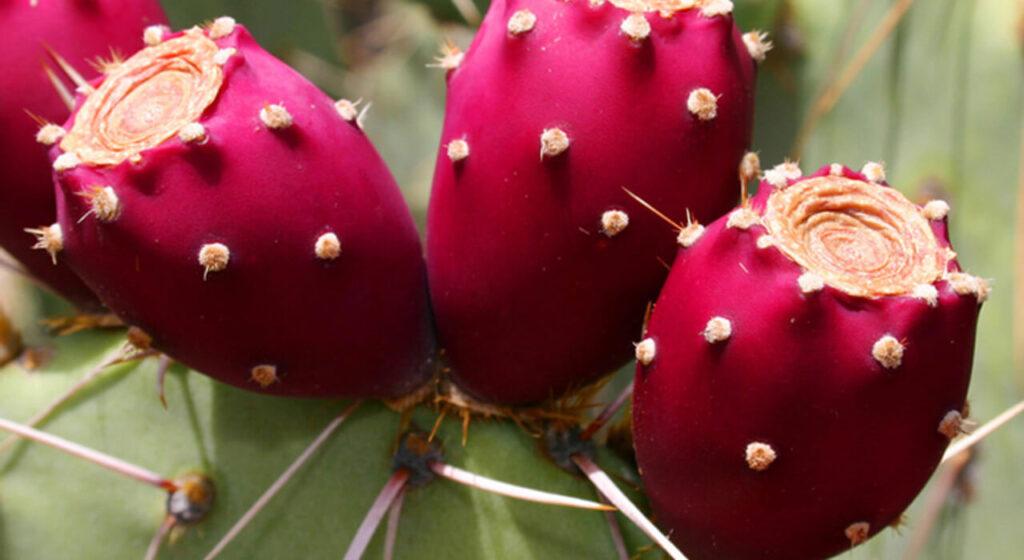
Glochids are the very fine spines that surround the fruit—shown in above photo. They easily dislodge themselves from the fruit when touched. More annoying than painful, glochids feel similar to the irritation caused by fiberglass splinters between your fingers.
If you plan to use the fruit within a few days, leave it on the kitchen counter; otherwise, place it in the refrigerator for a week or two.
Leave it on the cactus if you don't intend to eat the fruit. The birds in your neighborhood will make quick work of the fruit.
Prickly pear fruit is a delicacy for tortoises. Just cut the fruit in half and place it on the ground close to their water bowl. When I volunteered at Liberty Wildlife, one of the volunteers would bring bags of prickly pear fruit for the tortoises under our care. (Fig 8)

Removing the glochids before giving the fruit to the tortoise is unnecessary. The tortoise can eat the prickly pear whole; however, slicing it in half makes it a little easier to pick up with its mouth.

Ask Me! 
Need some expert guidance? Shoot me a message, and I'll provide actionable, free advice to solve your problem.
Message Me