
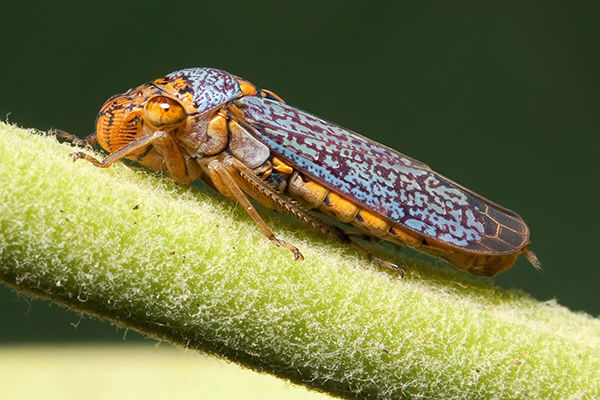
The sharpshooter, a relatively small leafhopper, is also known as a glassy-winged sharpshooter (Homalodisca vitripennis). (Fig 1) The sharpshooter gets its name from its propensity to squirt a fine stream of water droplets from its body. The sharpshooter is prevalent in northeastern Mexico, California, Arizona, and other portions of the Southwest.
A member of the family Cicadellidae, the sharpshooter's mouth contains mouthparts that pierce a plant's xylem. The xylem, a type of plant vascular tissue, is vital in transporting water and nutrients from the root system to the oleander's branches and leaves.
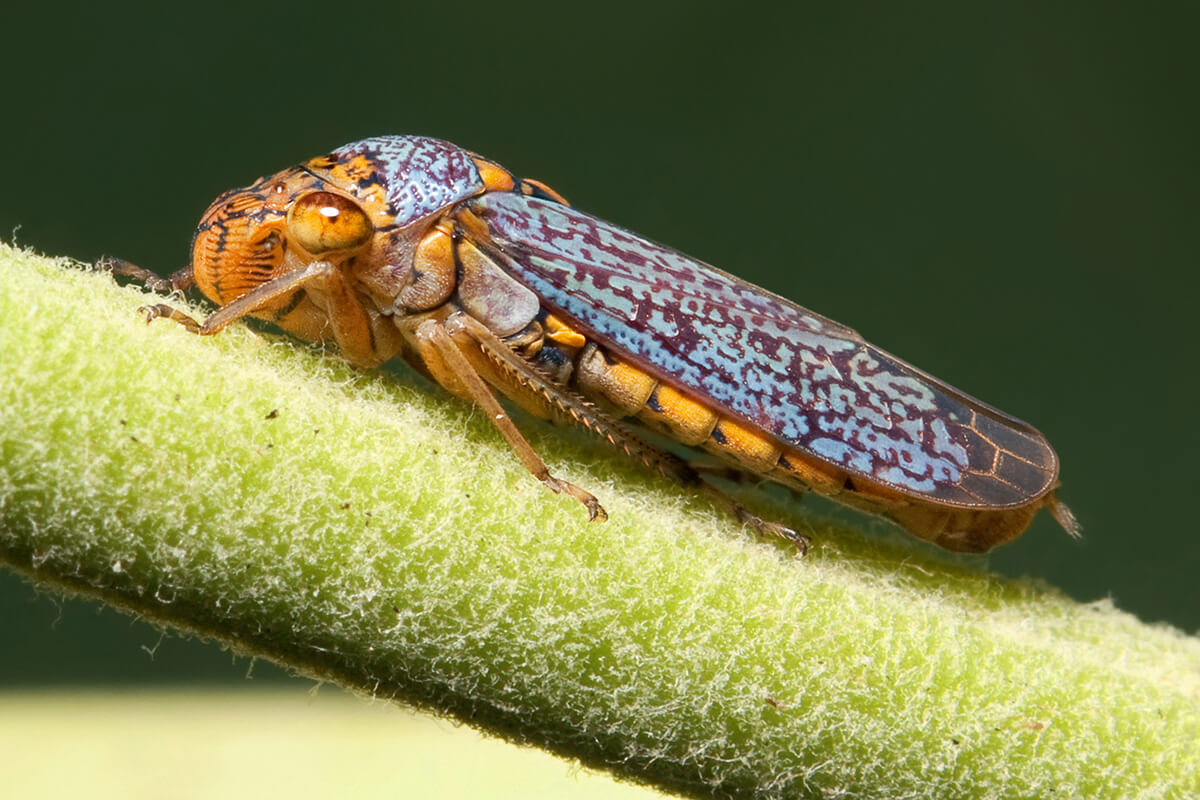
As the sharpshooter feeds on the oleander sap, it spreads a harmful pathogen (bacteria), Xylella fastidiosa, passed from the sharpshooter's foregut and deposited in the xylem of the healthy plant. Once in the xylem, X. fastidiosa uses the plant's circulatory system to transport the pathogen throughout the entire plant.
The bacteria are especially detrimental to oleanders, citrus, coffee, almond, and olive trees (Olive Quick Decline Syndrome) and cause Pierce's disease in grapevines. However, they are considered benign in most of their hosts (over 600 plant species).
The bacteria cause leaf scorch, browning, and leaf loss in the oleander, eventually killing the infected host plant. There is no known cure!
In Arizona, the glassy-winged sharpshooter is more prevalent than the smoketree sharpshooter (Homalodisca liturata), a leafhopper with almost equal destruction capability. While both feed on numerous plant species, smoketree sharpshooters have a stronger preference for desert plants, including their namesake smoke trees, creosote bushes, and brittlebush. Glassy-winged sharpshooters have a broader host range and readily adapt to agricultural and ornamental plants.
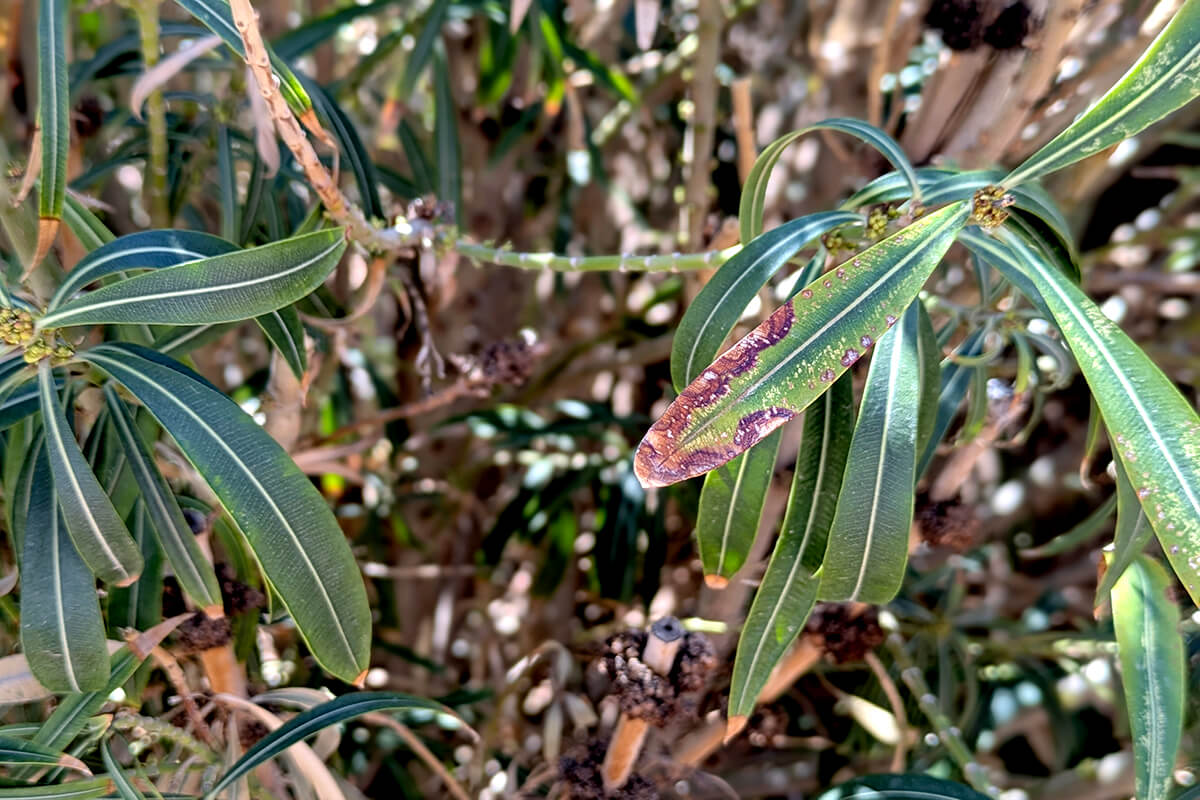
Last year, a neighbor hired a landscaper to remove weeds overtaking a small grass plot in his backyard. Shortly thereafter, I noticed a large, Hardy Red oleander on my side of the block wall that began developing brown leaves. (Fig 2) I assumed the landscaper, in his haste to finish the job, had allowed RoundUp weed killer to overspray the block wall that separates our property.
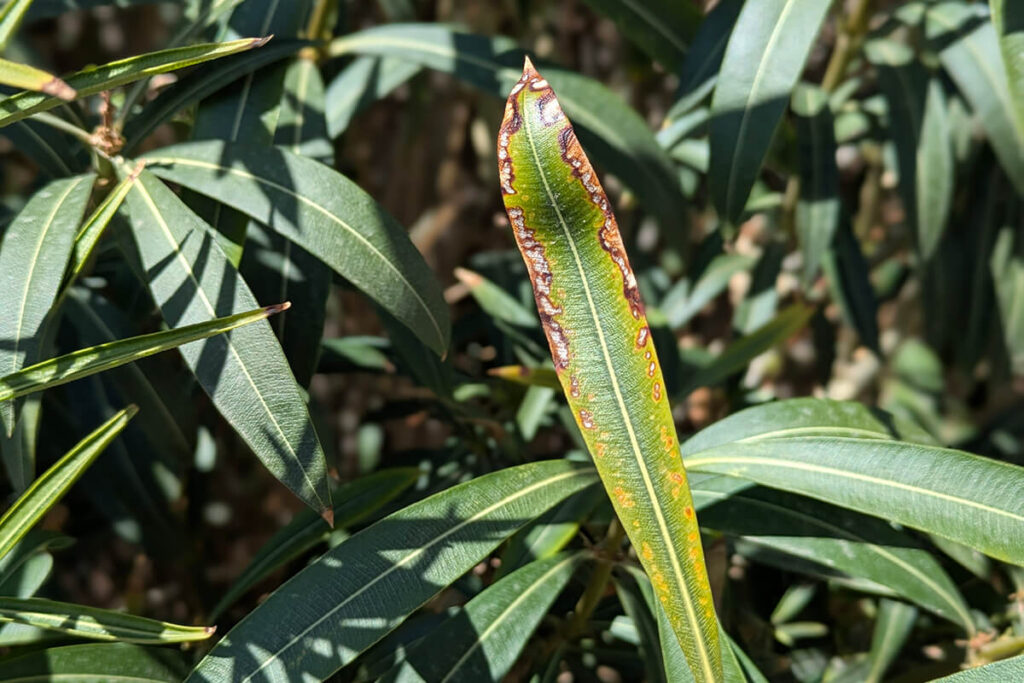
As it turned out, the sharpshooter, not the landscaper, had hit its target: my beautiful red oleander. When I first noticed the scorched leaves, I removed all the affected branches. However, over several months, I saw more scorched leaves as winter turned to spring, and the issue seemed to spread.
The oleander had no new growth and should have been in full bloom with trumpet-shaped red flowers (Fig 3). Knowing there was no cure, I decided to remove it.
I have a love-hate relationship with the oleander. When I first moved to Arizona, a grizzly neighbor told me oleanders were a scourge. He did elaborate, but I assume he was disgruntled because oleanders drop a fair amount of leaves, and he owned a large pool. The property I bought had many oleanders, several of which I removed shortly after moving in. Something changed, and I grew to admire them! They are incredibly resilient plants and well-adapted to the desert.
Oleanders can kill you if you consume their leaves or flowers. But who eats shrubs from their yard? The flowers can cause severe skin reactions in some folks if touched. My daughter got severe hives on her arm after picking an oleander flower on her way home from school.
The oleander is extremely toxic to dogs! If a dog ingests any part of the oleander, it can experience: tremors, drooling, vomiting, diarrhea, and even death from cardiac failure.
I think I am somewhat less susceptible to the toxic cardiac glycosides. After removing the infected oleander, my hands and arms were coated with a sticky tar-like coating that was difficult to remove. When a branch is cut, the oleander oozes a milky white sap. In hindsight, it probably was not the smartest thing to do.
How to Mitigate the Glassy-winged Sharpshooter
You can take a few measures that may help reduce the spread of leaf scorch.
- Disinfect your pruning shears after every use with a solution of isopropyl alcohol (70-100%) or a dilute bleach solution (1 part bleach to 9 parts water). I am guilty of never doing this! Disinfecting pruning shears will prevent the pathogen from spreading to other plants.
- Remove any oleander suspected of being infected with leaf scorch to reduce the source of the inoculum (material used to introduce microorganisms).
- Avoid planting new oleanders or consider a Ruby Lace™ oleander, a cultivar relatively resistant to the pathogen spread by the sharpshooter. I have yet to see a Ruby Lace oleander for sale in my area, but they may be available where you live.
Biological Control of the Sharpshooter
The fairyfly (Gonatocerus ashmeadi), a natural enemy of the glassy-winged sharpshooter, has been successfully used to control it in California. The fairyfly can parasitize the eggs of both the smoke tree sharpshooter and the glassy-winged sharpshooter.
The female fairyfly, a species of wasp found in temperate, subtropical, and tropical regions, lays its eggs inside the sharpshooter's eggs, and the developing fairyfly larvae consume the contents of the host egg before emerging as adults.
Originally native to the southeastern United States and northeastern Mexico, the fairyfly has been intentionally introduced to California and other regions where the glassy-winged sharpshooter has become a problem.
In 1999, the sharpshooter spread to French Polynesia. Because French Polynesia is a remote chain of islands, its isolated plant species have no natural resistance to Xylella-related diseases, which is a significant threat to the island chain's biodiversity.
In response to these invasions, biological control measures were implemented. Introducing the fairyfly wasp in French Polynesia in 2005 led to a significant reduction—approximately 95%—in the glassy-winged sharpshooter population within a year.
Unfortunately, biological control measures using the fairly is not a viable option for homeowners.
Additional Resources
Transmission of Xylella fastidiosa to Oleander by the Glassywinged Sharpshooter (Homalodisca coagulate)
Oleander Leaf Scorch, University of California, Davis

Ask Me! 
Need some expert guidance? Shoot me a message, and I'll provide actionable, free advice to solve your problem.
Message Me