A collection of questions (with answers) I have received from readers. You, too, can ask a question, and I will email you a response.

Temil from Malibu, CA, asked,
"I'm Curious if you tried nematodes and worm castings for weevil prevention."
Temil referred to my article, "Prevent Snout-Nosed Weevils from Destroying Agaves." I am unfamiliar with nematodes and have never heard of worm castings. I did a bit of reading on both, and they both sound like they may work to ward off the weevils. As I mentioned in my article, I am finished trying to grow Agave Americans. I lost 4 huge specimens and decided to give up.
I managed to grab a few pups (tubers) that have continued to grow underground 9 months after removing the last agave. It wasn't until recently that I realized two of the four agaves were sharkskin agaves, making the tubers a little more special. For the time being, I'll only grow agaves in a pot.
If anyone has tried nematodes or worm castings to prevent weevils from killing their agaves, please tell me about your experience.
Llyana in Tuscon, AZ, asked,
"Hi, I live in Tucson and am about to propagate prickly pear and purple prickly pear. I read your article and noticed you didn’t mention letting the cutting dry out/heal before planting in ground. Is it not necessary? And if I take a cutting from the purple prickly pear, should I also cut it diagonally or plant whole pad cut at the base?"
Contrary to what many say, letting the prickly pear pad dry is unnecessary before placing it in the soil. If you let the pad dry out and callous, it is harder for the pad to draw water from the soil. The prickly pear is tolerant to over-watering, and adding too much water to well-drained soil won't cause it to rot unless you go completely overboard with watering.
For the second part of Lyana's question, cutting a pad straight across or diagonally won't affect the pads' ability to grow roots. Sometimes, getting a pad cut straight across to stand up in the soil is difficult. By cutting the bottom of the pad on an angle, you have more surface area to place the pad in the soil. This makes keeping the pad upright a little easier.
Rossie of Chandler, AZ, asked,
"The other day, I was removing an agave pup, and as I pulled it out, several, maybe "millions," of tiny black insects crawled out of the ground and across my gloves and arms. I have no idea what they are/were; however, they really were tiny, maybe a 16th of an inch, and black or very dark brown. After I shook them off, they scurried back into the earth. This experience led me to your article. Do you have any thoughts?
Although I'm concerned about a possible infestation among my other agave, I, like you, would prefer not to use an insecticide for the same reasons you present. I'm leaning towards pulling the agave out and disposing of it to prevent the spread of those bugs.
I can't be sure they were weevils because they were so tiny, do you have an idea of what those bugs were and how to treat for them?"
I am unsure if the bugs Rossie described are weevils. It's a bit early in the year (mid-May) for weevils. Most of my trouble with weevils happened in June and August. Unfortunately, she did not have a photo to share, so I can't be positive based on what she described.
If this were my plant, I'd watch closely, looking for signs of collapse. Grabbing the agave from the center of the plant and gently rocking it from side to side is a good test. If it's infected, there's a good chance the entire agave will fall over.
It can't hurt to spray the entire plant, and it's also a good idea to spray other agaves. If weevils are active in the area, chances are any other agaves nearby may also be at risk.
To protect other agaves, it may be a good idea to be proactive: remove the agave in question and soak the ground with a good insecticide. Continue checking the ground for several days for any sign of insects or larvae.
Rossie mentioned that she is using E.B. Stone earthworm castings.
Sara of Mesa, AZ, asked,
"Are there any plants I can plant in June?"
I recommend avoiding planting anything new from June, April through September. The temperatures are too high, and the summer sun can be incredibly hard on a new plant. If you have to get your new plant in the ground, stick to cacti or try your luck planting in full shade. Check out my article, The Best Time of Year to Add New Plants in Phoenix, Arizona, which details why to avoid planting during summer.
Because Phoenix's summers are growing increasingly hot earlier in the year, it's probably best to ensure that any new plants are in the ground by March. I've noticed that plantings I did after March are doing poorly, requiring lots more water and suffering from scorched leaves.
Joe in Mesa, AZ, asked,
"We have 3 tangerine beauty vines on a south-facing cinder block wall. They get full sun all day. We planted them in October 2023. Looking for advice to keep them from scorching this summer. Any help would be greatly appreciated."
I use Agfabric 40% Sunblock Shade Cloth. I recently purchased additional cloth to cover a sago palm, a newer Mexican fan palm, and a small bougainvillea (similar to the tangerine beauty) that were getting scorched.
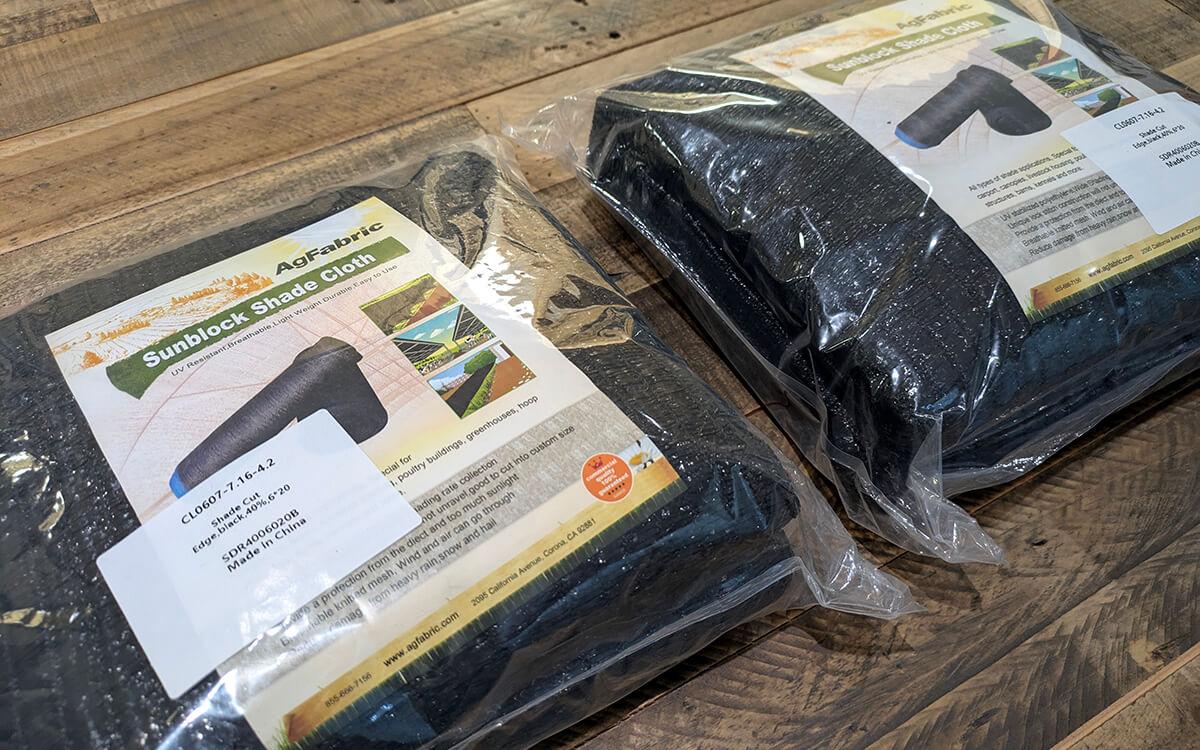
I've been using this shade cloth for several years, and it will absolutely prevent scorching but can't protect plants suffering from high temperatures. You can lay the cloth directly on the vines to reduce the amount of sun they receive. If you think you may need more protection, Agfabric is available in different levels of protection, up to 90%. The tricky part will be figuring out how to attach the cloth so it does not blow away.
You can also build a tent-like structure using stakes if you think that might work for your setup.
Steve from Rio Verde, AZ, asked,
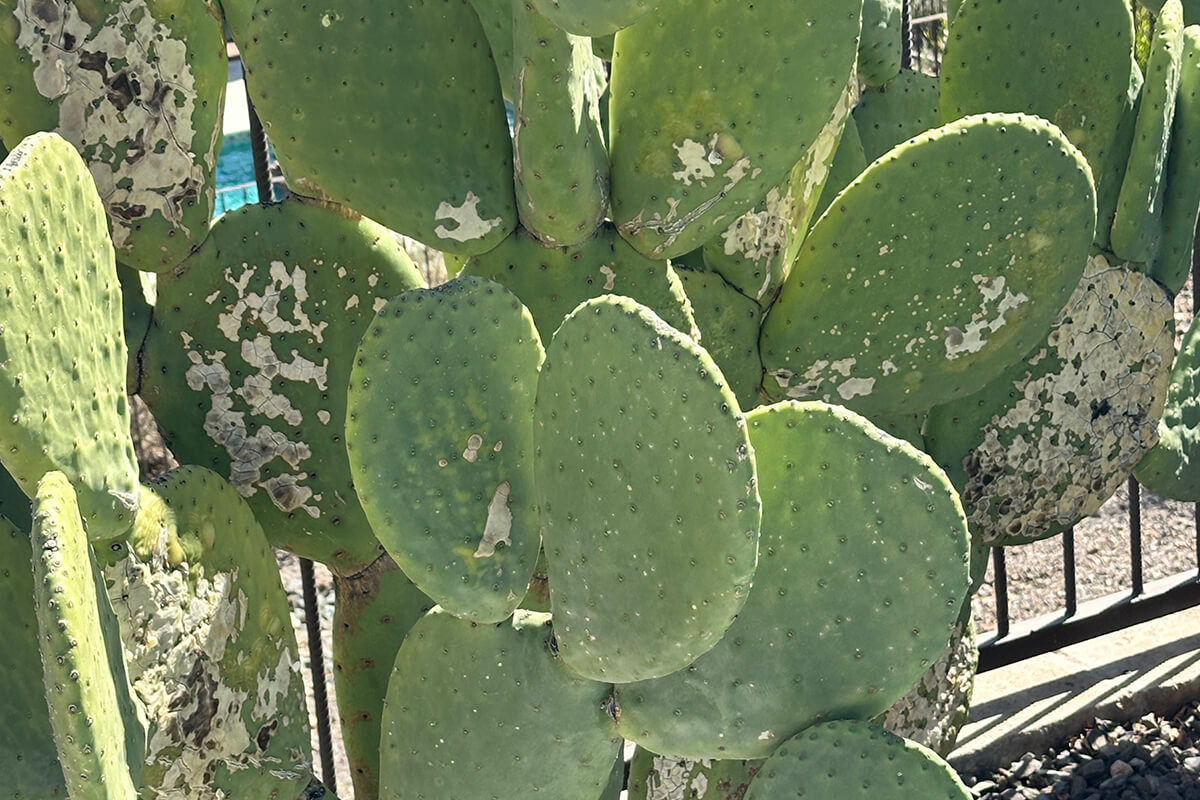
"I have three Indian fig cacti. Some corking is occurring, but I started to see this last summer and this Spring this has accelerated. Is this sunburn, corking or a fungus/pest? Some parts look like sunburn, while others form a crack in the paddle that oozes a white substance that gets very hard. Landscapers want to cut it down and let it regrow."
After looking at Steve's photos, I see nothing unusual with this cactus. The pads exhibit scorching (sunburn), cracks, and other signs common with these types (Opuntia) of cacti as they age. The white substance oozing from the cactus pad (cladode) is called mucilage. When a pad is cut or damaged, mucilage will ooze out of the pad as part of the healing process. Over time, the air will harden the mucilage.
Mucilage is used in traditional, regional Mexican cooking as a thickening agent for nopalitos (cactus salad).