
As temperatures rise due to climate change, learning how to protect plants in a heatwave is essential. Protecting your investment and the integrity of your plants may sound like a simple endeavor, but depending on what part of the country you live in, it can become a significant undertaking.
Take Phoenix, Arizona, for example, where I live. July 31, 2023, ended 31 consecutive days above 110 degrees Fahrenheit. The previous record was 18 straight days, set in 1974. Low temperatures at night were in the mid 90's.
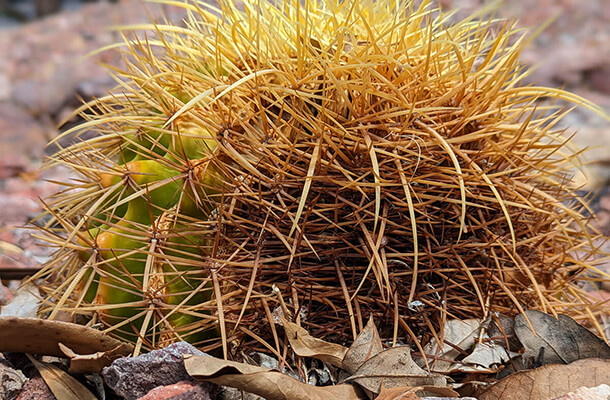
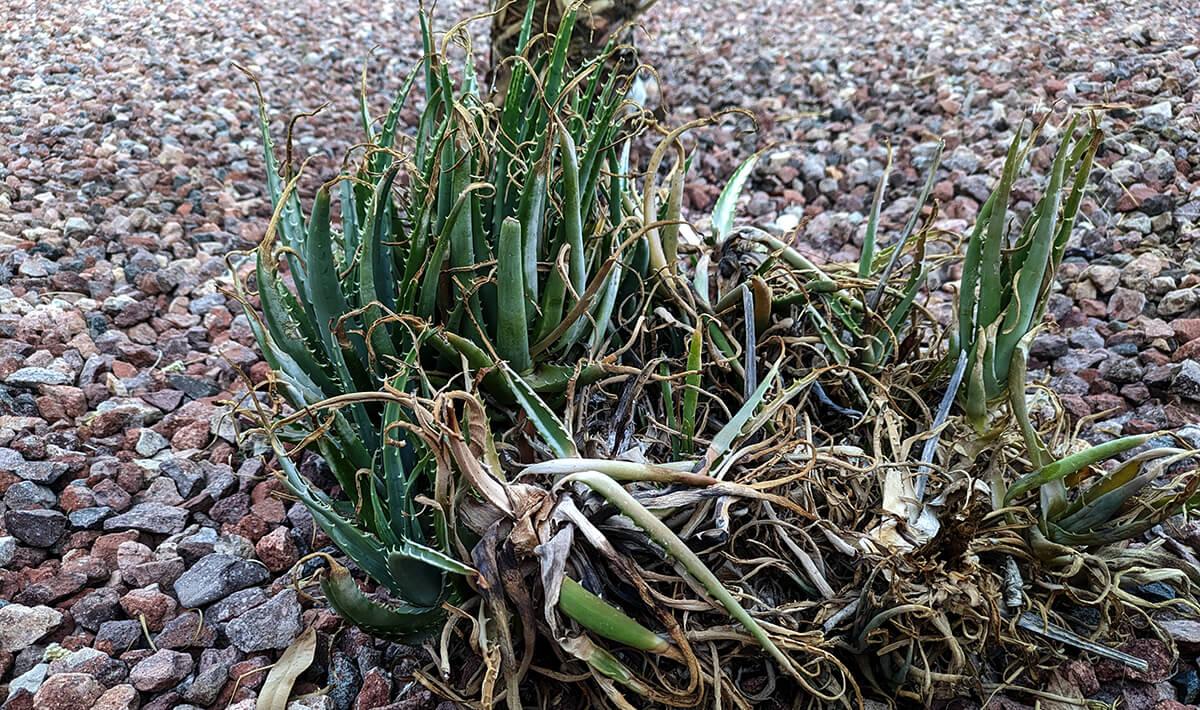
Plants native to the desert can easily survive temperatures as high as 120 degrees Fahrenheit; however, when temperatures consistently reach extreme levels, many plants suffer. Some, especially newer plants, including cactus (Fig 1) and agave (Fig 2), will die. Others may only recover if you know how to protect plants in a heatwave.


Those reading in other areas of the country will probably never experience the recent temperatures in Phoenix. However, that doesn't mean high temperatures in your area won't hurt plants in your garden. Practicing a few tips will give your plants the best shot of surviving a heatwave.
How to Protect Plants in a Heatwave
The most important thing you can do to protect plants in a heatwave is to know which plants need help. As temperatures rise, take a few minutes each day to look closely at your plants for signs of stress.
Plants not getting enough water will exhibit signs such as wilted leaves or browning of the foliage.
Some plants, especially those with broad leaves, may display burn marks or curling of the leaf. Check the ground for excessive leaf loss.
Flowering plants such as the oleander (Nerium oleander) will stop producing flowers. The pink and white variety of oleander is especially vulnerable to high temperatures.
The golden barrel cactus (Echinocactus grusonii) is highly susceptible to damage during the height of the summer. The cactus will change from green to yellow when under stress. It may also shrink and display burn marks on the side, receiving too much sun. (Fig 3)

Barrel cacti that are receiving too much sun will display an increase in the number of spines, which is an attempt to shield itself from the sun by creating its own shade.
The leaves of citrus trees that are not receiving enough water will hang downward instead of pointing up.
You can't control the actual temperature outside your home. However, you can do little things to ease the stress of the effects of a heatwave on your plants.
If you have indoor plants, especially tropical varieties, on a deck or patio, bring them inside. Plants growing indoors for many years can experience shock when exposed to a heatwave or intense sun.
Water Plants During the Early Morning or Evening
If you use an irrigation system, set it to run early in the morning or the evening. I don't use an irrigation system at my home in Arizona. Instead, I hand water during the evening hours.
Newer plants with a less established root base generally need more water. Larger plants, such as citrus or large palms, require a good soak. Citrus trees, especially orange trees, need water every day or two, especially during a heatwave. When lacking sufficient water, the leaves on an orange tree will point toward the ground instead of the sky.
Adjusting the run times during a heatwave is a good idea if you use an irrigation system. Most irrigation systems installed in residential settings deliver a drink rather than a soaking, so you must schedule the system to run longer during the summer.
Just as important is to avoid over-watering. Too much water can saturate the soil, making it difficult for the plant's root system to obtain necessary oxygen.
If you have plants in pots, these need a little extra water during extreme temperatures. Because a pot is surrounded by air, it can heat up quicker than a plant rooted in the ground.
Provide Your Plants with Sunscreen
Some plants, especially succulents, cannot tolerate an extended heatwave. (Fig 4) The extreme heat combined with the sun's intensity can play havoc on delicate succulents.
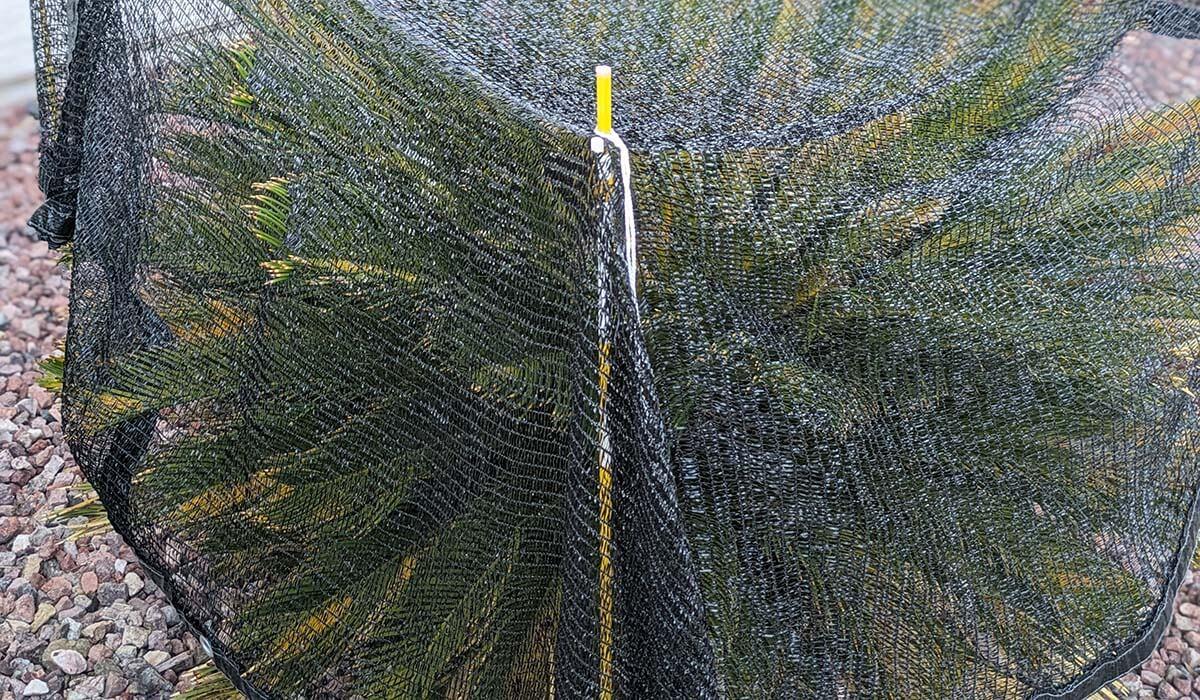
You can help protect a plant by covering it with UV-blocking material, such as Agfabric shade cloth. Providing shade will help lower the temperature. (Fig 5)
When stressed by extreme temperatures, the foliage on many plants will turn yellow. This is normal and can't be prevented. Once temperatures subside, the foliage should return to its normal color.
Shade cloth excels at preventing the scorching of leaves. Once the foliage is scorched, it will not recover. Eventually, the leaves, fronds, or other surface areas of the plant will die and fall off.
Shade cloth comes in various levels of protection, typically noted by a level of protection expressed as a percentage. Shade cloth is like SPF protection for humans.
Shade cloth is available in levels of protection ranging from 30 to 90%. The cloth that offers 30% protection has larger diameter holes to allow more sunlight to penetrate. At the other end of the spectrum, 90% protection cloth has very tiny holes. Cloth rated at 30% will allow 70% of the sun's UV rays to reach the plant.
Shade cloth can protect vegetable gardens, flowers, and any other plants from the sun, including succulents.
Shade cloth should not be laid directly on top of the plant. Doing so may cause the plant to overheat and burn the leaves. Instead, create a canopy above the plant you are trying to protect using large stakes, securing the corners of the cloth to a stake. You should also cover the side(s) that receive direct sunlight.
If you plan to cover a vegetable garden, you can purchase hoops to tie the cloth to. This will create a canopy effect, protecting the plants from UV rays.
Because shade cloth is permeable, rain and water from a garden hose can penetrate it.
Use Mulch to Prevent Evaporation and Lower the Ground Temperature
In the Phoenix area, small rocks are used to cover most yards. We don't have the benefit of grass lawns, which help lower the ground temperature and slow evaporation rates.
When I first moved to the Phoenix area, a neighbor suggested I pull back the rocks and create a mound of mulch around newer queen palm trees. He mentioned doing so would help cool down the ground, thus protecting the root system.
It did not help! All the palms, with one exception, did not make it through the summer.
That said, unless you live in the Phoenix area or some areas of Southern California, a mulch bed will help protect plants sensitive to a heatwave. A good mound of mulch can also help protect the ground from overheating and protect the root system by reducing solar radiation.
When soil temperatures get too high, plants have trouble taking in water, affecting the portion of the plant above ground. High soil temperatures can also inhibit the capacity of roots to penetrate the soil.
Mulch also helps the soil maintain moisture by reducing evaporation.
Prep Your Plants for the Heatwave
Most healthy plants can survive an extended heatwave. Newer plantings and unhealthy plants may not survive.
The key is to prepare your plants for the arrival of the heatwave months before it occurs. Make sure plants receive adequate amounts of water in the preceding months.
If you plan to use fertilizer, do so before the heatwave. Many fertilizers advise against using temperatures above 85 degrees Fahrenheit, which can burn a plant.
Plant new trees or shrubs in the fall. This will allow them to grow a healthy root system before summer arrives.
If plants need trimming, do so well before a heatwave. This will allow the plant to heal well before high temperatures become the norm.
If you have plants in containers or pots, move these to an area that receives less direct sunlight. It's a good idea to refresh the top layer of potting soil with new soil that will help the plant retain moisture.
Plan Ahead - How to Protect Plants in a Heatwave
Extreme temperatures are likely to become the norm rather than the exception. Knowing how to protect plants in a heatwave starts with simple concepts.
Choose plants that use less water and those native to your region.
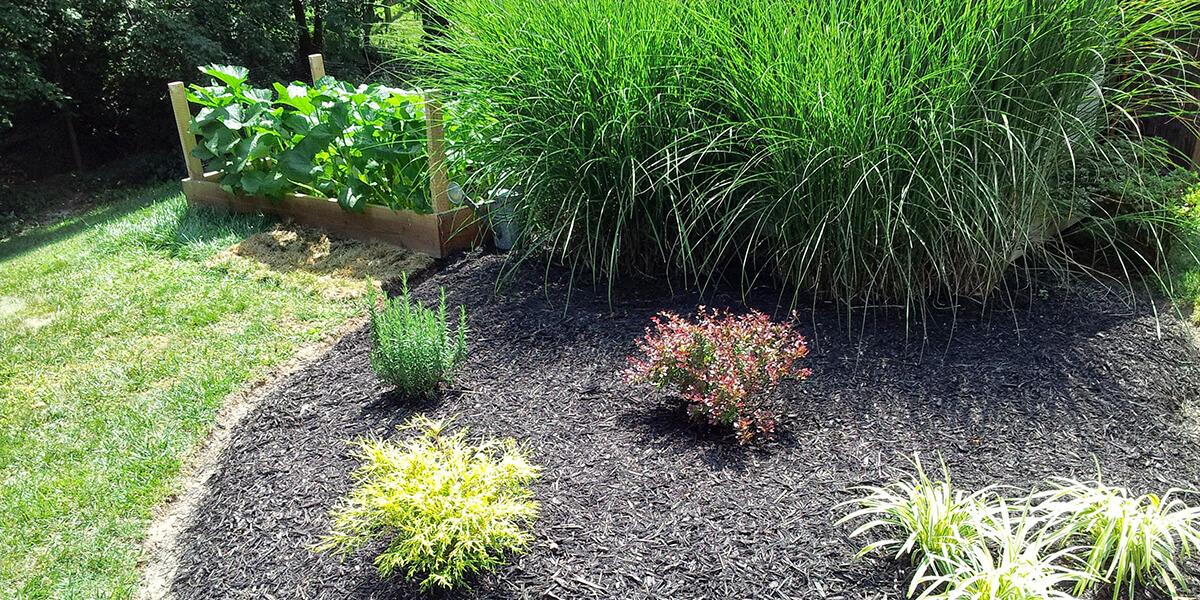
Ornamental grasses, which are common on the East Coast, require a lot of water. During the hottest time of the year, this means watering every day.
When I lived in Maryland, I had a few dozen large ornamental grasses (I can't recall the name) surrounding my home. (Fig 6) They require a lot of water because they have very shallow roots.
When you're choosing plants for your yard, read the watering requirements before making a purchase. Not all new plants available at garden centers will list these requirements; however, a quick search on Google should provide the answer.
If you are okay with paying a little more, employees at a nursery will have the answer, and typically, you will get a better specimen than, say, plants sold by Home Depot.
Avoid planting anything not native to your region unless you are sure it can survive hot temperatures.
When I bought my first house in Phoenix, AZ, the previous owner had planted a row of red rose bushes. Roses and the desert - bad idea!
Generally speaking, expensive plants, require more care. They are more difficult to propagate, may grow more slowly, and require specific growing conditions. Because of these factors, they tend to be less popular, increasing the cost when compared to for example a garden variety azalea.
An excellent way to know how well a plant will grow in your region is to ask an employee at a nursery. A well-run nursery will not typically sell species that do not grow well in your area, but it can't hurt to ask if you are unsure.
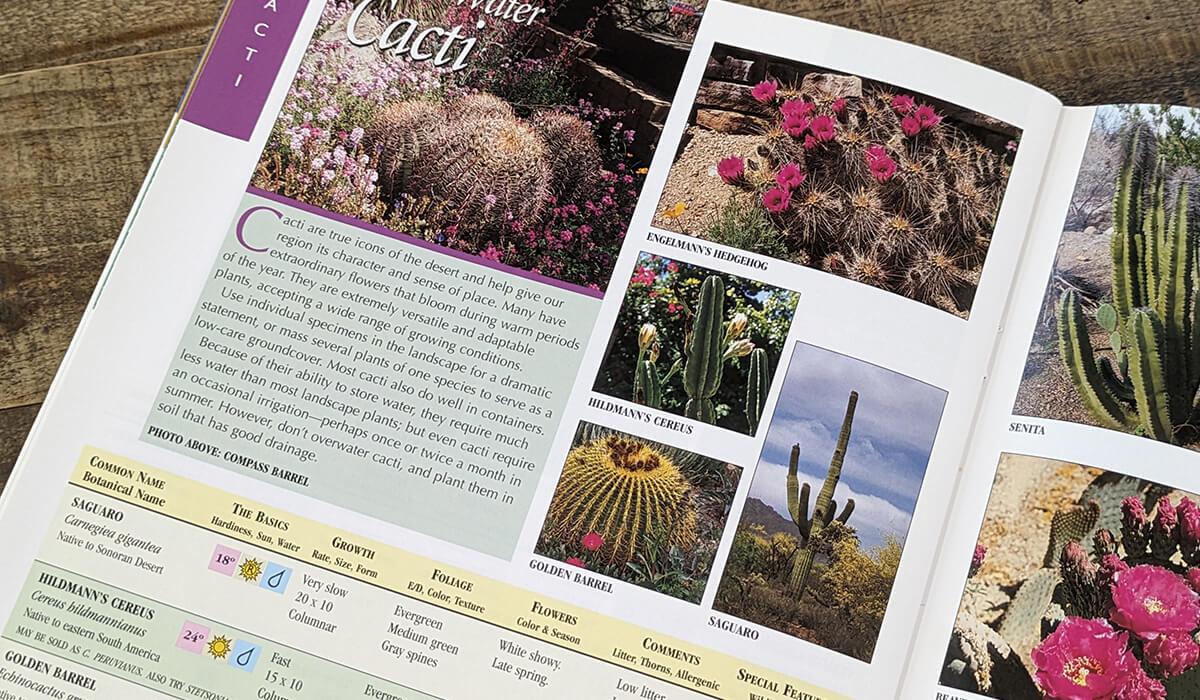
Another good resource is to check with your local water company. For example, the Arizona Municipal Water Users Association sends all new homeowners a well-designed guide containing low-water-use plants. (Fig 7) It's a valuable resource, especially for homeowners not from this region of the country.
Plant in the fall to give your plants a head start.
Transplanting a newly purchased plant from a container to the ground can be traumatic for the plant. Planting in the fall, when temperatures are moderate and rainfall is more likely, gives a plant a good start.
A healthy root structure should be established by summer, and your new plant will fully adjust to its new environment.
Remember to water your new plant even during the winter months. Depending on the amount of rain in your area, you may need to supplement the water with hand-watering or irrigation. New plants always need more water than well-established plants.
Fall is also the best time to transplant or move a plant from one spot to another.
Don't Give Up, Instead, Adapt
If you take pride in your landscaping, few things are more frustrating than losing a prized plant specimen. It happens to all of us!
Learning how to protect plants in a heatwave is a process of trial and error. Replacing plants can be expensive.
Don't replant the same specimen if you lose a plant during a heatwave. Replace it with something that can withstand extreme temperatures.
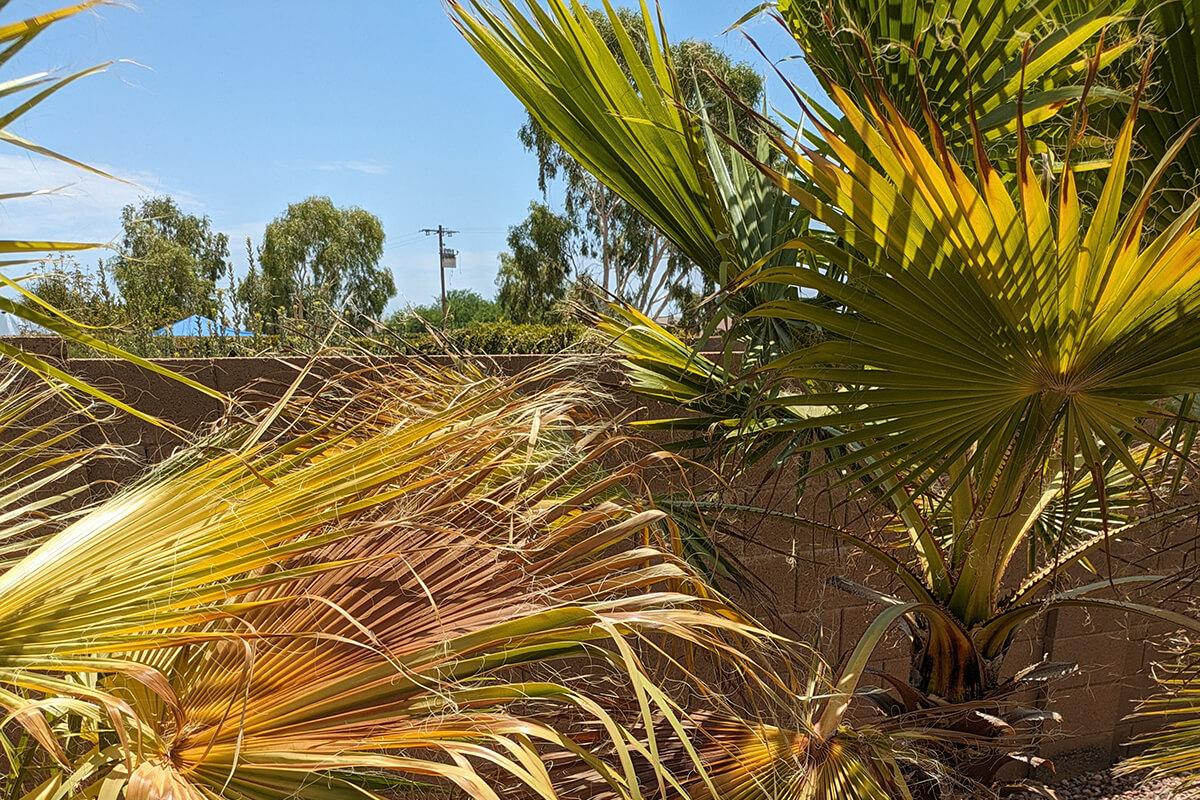
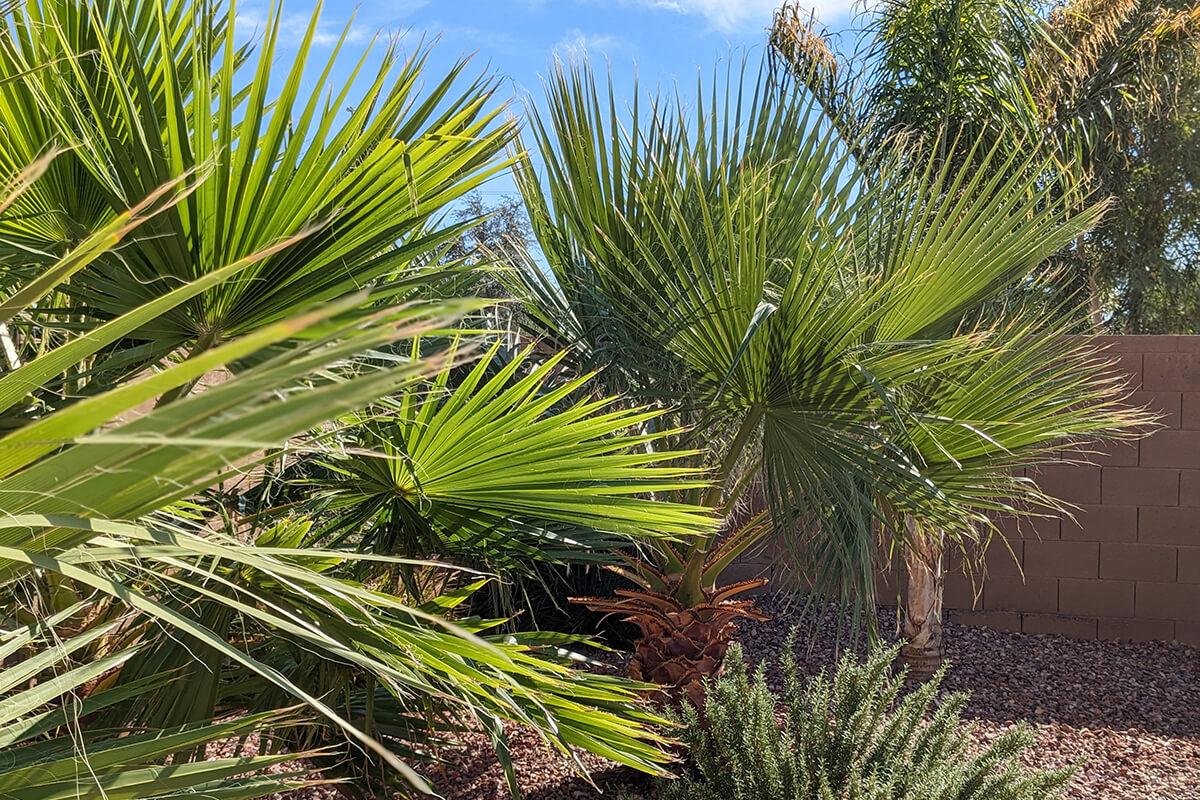
In 2019, I lost five queen palms due to an extended heatwave. Instead of planting more queen palms, I planted Mexican fan palms, which are less susceptible to extreme temperatures.
July of 2023 was the hottest month ever recorded in the Phoenix area. I am happy to report that all the Mexican fan palms survived. Sure, some of the fronds suffered serious scorching, but these can be cut off. In a few months, the palm will look none the worse for the wear. (Fig 8)
Beyond the obvious, for example, planting succulents in direct sunlight, there is no sure way to know which plants will do okay in extreme temperatures. It's a guessing game unless you base what you grow on prior experience or defer to an expert at a local nursery.
I've found the best method for knowing how well a plant will do under extreme temperatures is to drive through your neighborhood. For example, while driving to pick up my daughter at school, I noticed many dead plants in neighbors' yards and common areas.
Extreme temperatures aren't always the sole culprit! Like anywhere else, but more common in the Phoenix area during summer, people stop spending time outdoors when summer temperatures are high. They set their irrigation system to "auto-pilot" and forget about things until October when temperatures subside.
A neighbor of mine killed two large queen palms simply because he forgot to water them. The replacement cost — $20k!

Ask Me! 
Need some expert guidance? Shoot me a message, and I'll provide actionable, free advice to solve your problem.
Message Me